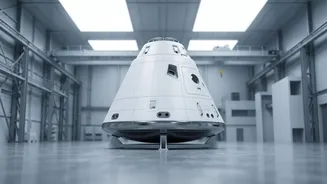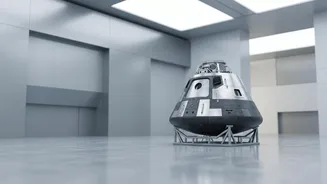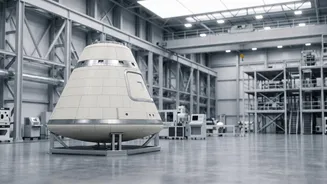





Gaganyaan's Critical Test Gauntlet
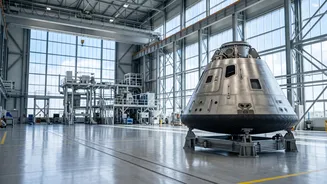
Before Indian astronauts, or 'Gaganyatris', can journey into orbit, every component of their spacecraft must be proven to be flawless. ISRO recently announced the successful completion of three major qualification tests for the Gaganyaan crew module,
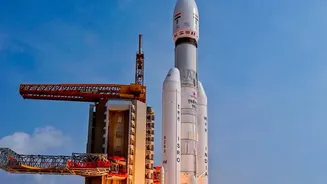
the capsule where the astronauts will live. These weren't just routine checks; they were designed to validate systems that are absolutely essential for bringing the crew home safely. The tests focused on moments of the mission that are high-risk and beyond the crew's control. This series of ground-based trials is a mandatory step before the systems are cleared for the uncrewed G1 test flight, which is anticipated for the latter half of 2026.
The Three Key Trials
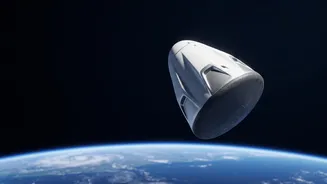
The recent qualification push centered on three specific systems. First was a test of the Crew Module Uprighting System (CMUS), which is crucial for post-landing recovery. The second trial validated the umbilical separation system, which ensures the crew module cleanly detaches from its service module before re-entering the atmosphere. Finally, engineers tested the structural integrity of the crew module to ensure it can withstand the powerful forces exerted when the apex cover, which protects the parachutes, is jettisoned. By subjecting the hardware to forces greater than what is expected in flight, ISRO confirms the systems have the necessary design margins for safety.
The Challenge of an Ocean Splashdown
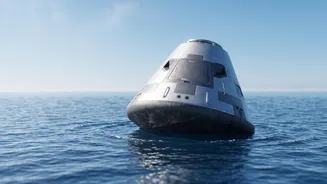
Gaganyaan’s journey will end with a parachute-assisted splashdown in the ocean. While the parachute system, itself subject to extensive testing, is designed to slow the descent, it doesn't control the module's orientation upon hitting the water. Due to its shape and centre of gravity, the capsule could easily end up in an inverted, or 'Stable 2', position, with the main hatch submerged. This is not just an inconvenience; it's a significant safety risk. An inverted capsule could make it difficult for astronauts to exit and for recovery teams to secure the module. Historical data from NASA's Apollo missions showed that nearly half of all landings resulted in an inverted capsule, highlighting the very real nature of this problem.
The Uprighting System: A Simple, Vital Solution
This is where the Crew Module Uprighting System (CMUS) becomes essential. The system is ingeniously simple: a set of flotation bags attached to the top of the crew module. If the capsule lands upside down, a stored supply of compressed cold gas is released through control valves, rapidly inflating the bags. The sudden buoyancy provided by the inflated bags acts like a lever, flipping the multi-tonne module into the correct, upright position. The recent qualification test successfully demonstrated that this inflation happens reliably and within the required time frame. It’s a non-negotiable safety feature ensuring that once the crew has safely returned to Earth, they can remain safe while awaiting recovery.