
The Silicon Valley Test Track
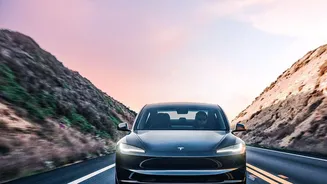
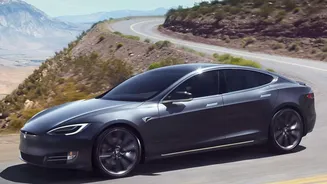
For years, autonomous driving technology has been developed and refined in the comparatively sterile environments of California and Arizona. On these roads, lanes are clearly marked, traffic flow is generally predictable, and drivers largely adhere to a common
set of rules. This structured world is the perfect laboratory for training an AI. Tesla's Full Self-Driving (FSD) system, for example, has learned to drive by analysing billions of kilometres of data from these environments. But the real world, especially in a country like India, is infinitely more complex. The leap from a well-manicured suburban street in Palo Alto to a congested junction in Mumbai is not just a change in scenery; it is a fundamental shift in the very language of driving.
The 'Final Boss' of Traffic
Indian roads present a unique and formidable challenge that many experts consider the ultimate test for any self-driving system. The difficulties go far beyond simply staying within the lines. The environment is a heterogeneous mix of cars, auto-rickshaws, motorcycles weaving through gaps, pedestrians, and even stray animals, all sharing the same space. Lane markings are often faded, inconsistent, or ignored entirely, with drivers creating their own lanes based on the flow of traffic. This 'organised chaos' is governed by an unwritten social contract of honks, hand gestures, and eye contact—subtle human cues that a camera-based AI struggles to interpret. Recent videos of imported Teslas on Indian roads show the car's visualisation screen flickering wildly as it tries to track dozens of unpredictable objects simultaneously, a glimpse into the immense data processing challenge.
How AI Learns to Drive
Unlike older systems that relied on rigid, pre-programmed rules, Tesla's approach is based on neural networks, a form of AI that learns from data. The system's 'brain' is trained by watching millions of hours of real-world driving. When the car makes a mistake or a human driver has to intervene, that data can be flagged, analysed, and used to retrain the network. This 'data engine' approach means the AI can theoretically learn to handle new and unusual situations without being explicitly programmed for them. The key, however, is having the right data. An AI trained exclusively on US highways will be unprepared for the nuanced, fluid dynamics of an Indian street. To succeed, it needs to learn the local dialect of driving.
The Path to Conquering Chaos
Tesla is aware of this challenge and appears to be taking steps to address it. Reports indicate the company has hired test drivers in cities like New Delhi and Mumbai to begin the crucial process of collecting local road data. This data will be used to train and adapt its FSD software specifically for the Indian context. However, the path to a full rollout is complicated. Regulatory hurdles are significant, as India currently lacks a comprehensive legal framework for autonomous vehicles, especially concerning liability in case of an accident. While Tesla has listed India as 'pending regulatory approval' for its FSD system, gaining that approval will likely require extensive localised testing to prove the system's safety and reliability. For now, the functionality of privately imported Teslas in India is limited, with features like FSD awaiting the official green light.
Why India Matters
Successfully navigating Indian roads is more than just a technical milestone; it is a critical business objective. For Tesla, cracking the India code would not only open up one of the world's largest and fastest-growing auto markets but also serve as the ultimate validation of its vision-only approach to self-driving. If an AI can master the complexities of Indian traffic, it can arguably handle roads almost anywhere in the world. It would represent a monumental leap forward, proving that autonomous technology is not just a novelty for developed nations but a robust, globally applicable solution. The journey is long, but the successful meeting of Tesla's AI and India's fluid roads could redefine the future of transportation for everyone.