





A New Digital Mapmaker for the Moon
NASA and IBM have a long history of collaboration, dating back to the Apollo missions. Their latest venture brings that partnership into the age of artificial intelligence with the release of the NASA-IBM Lunar Foundation Model. Announced in September
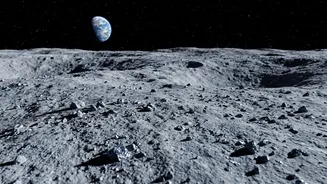
2026, this system is not just another piece of software; it's a foundational AI model specifically built to understand the Moon's geology. Previously, scientists had to manually sift through petabytes of data from various missions or use narrow AI models built for single tasks. This new model consolidates decades of observations from missions like NASA's Lunar Reconnaissance Orbiter (LRO) and Japan's SELENE spacecraft into one cohesive, intelligent system. By making it publicly available on platforms like Hugging Face, the two organizations are inviting the global scientific community to participate in the next wave of lunar discovery.
Training an AI for an Alien World
The Lunar Foundation Model is part of a larger family of AI systems called Prithvi, which IBM and NASA have previously used to analyze Earth observation data for applications like flood mapping and monitoring crop yields. To prepare the AI for its new celestial task, researchers trained it on millions of lunar image tiles. This dataset includes high-resolution camera images, multispectral data revealing mineral composition, and terrain data showing elevation and slopes. The AI learns to find hidden relationships between these different data types, creating a more holistic understanding of the lunar surface. Because it's a 'foundation model,' it doesn't just perform one task. Instead, scientists can easily adapt it for many different research goals using only small amounts of new, labeled data, saving immense time and resources.
Solving a Data Deluge Problem
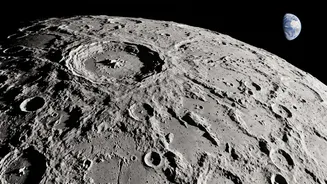
The primary challenge this AI solves is scale. NASA possesses an extraordinary archive of lunar data, but turning that raw information into actionable knowledge is a monumental task. The Lunar Foundation Model automates this process, performing complex analyses that would take humans countless hours. Its initial applications are directly tied to the goals of NASA's Artemis program, which aims to establish a sustainable human presence on the Moon. Benchmark tests have shown the model outperforms existing methods significantly, identifying key geographic features with up to 23% greater accuracy. It excels at mapping craters, investigating mysterious volcanic features called irregular mare patches, and, perhaps most critically, estimating where water ice might be stable in the permanently shadowed regions of the lunar poles.
Paving the Way for Artemis Missions
The insights generated by this AI have direct, practical applications for future astronauts. Locating stable water ice is a top priority, as it can be converted into drinking water, breathable oxygen, and even rocket fuel, reducing the need to launch these resources from Earth. Furthermore, detailed and accurate crater maps are essential for mission planners to select safe landing sites for robotic and crewed missions, avoiding hazards like steep slopes or large boulders. The model has already proven its prowess by correctly identifying a new crater formed by a rocket impact, demonstrating its ability to keep lunar maps up to date. By helping scientists better understand the Moon's geological past and present resources, the AI serves as a crucial planning tool for establishing a long-term lunar foothold.
The Power of Open-Source Science
One of the most significant aspects of this launch is the decision to make the model open-source. This move aligns with NASA's broader push for open science, which encourages collaboration and transparency. Instead of walling the technology off, NASA and IBM are providing the global research community with a shared foundation to build upon. Any scientist, from a university researcher to an amateur astronomer, can now access this powerful tool to ask new questions and explore their own hypotheses about the Moon. This collaborative approach not only accelerates the pace of discovery but also democratizes space science, ensuring that the next great lunar insight could come from anywhere in the world.