



Start with the Seller's Reputation
Before you even look at the sweets, look at the shop. A trustworthy seller is the first and most important check. Established sweet shops with a long-standing reputation often have more to lose from cutting corners. Look for clean premises, hygienic handling
practices where staff use gloves, and a general sense of order. In the digital age, this extends to online sellers. A reliable online mithai store will have transparent contact information, clear photos, and a history of positive customer reviews that mention freshness and quality. These sellers understand that trust is built on consistency. They are more likely to use high-quality ingredients like pure ghee and fresh khoya because their business depends on repeat customers who value authenticity over the lowest price.
Decode the Packaging and Labels
Proper packaging is more than just a pretty box; it's a legal requirement and a sign of quality. For pre-packaged sweets, the label is your best friend. Under the Food Safety and Standards Authority of India (FSSAI) regulations, every packaged food item must display key information. Look for the FSSAI license number, which proves the seller is registered and subject to safety audits. Check for the manufacturing and 'best before' or expiry dates. The ingredient list is another crucial area. Ingredients must be listed in descending order by weight, so you can see what the sweet is mostly made of. Be wary of vague terms like 'edible vegetable fat' which could mean cheaper hydrogenated oils (vanaspati) instead of pure ghee. A securely sealed package also ensures the contents haven't been tampered with and are protected from contamination during transport.
Scrutinise the Ingredient List
The ingredient list tells a story of quality, or lack thereof. During peak demand, some sellers substitute expensive ingredients with cheaper, sometimes harmful, alternatives. Khoya (milk solids) is often adulterated with starch or flour to increase its weight. To test this at home, you can boil a small piece of a milk-based sweet with water, let it cool, and add a drop of iodine solution. If it turns blue, it confirms the presence of starch. Another common issue is the use of non-permitted or excessive artificial colours to make sweets look more attractive. Bright, neon-like colours can be a red flag. Pure ghee may be replaced with vanaspati or other oils, which alters the flavour and is less healthy. Even the decorative silver foil (vark) can be fake, with sellers using cheaper aluminium foil, which is harmful if consumed. A seller who proudly lists 'pure ghee' and 'fresh khoya' is making a statement about their quality.
Trust Your Senses: Sight, Smell, and Taste
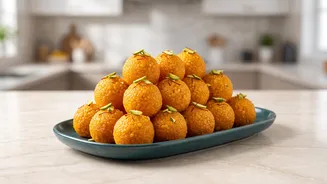
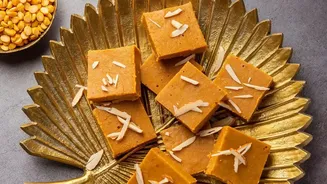
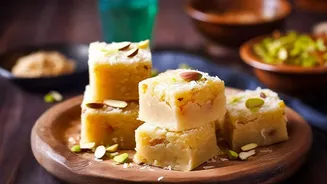
Finally, use the oldest checks in the book: your own senses. Fresh, well-made mithai has a distinct look, smell, and taste. A fresh sweet made with pure ghee will have a rich, pleasant aroma. If a sweet smells stale, sour, or oily, it's best to avoid it. The texture also provides clues. Fresh milk-based sweets should be soft and moist, not dry or overly hard. A grainy texture in sweets like burfi or peda could indicate adulteration with starch. If possible, ask for a sample before buying in bulk. A single bite can tell you a lot. An unusual aftertaste or a chemical-like flavour is a clear warning sign. Ultimately, authentic sweets have a clean, satisfying taste that comes from quality ingredients, not from overpowering artificial flavours or excessive sugar.