





A Landing Among the Clouds
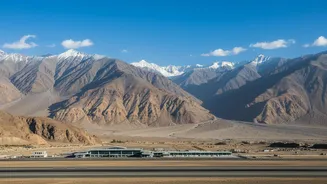
Kushok Bakula Rimpochee Airport (IXL) in Leh is the highest commercial airport in India, sitting at a breathtaking altitude of 3,256 metres (10,682 feet) above sea level. This elevation places it in a league of its own, creating a set of operational conditions
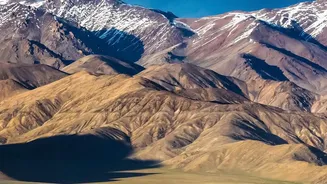
that are simply not a factor at sea-level airports. The airport, which serves as a critical gateway to the Ladakh region, is nestled in a valley surrounded by the Himalayan peaks. This geographical setting is both its biggest draw and its greatest challenge, making every takeoff and landing a carefully calculated procedure.
The Physics of Thin Air
At over 10,000 feet, the air is significantly less dense than at sea level. This thin air has a profound impact on how an aircraft performs. Firstly, it reduces engine thrust; with less oxygen to burn, engines produce less power. Secondly, it affects lift—the force that keeps the plane airborne. Wings generate lift by moving through the air, and when the air is thin, they have to move faster to create the same amount of lift. This means aircraft approaching Leh must maintain higher speeds during landing and require a longer runway to take off. This combination of reduced engine power and decreased lift makes high-altitude airports one of the ultimate tests for modern aviation.
A Special Task for Pilots
Landing at Leh is not a routine flight operation. Pilots who fly this route require special training and certification. They must undergo rigorous simulator training to handle the airport's unique challenges, including practicing operations with only one engine. The approach to the airport is unidirectional, meaning planes have to navigate through a specific corridor of peaks, and there are no instrument landing systems to guide them in low visibility. Pilots must rely on visual flight rules (VFR), using their expertise to judge the terrain and make a perfect landing on a relatively short runway. This specialized skill set ensures that despite the inherent difficulties, safety remains the highest priority.
The Morning-Only Flight Window
If you've ever booked a flight to Leh, you'll notice they all operate in the morning. This isn't for convenience; it's a critical safety measure. As the day progresses, the sun heats the mountainous terrain, causing strong, unpredictable winds and turbulence to develop in the valley. Furthermore, warmer air is even thinner, which further degrades aircraft performance. To avoid these hazardous conditions, the Directorate General of Civil Aviation (DGCA) restricts most flights to a tight window before noon, when the air is colder, denser, and the winds are calmer. This ensures that takeoffs and landings happen under the most stable conditions possible.
What Passengers Should Know
For travellers, arriving at Leh by air is a dramatic and beautiful introduction to Ladakh. However, the rapid ascent to such a high altitude can cause Acute Mountain Sickness (AMS). Symptoms can include headache, dizziness, and fatigue. Health experts and local authorities strongly recommend that visitors spend their first 24 to 48 hours in Leh acclimatising before engaging in any strenuous activity. This means resting, staying well-hydrated, and avoiding alcohol. By giving your body time to adjust to the lower oxygen levels, you can ensure your trip to this incredible region is both safe and enjoyable.