




An End to a Daring Rescue
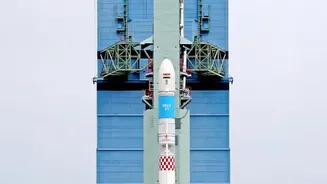
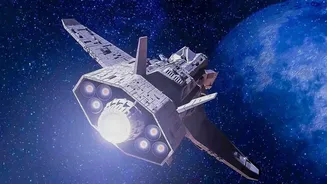
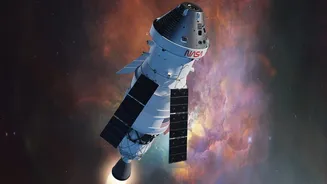
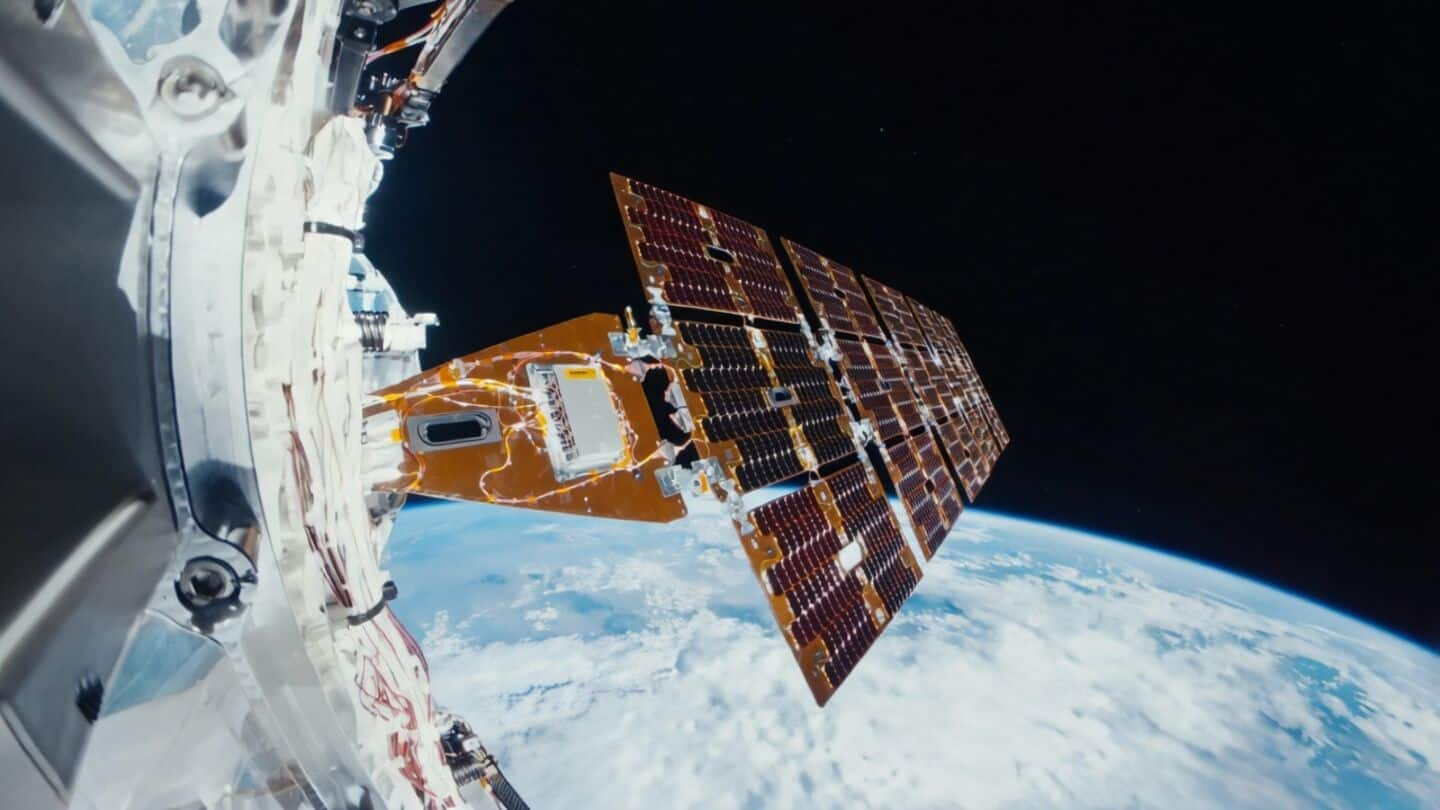
On August 19, 2026, NASA and its commercial partner, Katalyst Space Technologies, announced the end of the Swift Boost Mission. The plan was audacious: launch a robotic servicing spacecraft called LINK to rendezvous with Swift, grapple it, and push it into
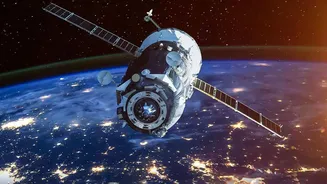
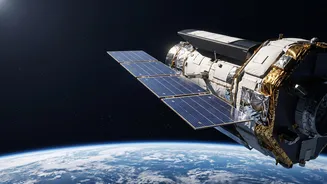
a higher orbit to extend its operational life. Swift, launched in 2004, had no built-in propulsion system to correct its decaying orbit, which was worsening faster than expected due to heightened solar activity. The rescue mission represented a novel public-private partnership aimed at servicing a satellite never designed for it. However, the rescuer itself ran into trouble. In late July, the LINK spacecraft lost attitude control and began to spin, suffering failures in two of its three critical reaction wheels and its thruster system. Despite weeks of effort by engineers to salvage the mission, the control issue proved insurmountable, making a safe capture of Swift impossible.
A Watcher of Cosmic Explosions
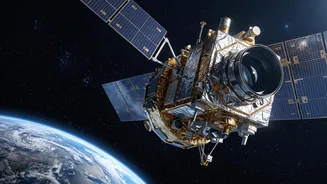
The Neil Gehrels Swift Observatory, to give its full name, was a game-changer in astrophysics. Originally designed for a two-year mission, it far surpassed all expectations, operating for over 21 years. Its primary job was to study gamma-ray bursts (GRBs), the most powerful explosions in the universe, often signaling the birth of a black hole or the collision of dense neutron stars. Swift's key innovation was its speed. Its name refers not to an acronym, but to its ability to rapidly pivot and focus its multiple instruments on a newly detected burst. Within seconds of spotting a flash of gamma rays, it could slew its X-ray and optical telescopes to the same spot, capturing the fleeting afterglow and pinpointing its origin for observatories on the ground. This capability turned the study of GRBs from a mystery into a precise science.
A Legacy Written in Starlight
Over its two decades of service, Swift detected over 2,000 gamma-ray bursts, fundamentally changing our understanding of the violent universe. In 2005, it made the first-ever detection of an afterglow from a short-duration GRB, providing strong evidence they are caused by merging neutron stars. It also spotted some of the most distant objects ever seen. In 2009, it observed GRB 090429B, an explosion that occurred over 13 billion years ago, when the universe was just a toddler. But Swift's work wasn't limited to GRBs. The versatile observatory became a jack-of-all-trades, studying everything from supernovae and flaring stars to comets in our own solar system. It played a key role in the era of multi-messenger astronomy, quickly turning its gaze to cosmic events first detected through non-light signals like gravitational waves.
A Calculated Risk
The decision to attempt the rescue was born from a desire to preserve a unique and valuable scientific asset. With its orbit decaying, NASA faced the loss of the $500 million observatory. In September 2025, the agency awarded a $30 million contract to Katalyst Space to mount the ambitious servicing mission in under a year. Both NASA and Katalyst knew the mission was a high-risk, high-reward endeavor. In a statement, NASA Administrator Jared Isaacman emphasized this point: "This is not the outcome we were working toward, but it does not change why this mission was worth attempting." The failure of the LINK spacecraft's control system, and not an issue with Swift itself, ultimately sealed the observatory's fate. Swift is now expected to burn up upon re-entering Earth's atmosphere later in 2026.