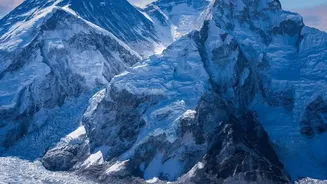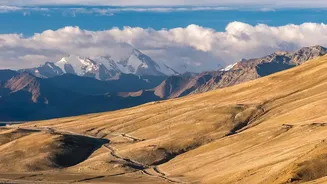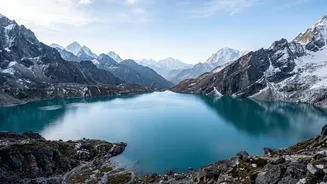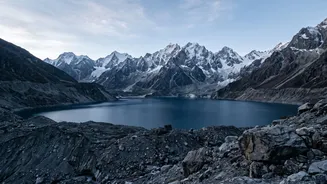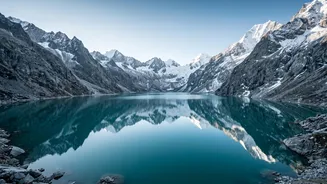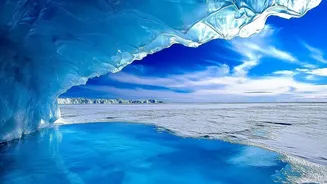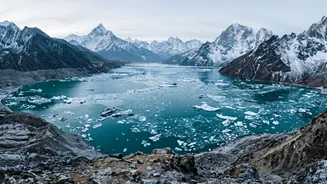




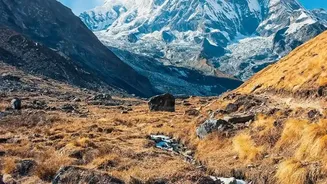
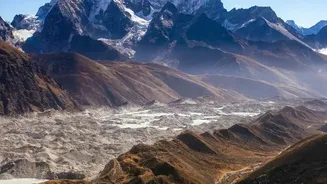
High in the Himalayas, serene glacial lakes hide an escalating danger. As climate change accelerates ice melt, these beautiful bodies of water can suddenly burst their banks, unleashing catastrophic floods that threaten everything in their path.
Understanding the 'Lake Bomb'
A Glacial
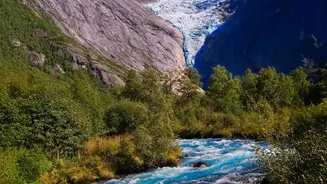
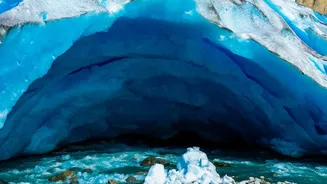
Lake Outburst Flood, or GLOF, is a sudden and violent release of water from a lake that was dammed by glacial ice or a moraine—a natural barrier of rock, soil, and ice left behind by a retreating glacier. As global temperatures rise, glaciers are melting at an accelerated rate. This meltwater swells existing lakes or forms new ones, increasing pressure on their unstable natural dams. A trigger event, such as a landslide, an avalanche of rock or ice into the lake, or even an earthquake, can cause the fragile moraine dam to fail abruptly. When this happens, millions of cubic metres of water can be released in a matter of hours, creating a terrifying wall of water mixed with mud, boulders, and debris that rushes downstream with immense destructive force.
The Devastating Path of a GLOF
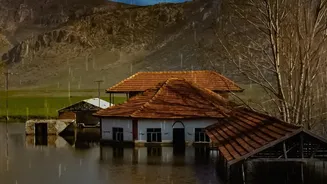
The impact of a GLOF extends far beyond the immediate vicinity of the lake. The torrent carves a path of destruction, wiping out entire settlements, agricultural land, and critical infrastructure like roads and bridges. The October 2023 disaster at South Lhonak Lake in Sikkim is a stark example. The flood surge thundered down the Teesta River valley, causing the collapse of a major hydropower dam and sweeping away homes, bridges, and highways. This single event affected tens of thousands of people, caused dozens of deaths, and severed connectivity to the state capital, highlighting the extreme vulnerability of communities and infrastructure located in narrow Himalayan valleys. The force of a GLOF is so immense that it can turn a small mountain stream into a deep, raging torrent, carrying debris that adds to its destructive power.
A Growing Threat Fueled by Climate Change
The link between climate change and the rising GLOF risk is undeniable. The Hindu Kush Himalaya region, often called the 'Third Pole', is warming faster than the global average. This elevation-dependent warming is causing glaciers to retreat and thin at an alarming rate, leading to the rapid formation and expansion of glacial lakes. Studies show that the rate of ice loss in the Himalayas has doubled since the year 2000, and the number of GLOF events has surged compared to the 20th century. This makes GLOFs one of the most significant and rapidly growing natural hazards in India, particularly in states like Sikkim, Himachal Pradesh, Uttarakhand, and Arunachal Pradesh. The threat is not just domestic; a GLOF originating in a neighboring country like Bhutan or Nepal can also send floodwaters across the border into India within hours.
Racing Against Time: Mitigation and Early Warnings
Recognizing the severe danger, Indian authorities have increased their focus on tackling GLOF risks. The National Disaster Management Authority (NDMA) has launched a national GLOF risk mitigation program. This initiative aims to identify and monitor high-risk lakes using a combination of satellite imagery and on-the-ground surveys. The goal is to establish robust early warning systems (EWS) that can alert downstream communities. These systems involve installing automated weather stations and water level sensors at the lakes to provide real_time data. However, setting up these systems in remote and fragile high_altitude terrain is challenging. Beyond technology, effective disaster management requires clear communication plans and well_rehearsed evacuation drills to ensure that warnings reach the last mile and people know how to respond safely.