





A Fiery, Hard-Won Ascent
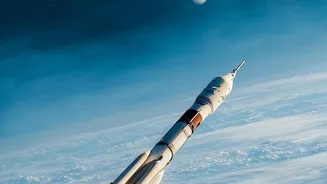
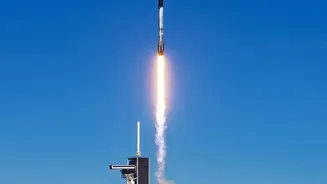
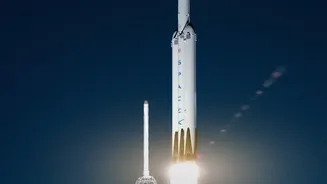
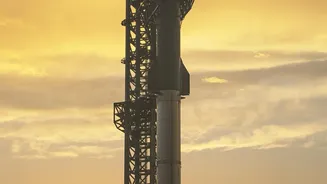
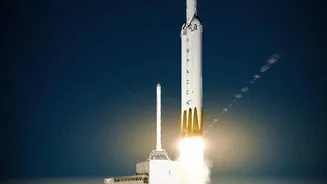
On its 14th test flight, the world's most powerful rocket blasted off from Starbase, Texas, clearing the launch tower in a controlled spectacle of immense power. For a few tense minutes, however, the mission's primary goal seemed in jeopardy. During the ascent,
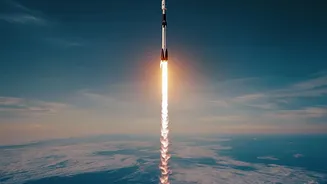
one of the upper stage's six Raptor engines shut down prematurely. On the SpaceX livestream, there was a palpable hesitation as mission controllers deliberated whether to scrub the orbital attempt. Ultimately, they gave the 'go', and with a final 19-second burn from a single engine, Starship was pushed into a stable orbit roughly 170 miles above the Earth, a feat greeted with roaring cheers in mission control.
From Suborbital Hops to Orbit
This flight marks a critical departure from Starship's previous 13 tests. Those earlier flights were suborbital, meaning the rocket went up and came back down without achieving the velocity needed to circle the planet. Reaching orbit requires surviving the initial launch and then attaining a horizontal speed of about 28,000 km/h. This allows the spacecraft to continuously 'fall' around the curve of the Earth, a much more challenging and high-stakes endeavor. Previous tests focused on launch, stage separation, and controlled splashdowns, all crucial steps, but this was the first flight designed to make that final, all-important leap into a sustained orbital trajectory.
A Successful but Shortened Mission
While reaching orbit was the primary win, the mission was not without its issues, reflecting the headline's 'but'. The flight was originally planned to last nearly 10 hours and complete six orbits. However, SpaceX announced that out of an "abundance of caution" following the engine issue, the mission would be cut short. Despite the abbreviated timeline, Starship successfully completed a major secondary objective: deploying 26 of the next-generation Starlink V3 satellites. This was the first time Starship had delivered a real, operational payload, proving its potential as a heavy-lift cargo vehicle. After about three hours, the spacecraft performed a deorbit burn and came down for an explosive splashdown in the Pacific Ocean.
Why This Milestone Matters
Achieving orbit, even imperfectly, is a watershed moment for SpaceX and the entire space industry. Starship is the key to Elon Musk's long-term vision of making humanity multi-planetary. Its full and rapid reusability is designed to drastically lower the cost of reaching space, enabling everything from massive satellite constellation deployment to eventual missions to Mars. More immediately, this success is vital for NASA's Artemis program, which plans to use a version of Starship to land astronauts on the Moon as early as 2028. This test flight, despite its flaws, demonstrates that the fundamental architecture of the world's largest rocket works, moving it from a developmental curiosity to a proven orbital-class vehicle.
The Road Ahead: More Tests, More Data
For SpaceX, this flight is not a finish line but a massive data-gathering exercise. Engineers will now pour over every second of telemetry to understand the engine failure and refine the vehicle's systems. The company's philosophy of 'test, fly, fail, fix, fly again' means that the lessons from this shortened mission are arguably as valuable as a perfect flight. The next major hurdles include perfecting the reentry and landing of the Starship upper stage, with the ultimate goal being to catch both the booster and the ship with the launch tower's 'chopstick' arms for rapid reuse. Proving that Starship can fly to orbit reliably and without anomalies is the next critical step toward carrying crew and fulfilling its contracts with NASA and other commercial clients.