





The Power of the Bounce
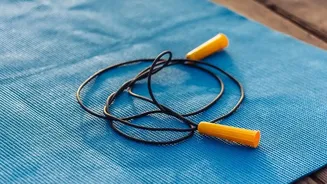
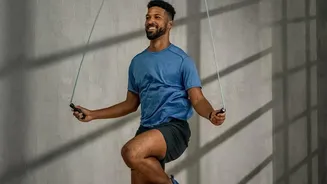
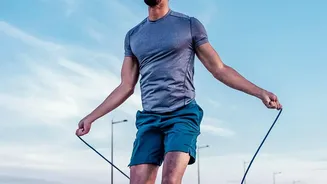
Rope skipping is much more than a playground activity; it's a sophisticated form of plyometric training. Plyometrics, often called jump training, involves exercises where muscles exert maximum force in short intervals, aiming to increase power. When you
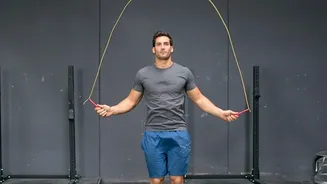
skip rope, your feet make repeated, rapid contact with the ground. This action trains something called the stretch-shortening cycle (SSC). Think of your calf muscles and Achilles tendons as powerful springs. As you land, the spring compresses (the eccentric phase), storing elastic energy. The moment you push off again, that stored energy is released (the concentric phase), allowing for a more explosive jump. This rapid cycle of stretching and contracting trains your neuromuscular system to become incredibly efficient. It teaches your muscles to fire faster and more forcefully, which is the very essence of acceleration.
Yoga’s Foundational Strength
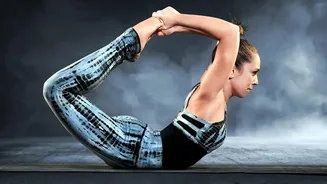
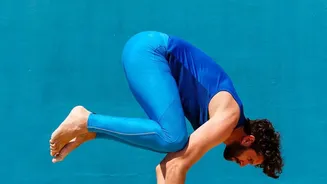
Yoga, on the other hand, works on a different but equally important set of athletic principles. While some faster-paced Vinyasa flows can build endurance, yoga’s primary athletic benefits lie in improving mobility, stability, balance, and body awareness (proprioception). Poses like Warrior II or Tree Pose build strength in the stabilizing muscles around your ankles, knees, and hips. Holding these postures strengthens your core and improves your balance, which is crucial for controlling your body during athletic movements. Furthermore, yoga enhances flexibility and lengthens muscles, which can lead to a greater range of motion. This improved mobility and stability create a strong foundation, helping to prevent injuries and enabling more efficient movement patterns. A flexible, stable athlete is less likely to suffer from the compensations that can lead to overuse injuries.
Speed vs. Stability: The Key Difference
When the specific goal is improving sudden footwork acceleration, rope skipping has a clear advantage. The reason is specialization. Acceleration is about rate of force development—how quickly you can generate power. Rope skipping directly trains this attribute through the high-volume, low-impact plyometric action of the SSC. It conditions your fast-twitch muscle fibers, the ones responsible for short, explosive bursts of speed. While yoga builds an incredible foundation, its movements are generally slower and more controlled. It excels at developing static stability and control through a full range of motion. A soccer player might use yoga to open their hips for a more fluid stride, but they would use rope skipping drills to improve the explosive push-off needed to chase down a ball. Yoga creates a more resilient and aware athlete, but rope skipping specifically hones the explosive reflex needed for that instantaneous burst of speed.
The Right Tool for the Right Job
This comparison isn't about declaring one exercise 'better' than the other; it's about understanding their distinct roles in a training program. Viewing them as competitors is a mistake. Instead, they should be seen as complementary tools. Use rope skipping for your high-intensity days when you want to focus on speed, agility, and power. Drills like double-unders or high-knees with a rope are perfect for sharpening your footwork. Reserve yoga for active recovery, improving mobility, and building the core and stabilizer strength that protects your body from the strain of explosive movements. An athlete who only skips rope may develop power but lack the flexibility to use it safely, leading to potential strains. An athlete who only does yoga will be stable and mobile but may lack the top-end explosive power to outpace an opponent. The synergy of both creates a more complete and resilient athlete.