







An Icon of Savory Delights
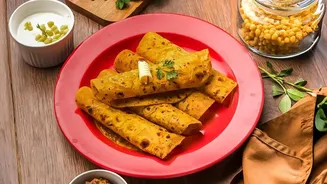
Known as Suralichi Vadi in Maharashtra and Khandvi in Gujarat, this snack is a marvel of texture. It consists of soft, melt-in-your-mouth rolls made from a thin layer of cooked gram flour batter. These delicate spirals are typically garnished with a sizzling
tempering (tadka) of mustard seeds, sesame seeds, and curry leaves, then finished with fresh grated coconut and finely chopped coriander. The result is a light, gluten-free, and mildly spiced treat that can be served warm or at room temperature, making it a perfect appetiser or tea-time companion. While its elegant appearance can seem intimidating to a home cook, the process is more about flow and focus than any kind of culinary wizardry.
The Myth of Complicated Ingredients
A quick look at the ingredient list reveals just how simple this dish truly is. The foundation of Suralichi Vadi requires only a few pantry staples: gram flour (besan), yogurt (dahi) or buttermilk (chaas), water, and a few basic spices. Turmeric powder lends its golden hue, while a paste of ginger and green chillies provides a gentle, aromatic heat. A pinch of asafoetida (hing) adds a subtle savoury depth. There are no exotic vegetables to procure or expensive masalas to blend. The entire dish is a testament to creating something extraordinary from the ordinary, proving that flavour doesn't always come from a long and complicated list of ingredients.
The First Lesson: The Batter
The first real test of patience begins with the batter. The goal is to create a perfectly smooth, lump-free mixture of gram flour and buttermilk or yogurt. This requires whisking thoroughly before any heat is applied. Once on the stove, the mixture must be cooked over a low to medium flame, and this is where constant attention is crucial. It needs to be stirred continuously and vigorously to prevent lumps from forming and to ensure it doesn't stick to the bottom of the pan. This stage can take anywhere from 10 to 17 minutes. The batter is ready when it thickens to a smooth, glossy paste that starts to pull away from the sides of the pan. Many seasoned cooks perform a simple test: spread a tiny amount on a plate, wait a few seconds, and see if it can be peeled off and rolled. If it can, you’re ready for the next step.
The Test of Timing: Spreading the Batter
Once the batter reaches the perfect consistency, the process speeds up dramatically. This is a race against time, as the mixture begins to set as soon as it starts to cool. You must work quickly to spread the hot batter in a paper-thin, even layer over a smooth, greased surface, such as the back of a steel plate (thali) or a clean kitchen countertop. If you delay, the batter will become thick and lumpy, making it impossible to spread thinly. This step isn’t about brute force but about quick, decisive action. It’s a moment of pure focus, where the rhythm of spreading the batter is key. Don't be disheartened if the first few attempts are not perfect; even thicker rolls will still taste delicious.
The Final Flourish: The Roll and Tempering
After the thin sheets have cooled completely—which only takes a few minutes—the final, satisfying steps begin. The set sheets are cut into uniform strips, about one to two inches wide. Then, each strip is gently and tightly rolled into the characteristic spiral shape. These delicate rolls are arranged on a platter, ready for their final anointment. The tempering, or tadka, is made by heating oil and spluttering mustard seeds, which are often followed by sesame seeds, curry leaves, and slit green chillies. This fragrant, sizzling mixture is poured over the rolls, providing a textural contrast and a final burst of flavour. A generous garnish of freshly grated coconut and coriander leaves completes the dish, making it as beautiful to look at as it is to eat.