






The All-Important Power Source
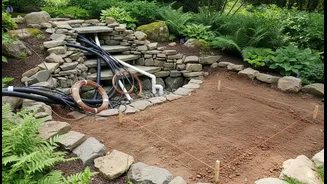
Every waterfall, regardless of size, needs a pump to circulate water, and that pump needs power. This is the first logistical hurdle to clear. Most waterfall pumps are mains-powered, and since you are mixing water and electricity, safety is non-negotiable.
An outdoor-rated Ground Fault Circuit Interrupter (GFCI) outlet is essential to prevent electric shock. For safety and compliance, it is highly recommended that you hire a licensed electrician to install any new outdoor outlets. They will ensure the outlet is correctly positioned, weatherproofed, and compliant with local building codes. You must also consider the distance from the power source to the waterfall's pump. This will determine the length of cord needed and whether any wiring needs to be buried. If you do bury a power line, it must be encased in a proper conduit at a specific depth to avoid being accidentally severed by future digging.
Managing the Splash Zone
Water has a tendency to go everywhere, and a waterfall is designed to make it move. The resulting splash is a primary consideration that many first-time installers overlook. Before you build, think about where that splashing water will land. Consistent moisture can damage the walls of your home, rot wooden deck boards, create slippery and hazardous stone patios, and drown nearby plants that are not suited for bog-like conditions. A good rule of thumb is to create a generous clearance zone around the base of the waterfall. The height and force of the water drop will determine the splash radius. You can minimize water loss and surrounding damage by designing the waterfall with flatter stones that guide the water gently or by creating a wider basin or stream bed to catch errant drops. A properly designed feature contains its own water, which is not only more efficient but also more responsible.
Choosing the Perfect Location
Beyond power and splash, the location of your waterfall impacts its aesthetic appeal and maintenance needs. Ideally, place it where you can see and hear it from a primary viewing area, like a patio, deck, or a window inside your home. The goal is to maximize your enjoyment. However, there are practical constraints to consider. Avoid placing your waterfall directly under trees. While the shade might seem appealing for reducing algae growth, falling leaves, twigs, and other debris will constantly clog the pump and filtration system, creating a maintenance headache. Also, be mindful of underground tree roots that could disrupt the foundation of the waterfall over time. If your yard is flat, you can still have a beautiful waterfall; a landscape professional can build up a berm to create the necessary elevation for a natural-looking feature.
Pond vs. Pondless Systems
Waterfalls typically come in two main configurations: those that flow into a pond and those that are 'pondless'. A traditional waterfall and pond combination offers a classic look and can support fish and aquatic plants. However, the open body of water requires more maintenance and can pose a safety risk for homes with small children or pets. A pondless waterfall is an increasingly popular alternative where the water cascades down and disappears into a hidden underground reservoir covered with rocks. This design is safer, requires less maintenance, and is ideal for smaller spaces or families concerned about the hazard of open water. The water is continuously recirculated from the hidden basin back to the top of the waterfall, providing all the sights and sounds without the liability of a pond.
Sizing the Pump and Materials
The heart of your waterfall is its pump, and choosing the right size is critical. A pump that is too weak will produce a disappointing trickle, while an overpowered one can create excessive splashing and noise. The pump's strength is measured in gallons per hour (GPH). A general guideline is to plan for 100 GPH for every inch of waterfall width. So, a 12-inch wide spillway would need a pump rated for at least 1,200 GPH. It is often better to slightly oversize the pump and use a valve to dial back the flow if needed. The materials you choose for the waterfall structure itself—such as natural stone, pre-formed concrete, or fiberglass—will define its look, durability, and cost. Natural stone offers the most authentic look but requires more skill to assemble, whereas pre-formed kits can simplify the construction process.