



The Final Frontier's Traffic Jam
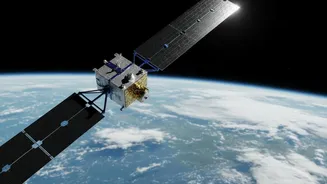
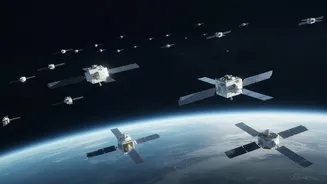
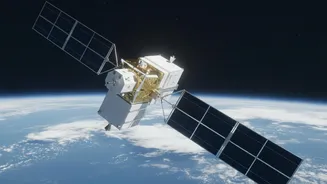
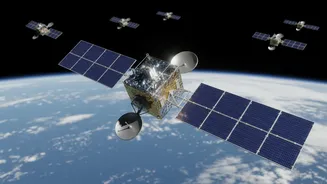
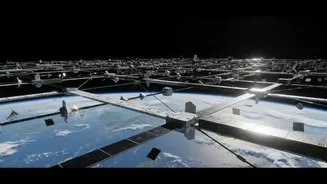
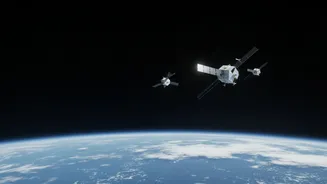
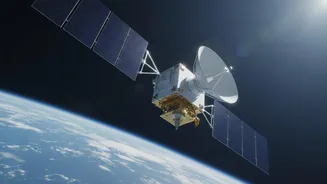
Imagine a highway with no lanes, no speed limits, and no traffic signals, where vehicles travel seventeen times faster than a bullet. That’s the reality in low Earth orbit today. With more than 10,000 active satellites and millions of pieces of untracked
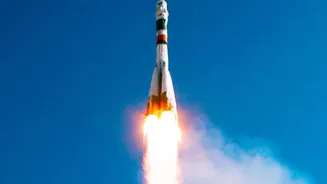
‘space junk’—from defunct satellites to tiny fragments of old rockets—the risk of a catastrophic collision is higher than ever. A single impact could create thousands more pieces of debris, triggering a chain reaction known as the Kessler Syndrome that could render parts of orbit unusable for generations. This isn't just a problem for astronauts; it's a direct threat to the satellite services we rely on daily for navigation, communication, weather forecasting, and financial transactions. The growing congestion, fueled by the launch of massive satellite mega-constellations, has turned space sustainability into an urgent global priority. Recent news about uncontrolled rocket parts returning to Earth further highlights the pressing need for action.
Bengaluru Takes Centre Stage
Fittingly, the search for solutions brought the world’s top space minds to India. From April 8-10, 2026, the International Conference on Spacecraft Mission Operations (SMOPS-2026) was held in Bengaluru, the heart of India’s aerospace industry. Jointly organised by the Indian Space Research Organisation (ISRO), the Astronautical Society of India (ASI), and the International Academy of Astronautics (IAA), the conference’s theme was “Innovative Operations for Smart and Sustainable Space Mission Management.” The choice of venue was no coincidence. As home to ISRO's headquarters and a thriving ecosystem of space-tech startups, Bengaluru symbolised India's transition from a participant in the space race to a leader shaping its future rules. The gathering was a crucial platform for collaboration, with experts from NASA, the European Space Agency (ESA), and Japan's JAXA joining their Indian counterparts.
On the Agenda: Rules of the Road for Space
A central theme at SMOPS-2026 was the desperate need for a global Space Traffic Management (STM) framework. Put simply, STM is the space equivalent of air traffic control. It involves tracking objects, coordinating satellite movements, and establishing universally accepted rules of behaviour to prevent collisions. Currently, no such binding international system exists. Operations are managed through a patchwork of national capabilities and voluntary data-sharing agreements, which are becoming insufficient as the number of satellites skyrockets. Discussions at the conference focused on what a future STM regime could look like, addressing not just the technical challenges of tracking objects but the legal and policy hurdles of getting all space-faring nations and private companies to agree on and adhere to a single set of guidelines.
India’s High-Tech Watchdogs
A key component of any STM system is Space Domain Awareness (SDA)—knowing what is in orbit and where it is going. India has been making significant strides in this area, a fact highlighted at the conference. ISRO’s System for Safe and Sustainable Space Operations Management (IS4OM) in Bengaluru serves as the nation's hub for monitoring space objects and coordinating collision avoidance manoeuvres. This is powered by Project NETRA (Network for Space Object Tracking and Analysis), a growing network of radars and telescopes that act as India's eyes on the sky. The discussions at SMOPS-2026 also explored the transformative potential of Artificial Intelligence. AI can process vast amounts of tracking data to predict potential collisions with greater speed and accuracy than human operators, enabling more autonomous and efficient mission operations.
A Leader in Global Governance
India's contributions extend beyond technology. The nation is increasingly seen as a crucial voice in shaping global space governance. As an active member of the UN Committee on the Peaceful Uses of Outer Space (UNCOPUOS), India has been a strong advocate for the long-term sustainability of space activities. The Indian Space Policy 2023 further cemented this commitment, outlining a framework for responsible private sector participation overseen by the Indian National Space Promotion and Authorisation Center (IN-SPACe). This proactive stance, combining technological self-reliance with a commitment to international collaboration, was a recurring theme at SMOPS-2026. Experts emphasized that solving the space traffic problem requires not just individual excellence but a collective global effort, and India is positioning itself as a key bridge-builder in this domain.