





Beyond the Reps: The Power of Play
Let's be honest: the repetitive nature of many exercise routines is a primary reason people lose motivation. Counting reps or watching the clock on a treadmill can quickly turn a health-positive activity into a dreaded task. This is where gamification
comes in. By transforming exercise into a game, you shift the focus from the physical strain to the enjoyment of the activity itself. Your brain is no longer just enduring the workout; it's engaged in a challenge, trying to score a point, or working with a team to achieve a goal. This mental engagement makes the physical effort feel secondary. Studies show that exercise releases mood-elevating endorphins, and when this is combined with the social connection of a group, the benefits multiply. The activity becomes a source of pleasure, not just a means to an end.
The Social Sweat: Motivation in Numbers
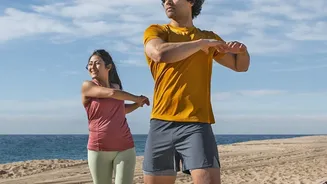
Exercising in a group provides a powerful dose of social accountability and motivation that is hard to replicate on your own. When you know a few friends are waiting for you at the park, you are far less likely to skip the session. This sense of community fosters a supportive environment where everyone feels like part of something bigger. The shared energy is contagious; seeing others push themselves can inspire you to do the same. This isn't about harsh competition, but rather a friendly dynamic that encourages consistency. Research indicates that people tend to push themselves harder and achieve a higher intensity level when working out in a group compared to exercising alone. This collective effort builds camaraderie and can turn a simple morning workout into a valued social ritual, reducing feelings of loneliness and isolation.
Adding Context and Purpose to Movement
A traditional workout often has a vague, long-term goal like 'get fitter' or 'lose weight'. A game, however, provides immediate context and short-term objectives. The purpose of your movement is no longer just to burn calories; it's to get the frisbee to your teammate, to return a shuttlecock over the net, or to win a round of tag. These mini-goals make the experience more engaging and provide instant feedback and a sense of accomplishment. This concept, known as behavioural activation, is a recommended strategy for improving mental well-being, as it involves participating in your environment in a meaningful way. By adding this layer of purpose, the exercise feels more dynamic and less like a grind, helping you stay present and focused on the fun.
Keeping It Fun, Light, and Inclusive
The key to successful group games is ensuring they are accessible to everyone, regardless of their current fitness level. The goal is participation and fun, not elite competition. This means choosing activities that are skill-based rather than purely endurance-based and can be easily modified. For example, a game of badminton can be played at a gentle pace or a more competitive one. Slow-pitch softball, frisbee, or even team-based warm-up games like relays with simple exercises can be great options. The most important rule is to create a welcoming atmosphere. Establish that the objective is to move, laugh, and connect. When the pressure to perform is removed, people are more likely to relax, enjoy themselves, and, most importantly, come back for the next session.
Simple Games to Get You Started
You don’t need complex rules or a lot of equipment. Start with something simple that gets everyone moving. A game of 'captain ball' with a lightweight ball is great for coordination. You can also try team trivia where wrong answers lead to a light, fun exercise like five jumping jacks. Even something as simple as 'scissors, paper, rock' where the loser does a few star jumps can serve as a fun, interactive warm-up that breaks the ice and gets the blood flowing. Ping pong is another excellent choice as it relies more on hand-eye coordination than raw athleticism, allowing beginners and seasoned players to enjoy a game together. The idea is to choose activities that are low-impact and can be scaled in intensity, ensuring everyone can participate comfortably and safely.