





The Challenge: A Doctor on Call, 40 Minutes Away
For astronauts on the International Space Station (ISS), a medical emergency is a serious but manageable problem. They can speak with doctors on Earth in near-real-time and, in a worst-case scenario, be evacuated home in a matter of days. But for future
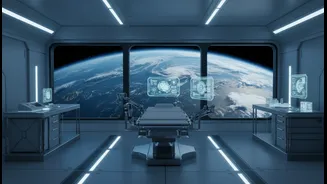
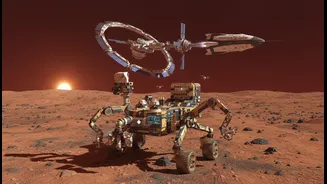
missions to the Moon and Mars, that safety net disappears. A round-trip communication signal to Mars can take up to 40 minutes, making real-time consultation impossible. A simple illness or injury could become a mission-threatening catastrophe. Astronauts face numerous health risks, including bone demineralization, muscle atrophy from microgravity, and radiation exposure, all of which are amplified on long-duration flights. To make these ambitious journeys feasible, crews need a way to diagnose and treat medical problems on their own.
Anil Menon: A Doctor for the Final Frontier
Enter Dr. Anil Menon, an Indian-origin NASA astronaut, US Space Force Colonel, and emergency medicine physician. His career has uniquely positioned him at the intersection of extreme environments and medical care. He's been a first responder to earthquakes, treated climbers on Mount Everest, and served as a flight surgeon in the Air Force. Before becoming an astronaut, Menon was the first flight surgeon at SpaceX, where he helped launch the company's first human missions and developed medical protocols for future flights, including Starship. Now an astronaut himself, having launched to the ISS in July 2026, part of his work involves testing technologies that are critical for deep space medical autonomy.
The AI Solution: A 'Doctor in a Box'
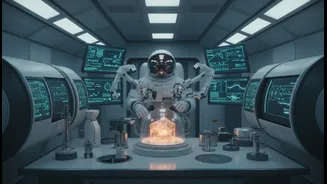
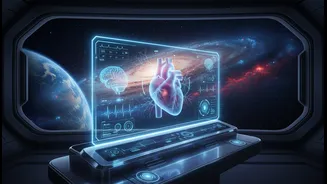
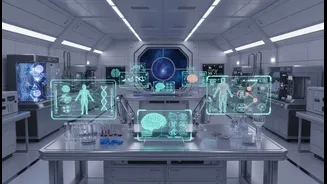
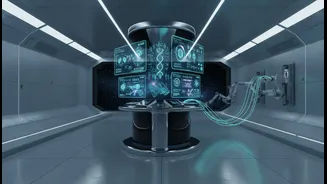
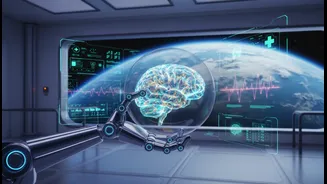
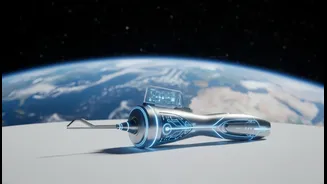
The solution being developed is an AI-powered system often called a Crew Medical Officer Digital Assistant (CMO-DA). This isn't just a simple diagnostic app; it's a sophisticated tool designed to act as an autonomous medical expert. The system integrates large language models (LLMs) for reasoning through complex symptoms and vision language models (VLMs) to analyze medical images, like ultrasounds. One of Menon's tasks aboard the ISS is to perform ultrasound investigations using augmented reality and AI, testing methods that could one day eliminate the need for direct ground support. These AI systems are being trained on vast amounts of spaceflight medical literature and data to provide real-time analysis of an astronaut's health. The goal is to create a system that can guide a non-physician crew member through everything from diagnosing an ankle injury to managing a more complex emergency.
How it Works: From Symptoms to Solution
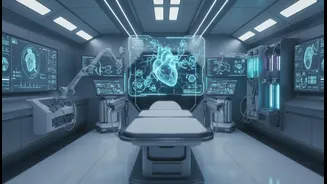
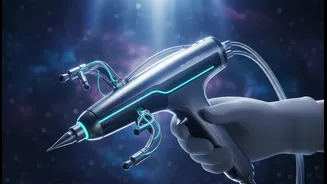
Imagine an astronaut on Mars develops a sharp pain. Instead of waiting for a delayed message from Earth, the crew's medical officer could consult the AI assistant. They could describe the symptoms, upload data from biosensors, and even use a portable ultrasound guided by the AI. The system would then process this information, ask clarifying questions, and offer a probable diagnosis and a step-by-step treatment plan based on the limited medical supplies available onboard. Early trials of these systems have shown promising results, with high accuracy rates for diagnosing common issues. By running on local hardware within the spacecraft, the AI ensures that medical guidance is instant and always available, regardless of communication blackouts. This shifts the paradigm from reliance on Earth-based telemedicine to true medical autonomy.
Paving the Way for a Martian Colony
The work being done by Menon and teams at NASA is about more than just technology; it's a fundamental requirement for establishing a long-term human presence beyond Earth. These AI systems are a crucial step toward making crews self-sufficient and resilient. While challenges remain, such as ensuring the AI is unbiased and effective for a diverse group of astronauts, the progress is undeniable. The insights gained from testing these systems on the ISS are directly informing the capabilities that will be needed for the Artemis missions to the Moon and, eventually, the first human footsteps on Mars. It's a critical piece of the puzzle, ensuring that when humanity takes its next giant leap, it does so with a trusted medical advisor by its side, no matter how many millions of miles from home.