





A Boom in Orbit
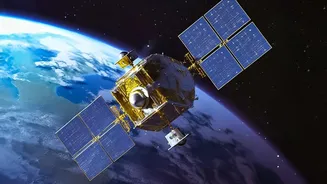
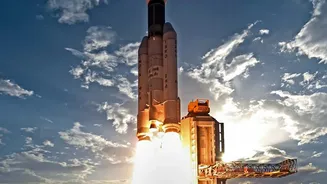
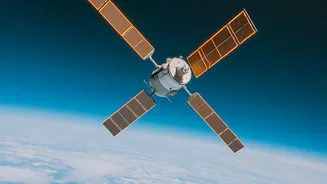
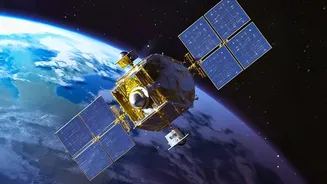
The past few years have witnessed an unprecedented expansion of activity in low-Earth orbit (LEO). This is largely driven by the deployment of commercial satellite 'mega-constellations' designed to provide global internet access. Companies like SpaceX
with its Starlink network have launched thousands of satellites, with plans for tens of thousands more. This rapid growth promises to connect the unconnected and power a new space-based economy, projected to grow into a multi-billion dollar market. The number of active satellites has ballooned, transforming once-quiet orbital highways into bustling thoroughfares. As of mid-2026, there are over 16,100 functioning satellites in orbit, a number that has risen dramatically in a very short period.
The Orbital Junkyard by the Numbers
With every launch comes the risk of leaving something behind. Space junk, or orbital debris, refers to any man-made object in orbit that no longer serves a purpose. This includes defunct satellites, spent rocket stages, and fragments from collisions and explosions. According to the European Space Agency's latest figures from July 2026, space surveillance networks are tracking about 46,110 artificial objects. Of these, only about 16,100 are active satellites. The rest is junk. But this is just what can be tracked. Statistical models estimate there are approximately 1.2 million pieces of debris between 1 and 10 cm, and over 140 million fragments smaller than 1 cm. The total mass of all objects orbiting Earth now exceeds 17,000 tonnes. Even a paint fleck travelling at orbital speeds of over 28,000 km/h can cause catastrophic damage to an operational satellite or a crewed spacecraft.
The Kessler Syndrome: A Collision Cascade
The primary fear among space agencies and operators is a chain reaction known as the Kessler Syndrome, named after NASA scientist Donald Kessler who proposed the theory in 1978. The scenario posits that if the density of objects in LEO becomes high enough, a single collision could generate a cloud of debris. Each of these new fragments increases the probability of further collisions, which in turn create even more debris. This cascading effect could eventually render certain orbits completely unusable for generations, trapping humanity on Earth and crippling the satellite-based services we depend on for everything from GPS navigation and weather forecasting to financial transactions and communications.
The Disposal Dilemma
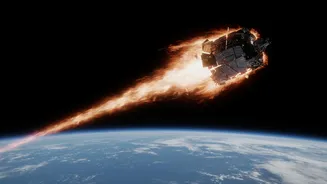
For decades, the internationally recognized guideline was the '25-year rule', which recommended that satellite operators move their spacecraft out of valuable orbits within 25 years of their mission's end. However, compliance has been historically poor, with studies showing that only about half of all satellites were successfully deorbited as required. The rapid increase in launch traffic has made this relaxed timeframe obsolete. In response, regulators are tightening the rules. In a landmark move, the U.S. Federal Communications Commission (FCC) implemented a new '5-year rule' effective from late 2024, mandating that new satellites under its jurisdiction be deorbited within five years of mission completion. This puts immense pressure on operators to design satellites with reliable and effective end-of-life disposal systems.
The Race for a Solution
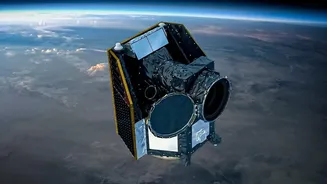
The growing crisis has spurred a race to develop solutions. On one front are mitigation efforts, focused on preventing the creation of new debris. This includes designing satellites for easier disposal. On the other front is the more complex challenge of active debris removal (ADR). Various methods are being developed, including robotic arms, nets, and harpoons to capture existing junk and drag it into the atmosphere to burn up. Missions like the European Space Agency's ClearSpace-1 aim to demonstrate these technologies by capturing and removing a piece of debris. In India, ISRO's Project NETRA (Network for space object Tracking and Analysis) is an early warning system to detect debris and protect Indian space assets, showcasing the country's commitment to space situational awareness.