






More Than Just a Grain
In many parts of the world, especially across Asia, the price and availability of rice are not just economic indicators; they are measures of a government's success. This single crop underpins the food security of nearly half the planet. Its journey from
the paddy field to the plate is intertwined with culture, politics, and national identity. Stable rice prices can mean peace and prosperity, while sharp increases often trigger public anger and instability. Studies have consistently shown a strong link between rising food costs and social unrest, making rice a commodity of immense geopolitical significance. For this reason, governments are deeply invested in managing its supply and cost, often through complex interventions that are not always visible to the public.
The Global Supply Squeeze
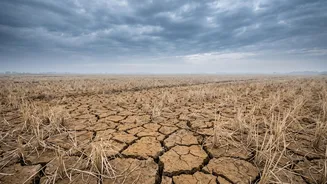
Recent market trends show a complex picture. While some reports from earlier in the year suggested a dip in prices due to good harvests, the latest data from September 2026 indicates a tightening market. Indian rice export prices, for example, have reached one-year highs due to concerns over a weak monsoon, which could hurt crop yields. India is the world's largest rice exporter, accounting for around 40% of global trade, so any disruption there has significant ripple effects. Other major exporters like Vietnam and Thailand are also seeing firm prices. These market movements are driven by a combination of weather events, production forecasts, and shifting demand patterns, creating a volatile environment where supply is a constant concern.
Reading the Fine Print
This is where the "fine print" of government policy becomes critical. To protect domestic consumers from rising costs, rice-exporting nations often resort to measures like export bans, tariffs, or setting a minimum export price. While these actions can temporarily lower prices at home, they squeeze the global supply, pushing prices up for importing countries. India, for instance, has a history of using such tools. The government also manages vast buffer stocks, releasing them through schemes like the Open Market Sale Scheme (OMSS) to control domestic inflation, a move that directly impacts local availability and prices. Furthermore, international trade is governed by detailed regulations, such as mandatory inspection certificates for exports to certain regions like the EU, which can be relaxed or tightened to serve strategic goals. These bureaucratic and policy levers are powerful tools that can alter trade flows and create market uncertainty.
From Market to Mayhem
The link between food price shocks and conflict is well-documented. When the cost of a staple food like rice suddenly spikes, it disproportionately hurts the poorest households, where food accounts for a large share of daily expenses. This economic pressure can quickly evolve into public protest and political instability. Historical and recent analyses confirm that while grievances over food prices can be a trigger, they often ignite deeper-seated frustrations with governance and inequality. A sudden export ban by a major supplier can lead to shortages and riots in a net-importing country thousands of miles away. This delicate balance means that a policy decision made in New Delhi can have profound social consequences in Manila or Lagos, illustrating how interconnected global food security has become.
The View from India
As both the world's largest exporter and home to a massive population, India walks a tightrope. The government must balance the interests of its farmers, who benefit from higher prices, against the needs of its consumers, who require affordable food. A weak monsoon, as seen in 2026, puts immense pressure on this balancing act, forcing policymakers to consider restricting exports to ensure domestic supply and control inflation. Meanwhile, states with surplus production, like Telangana, are drawing up their own export policies to tap into global markets. For the average Indian citizen, these high-level decisions translate directly into the price paid for a bag of rice. Global market volatility, influenced by everything from geopolitics to climate change, ultimately impacts household budgets across the nation.