




A Nation on the Ring of Fire
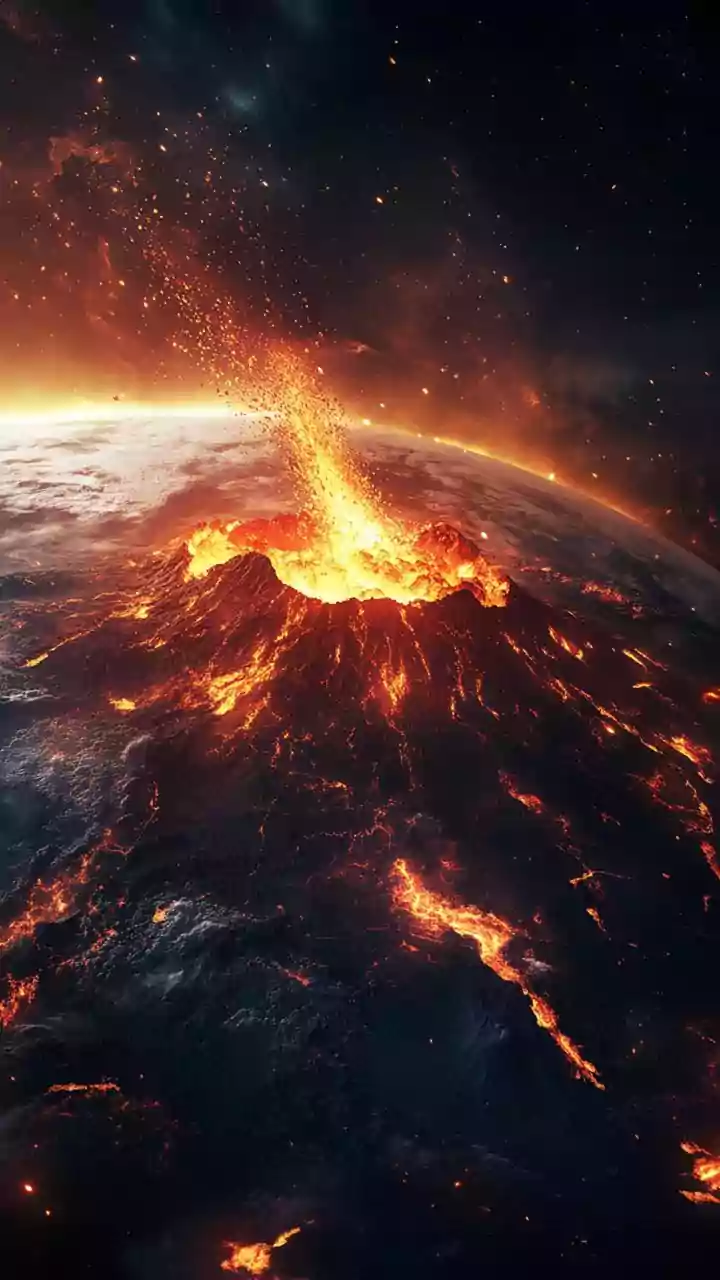
Japan’s turbulent geological reality stems from its location on the Pacific Ring of Fire, a vast, horseshoe-shaped zone that encircles the Pacific Ocean. This 40,000-kilometre arc is responsible for about 90% of the world's earthquakes and is home to
75% of its active volcanoes. Countries along this ring, from New Zealand to Chile to the western United States, experience intense seismic activity. Japan, however, is in a particularly precarious position because it sits at one of the most complex intersections along this entire belt. This geography is the fundamental reason behind the constant threat of tremors, volcanic eruptions, and the devastating tsunamis that can follow.
The Four-Plate Convergence
The ground beneath Japan is a battleground for four massive tectonic plates. The archipelago is wedged between the huge Pacific and Eurasian plates, as well as the smaller Philippine Sea and North American plates (sometimes identified as the Okhotsk microplate). These colossal slabs of Earth's crust are constantly in motion. The oceanic Pacific plate moves westwards at a rate of about 8 to 9 centimetres per year, pushing relentlessly under the continental plates on which Japan sits. To the south, the Philippine Sea plate grinds and slides beneath southern Japan. This chaotic, four-way junction creates an unimaginable amount of stress in the Earth's crust, which is periodically and violently released as earthquakes.
The Science of Subduction
The process driving this is called subduction. Because oceanic plates like the Pacific plate are denser, they dive, or subduct, beneath the lighter continental plates when they collide. This creates immense deep-sea trenches, such as the Japan Trench off the country's northeast coast. As the Pacific plate grinds downwards, it doesn't slide smoothly. Instead, the plates lock together, and for decades or even centuries, immense strain builds up. Eventually, the overriding plate snaps back into position, releasing all that stored energy in a powerful megathrust earthquake. This sudden movement can violently displace the seafloor, thrusting a massive column of water upwards and generating a tsunami.
The Nankai Trough Megathrust
While the Japan Trench is a major hazard, scientists are particularly concerned about another subduction zone to the south: the Nankai Trough. Here, the Philippine Sea plate is subducting beneath southern Japan. This fault has a history of producing catastrophic megathrust earthquakes every 90 to 200 years. Historical records show a pattern of massive, paired earthquakes rupturing along this trough, causing widespread devastation. The Japanese government actively models disaster scenarios for a future Nankai Trough earthquake, which has the potential to cause hundreds of thousands of fatalities and trillions of dollars in damage, making it one of the most significant natural disaster threats facing the nation today.
An Inescapable Geological Destiny
From the deep-sea trenches to the active volcanoes that dot its landscape, Japan's geography is defined by this tectonic clash. While some earthquakes occur inland due to stresses within a single plate, the most powerful, tsunami-generating events originate offshore in these subduction zones. The constant rumbling is a reminder that the land is not static but part of a dynamic, powerful, and often violent planetary process. The country's very existence is a product of this volcanic and seismic activity, which has built up its mountainous island chains over millions of years. This constant threat has forced Japan to become a world leader in earthquake engineering and preparedness, a culture born from the necessity of living on some of the most unstable ground on the planet.