





The Challenge of Finding Your Way
On Earth, we take satellite navigation for granted. A network of Global Navigation Satellite System (GNSS) constellations, like GPS, blankets the planet in signals, allowing your phone to pinpoint your location. The Moon has none of that. For decades,
navigating in lunar orbit and on the surface has been a complex process, heavily reliant on constant communication with the Deep Space Network on Earth. This method is slow, resource-intensive, and not scalable for the sustained human presence envisioned by the Artemis program. As more missions from different countries and private companies head to the Moon, the need for a local, autonomous navigation system has become critical. Without it, every lander, rover, and astronaut would be perpetually tied to mission control for basic positioning data, limiting exploration and complicating operations.
Introducing the Lunar Lighthouses
Enter NASA's new wave of lunar navigation payloads. These aren't a single piece of hardware but a series of interconnected technologies designed to create a framework for lunar navigation and communication called LunaNet. A key early pathfinder is the Lunar Node 1 (LN-1) payload, a small radio beacon designed to act like a celestial lighthouse. Developed at NASA's Marshall Space Flight Center, LN-1 was sent to the Moon on a commercial lander. Its mission was to test the ability to broadcast a navigation signal from the lunar surface, allowing other spacecraft to determine their position relative to it. This demonstration is a foundational step toward a network of these beacons, creating a reliable, local grid for positioning, navigation, and timing (PNT) services—essentially, a GPS for the Moon.
How Does It Work?
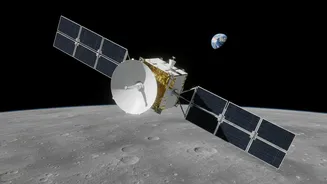
The long-term vision for LunaNet is a network of interconnected nodes, some on the surface like LN-1 and others in lunar orbit. These nodes will communicate with each other and with users, creating a resilient, internet-like system. In the near term, another clever approach involves using existing Earth-based GNSS signals in a new way. Payloads like the NavCube3-mini are highly sensitive receivers designed to catch the faint whispers of GPS and Galileo signals that spill past Earth and reach the Moon. While these signals are much weaker at lunar distances, advanced receivers can use them to calculate a position. This provides an immediate navigation capability for missions while the dedicated LunaNet infrastructure is being built out. This hybrid approach combines leveraging existing assets with building new, dedicated lunar systems.
Paving the Way for Artemis
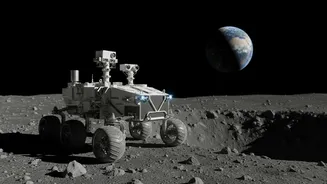
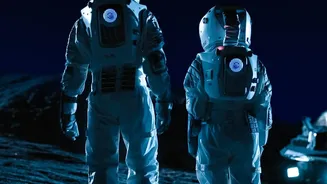
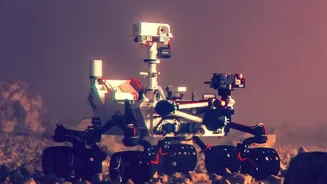
This new navigation infrastructure is not just a technical upgrade; it's a critical enabler for NASA's Artemis program and the future lunar economy. Reliable navigation is essential for landing astronauts safely, especially in the treacherous, shadowy terrain of the lunar South Pole. It will allow rovers to autonomously navigate long distances to conduct science and prospect for resources like water ice. Furthermore, by creating a standardized system through LunaNet, NASA is encouraging international partners and commercial companies to participate. Europe's Moonlight program, for instance, is a parallel effort designed to be interoperable with LunaNet, contributing to a global standard for lunar operations. This collaborative approach reduces the cost and complexity for any single entity and fosters a sustainable ecosystem of exploration and commerce.
Building the Solar System Internet
The ambitions for this technology extend far beyond the Moon. LunaNet is conceived as the first step toward a true "solar system internet." The principles of creating a resilient, scalable, and interoperable network of communication and navigation nodes can be applied to future missions to Mars and beyond. The technology being tested today, from surface beacons to advanced GNSS receivers, is laying the groundwork for a future where spacecraft can navigate autonomously throughout the solar system, communicating with each other seamlessly. This reduces reliance on the constant, direct-to-Earth link that has defined space exploration for its first 70 years, opening the door for more complex, multi-spacecraft missions. A successful demonstration of these navigation payloads is more than just a new gadget; it's a fundamental piece of the permanent, off-world infrastructure humanity is just beginning to build.