
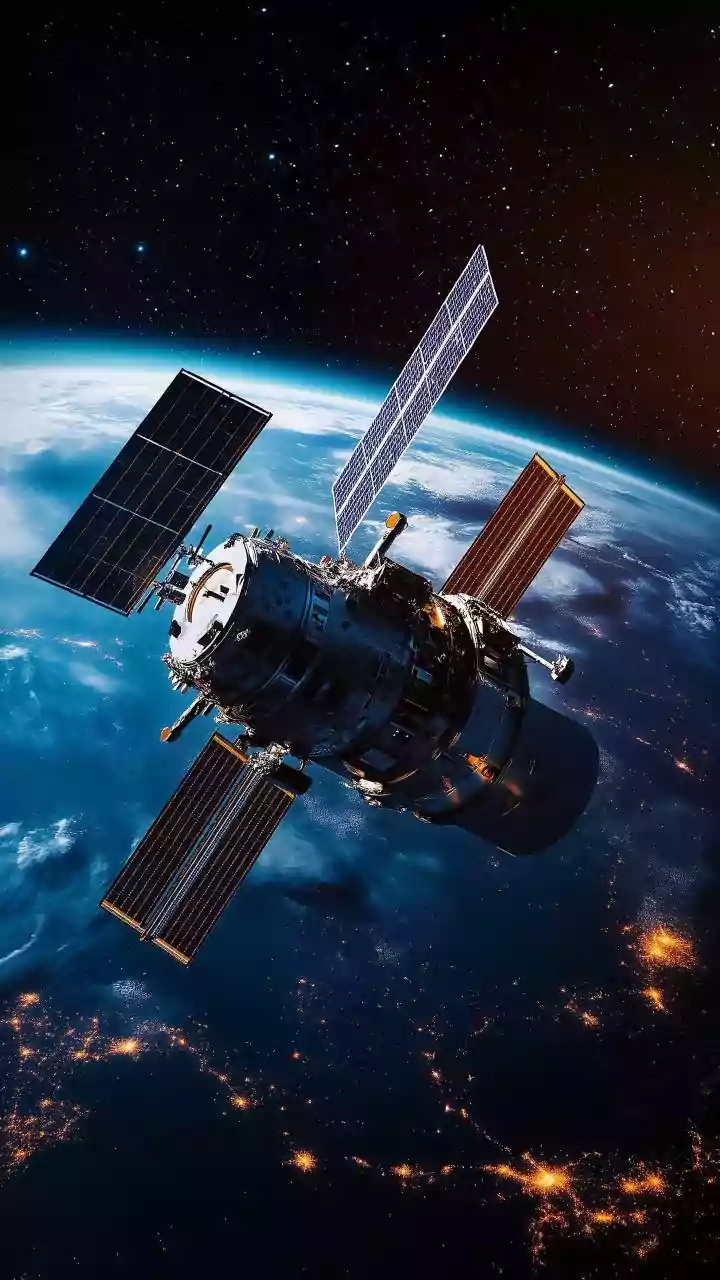
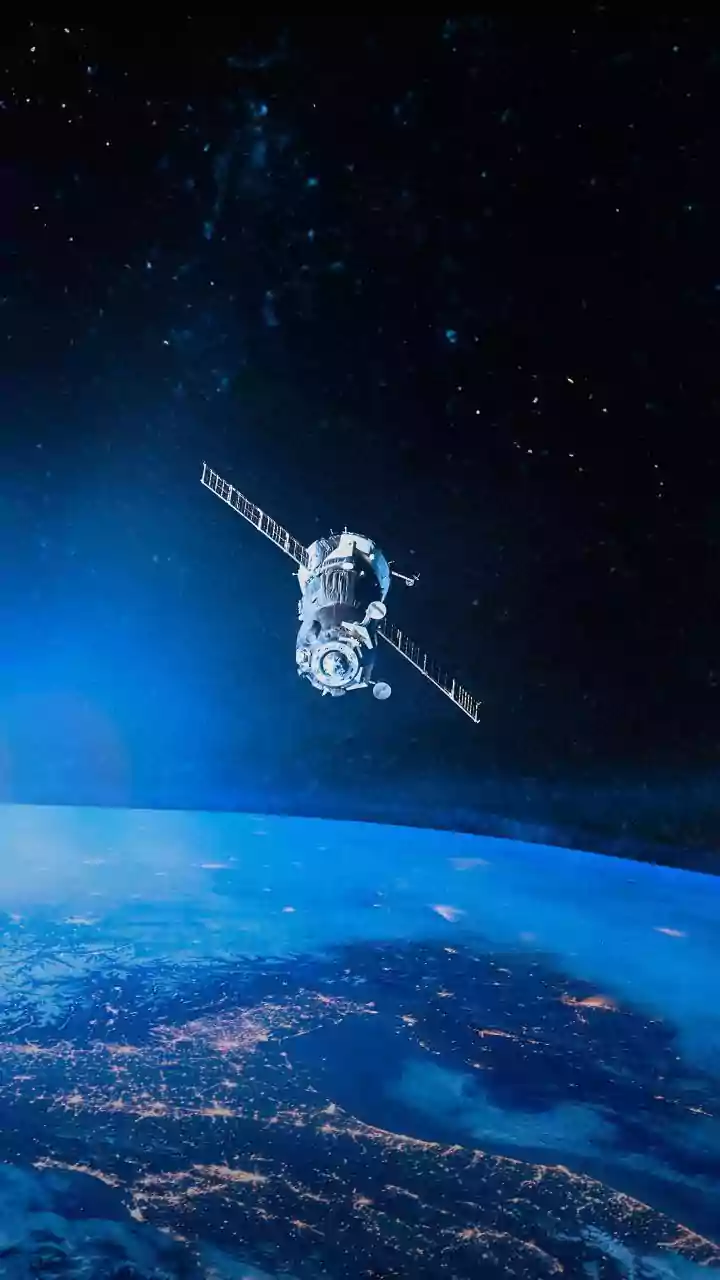




India is aiming for the stars, and this time, it's giving them a brain. A significant November government funding deal is set to fast-track an ambitious project to develop a sovereign, AI-powered satellite network for the country.
A Strategic Funding Boost
In a major push for its
'Make in India' initiative in deep technology, the Indian government has announced significant financial backing for a cutting-edge space project. The Technology Development Board (TDB), under the Department of Science & Technology, has committed ₹64.05 crore to Bengaluru-based startup Astrome Technologies. This funding supports a total project cost of ₹128.11 crore aimed at developing an indigenous constellation of AI-enabled electronic intelligence satellites. The investment, structured as Optionally Convertible Debt, signals a clear strategy to leverage private sector agility for national security and technological self-reliance, moving critical technologies from development to operational readiness.
What is an AI-ELINT Satellite?
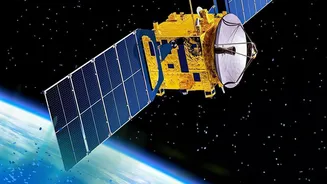
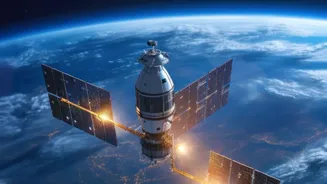
This project is focused on creating a network of 'thinking' satellites. ELINT, or Electronic Intelligence, involves detecting and analysing electronic signals. Traditionally, satellites collect vast amounts of raw data and send it back to Earth for processing, a time-consuming and bandwidth-heavy process. By integrating AI directly into the satellites, these new spacecraft can process data in orbit. They can autonomously analyze signals, identify what's important, and only transmit the crucial intelligence back to ground stations. The project involves a constellation of 50-kilogram class microsatellites that will feature inter-satellite communication links, allowing them to work together as a cohesive network in Low Earth Orbit.
Enhancing National Security and Beyond
The primary goal of this AI-ELINT constellation is to bolster India's national security capabilities. A sovereign space-based intelligence system provides the ability to conduct persistent surveillance over large geographical areas, which is critical for border monitoring and strategic awareness. However, the applications extend far beyond defense. Onboard AI processing can revolutionize disaster management by quickly identifying affected areas, support precision agriculture by analysing crop health, and assist in urban planning. This dual-use capability makes the technology a national asset with wide-ranging economic and social benefits, reducing dependence on foreign technology and data.
Fueling a Private Space Ecosystem
This funding is part of a broader government strategy to energize India's private space sector. Reforms in recent years, such as the Indian Space Policy 2023 and the establishment of IN-SPACe as a single-window agency, have been designed to attract private investment and innovation. The number of space startups in India has grown from just a handful to over 400, driven by policies that open up the sector to non-government entities. By funding startups like Astrome, the government is not just buying technology; it's cultivating a vibrant ecosystem where private companies can develop and commercialize advanced space solutions, positioning India as a globally competitive player in the $40 billion space market.
India's Place in the New Space Race
The development of AI-powered satellites places India in an elite group of nations, including the US and China, who are pioneering in-orbit computing and autonomous space systems. While ISRO has a long history of leveraging AI in missions like Chandrayaan-3 for navigation and hazard detection, this project represents a concerted push into next-generation, AI-native satellite networks. These 'intelligent' constellations are the future of space technology, enabling faster, more efficient, and more resilient space operations. This initiative is not just about launching another satellite; it's a strategic move to ensure India has sovereign capabilities in the technologies that will define the 21st century's geopolitical and economic landscape.