



A Different Time: Punjab Before Paddy Dominance
It’s hard to imagine now, but before the Green Revolution of the 1960s, Punjab's fields were a mosaic of different crops. In 1960-61, wheat and rice occupied less than 40% of the cropped area. The rest was a mix of pulses, maize, oilseeds, sugarcane,
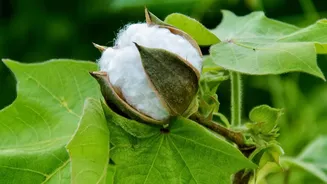
and cotton. In fact, until the 1990s, cotton was the dominant monsoon crop in the state's southwestern region. For decades, diversification wasn't about escaping a paddy-wheat cycle; it was the norm. Cotton, in particular, was a key cash crop, with Punjab producing a significant share of India's total output since the 1920s. This diversified agricultural landscape was less taxing on the region's natural resources, particularly its groundwater.
The Green Revolution's Powerful Promise
The Green Revolution began as a mission to make India self-sufficient in food grains. Punjab was chosen as the epicentre for this transformation due to its progressive farming community and infrastructure. The state was provided with a package of high-yielding variety (HYV) seeds for wheat and, later, rice, along with chemical fertilisers and pesticides. The results were dramatic. Rice cultivation, once a minor crop grown on just 2.27 lakh hectares in the early 1960s, exploded. The introduction of HYVs turned paddy into a highly productive and profitable venture, laying the groundwork for its eventual takeover. While it secured India's food supply, it also sowed the seeds of a new monoculture.
The Irresistible Lure of Rice
The shift towards paddy wasn't just about better seeds; it was supercharged by government policy. Two key factors created an almost irresistible incentive for farmers. First, the government offered a guaranteed Minimum Support Price (MSP) for paddy and wheat, ensuring 100% procurement. This removed all market and price risks, promising stable economic returns. Second, beginning in 1997, Punjab introduced free electricity for agricultural use. This policy made the enormous water requirement for paddy cultivation economically viable, as farmers could pump unlimited groundwater from tubewells at no cost. For a farmer, the choice became simple: grow a risky crop like cotton, or grow paddy for an assured income with free water. Paddy cultivation became the path of least resistance and greatest financial security.
Why Cotton Fell From Favour
As paddy's star rose, cotton's began to fade. Farmers in Punjab's traditional cotton belt faced mounting challenges. Persistent pest attacks, particularly from whitefly and bollworm, devastated crops and drove up pesticide costs. This contrasted sharply with the relative stability of paddy. The high risks associated with cotton, from unpredictable weather to price fluctuations in private markets, made it a gamble many farmers were no longer willing to take. While paddy offered a government-backed safety net, cotton growers were largely exposed to market volatility. Facing repeated losses and rising costs, many abandoned cotton, and the land was quickly converted for paddy cultivation, facilitated by the easy access to groundwater. The area under cotton has seen a dramatic decline, reaching an all-time low in recent years.
The Ecological Price of Dependence
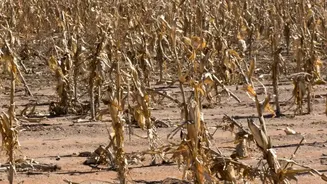
The dominance of the paddy-wheat cycle has come at a severe environmental cost. Paddy is an incredibly water-intensive crop, requiring around 3,000 to 5,000 litres of water to produce just one kilogram of rice. With over 87% of the Kharif crop area now under paddy, the strain on Punjab's groundwater has been catastrophic. Today, Punjab is the country's highest extractor of groundwater, with 119 out of 138 blocks designated as 'over-exploited'. The water table is dropping by over a meter each year in some parts of central Punjab. Experts warn that at the current rate of extraction, the state could exhaust its usable groundwater within two decades. This dependence has also fueled the annual crisis of stubble burning, as farmers rush to clear paddy residue to plant wheat, blanketing North India in toxic smog.
Trapped in a Vicious Cycle
The policies that once brought prosperity have now trapped Punjab's farmers in a difficult cycle. Many are aware of the long-term unsustainability but find it economically impossible to switch from paddy. Alternative crops like maize or pulses don't offer the same yield or assured income, even with an MSP. An income from paddy per acre is significantly higher than what can be earned from alternate crops. Decades of warnings and expert reports, starting with the Johl Committee in 1986, have called for diversification away from paddy, but the economic incentives remain too powerfully aligned against change. The result is a deep-seated dependence, where the short-term livelihood of farmers is pitted against the long-term ecological health of the entire state.