




The Astronauts' Only Shield
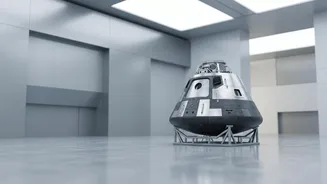
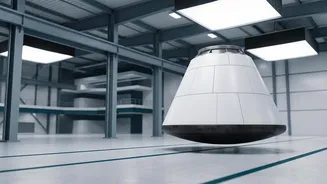
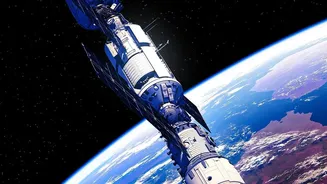
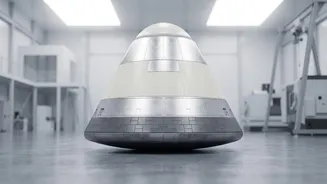
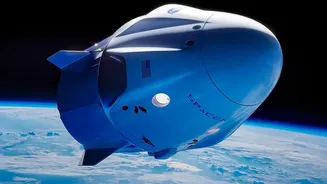
The Crew Module is the heart of the Gaganyaan mission. It is the only pressurised and protected section of the spacecraft where the astronauts will live and work for their three-day mission in a 400 km orbit. This capsule is their sole shield against
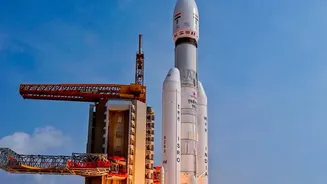
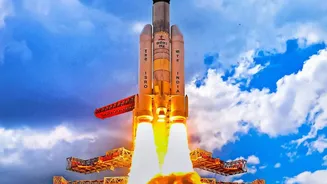
the vacuum of space, extreme temperatures, and the violent forces of launch and re-entry. Ensuring its structural and systemic integrity is not just a priority; it is the absolute foundation of crew safety. While the powerful LVM3 rocket gets the glory, it is the exhaustive ground testing of this module that truly determines the mission's success. Recently, the Indian Space Research Organisation (ISRO) announced the successful completion of a crucial trio of qualification tests, each designed to validate a specific, high-stakes phase of the module's journey.
Test One: Surviving the Splashdown
The first major test focused on what happens after the mission is over: the splashdown. A key safety requirement is that the Crew Module must orient itself upright after landing in the sea to ensure the crew's stability and safe recovery. To achieve this, ISRO has developed a Crew Module Up-righting System (CMUS). This test involved inflating the system's floats using stored cold gas from high-pressure bottles. Engineers successfully demonstrated that the inflation system worked perfectly, meeting the required performance and timing standards across its full operating range. This test confirms that even after a long journey through space, the crew will be in a stable position awaiting recovery.
Test Two: Ensuring a Clean Break
The second test validated the critical separation of the umbilical connections between the Crew Module and the Service Module. The Service Module provides power and propulsion during the orbital phase, but it must be cleanly jettisoned before the Crew Module begins its re-entry into Earth's atmosphere. The connection system, known as CS-CDS, has two parts. The umbilical on the Service Module side disconnects first, followed by the one on the Crew Module side (CSU-2) just before re-entry. The test focused on this second separation, demonstrating a clean break without causing any structural damage to the Crew Module panel it is attached to. A failure here could be catastrophic, proving how vital this validation of structural stability is.
Test Three: Withstanding Separation Forces
The third test focused on the structural integrity of the Crew Module during the separation of its apex cover. This cover protects the precious parachute systems during the ascent and orbital phases of the mission. Just before the parachutes are deployed to slow the module for a safe landing, this apex cover is jettisoned using pyrotechnic thrusters. This event imparts significant force onto the main structure of the Crew Module. To qualify it, ISRO engineers applied loads approximately 1.75 times higher than what is expected during an actual flight. The test successfully confirmed that the module's structure can withstand these forces with a comfortable safety margin, ensuring the parachute deployment sequence can begin without issue.
The Path to Launch
These three successful qualification tests represent a major milestone, clearing critical hurdles related to the module's recovery and structural soundness. They are part of a much larger, comprehensive testing campaign that includes everything from parachute air-drop tests to validating the life support systems. Each successful test builds confidence and provides invaluable data that engineers use to refine every aspect of the mission. While ISRO has been methodically checking every box, from propulsion to parachute systems, this recent focus on the Crew Module's physical resilience underscores a safety-first approach. This meticulous process ensures that when India's astronauts finally launch, they will be flying in a vehicle proven to be as safe and robust as possible.