


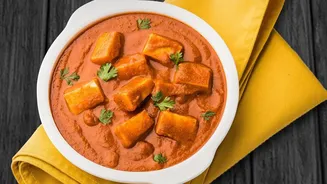
What Real Paneer Contains
Authentic, traditional paneer has a refreshingly simple recipe. Its ingredient list should be short and straightforward, containing only two primary components: milk and an acidifying agent. The milk, whether from a cow or buffalo, provides the protein
and fat that give paneer its characteristic richness. The acid, such as lemon juice, vinegar, or citric acid, is used to curdle the milk, separating the solids (curds) from the liquid (whey). That’s it. A high-quality product needs nothing more. When you see this simple list, you can be confident you are holding real, unadulterated paneer.
Red Flag: Vegetable Oils and Fats
One of the most common red flags on a paneer label is the presence of vegetable oils, such as palm oil or other hydrogenated fats. Manufacturers use these cheaper fats to replace some or all of the natural milk fat, which is a significant cost-cutting measure. This results in a product often referred to as 'analogue paneer'. While it may look like the real thing, the addition of vegetable oil drastically changes its properties. The texture often becomes rubbery or greasy, and it lacks the creamy, milky flavour of true paneer. Nutritionally, you are consuming processed fats instead of the natural, high-quality protein and calcium you expect from a dairy product.
Red Flag: Starch and Milk Powder
Another set of ingredients to watch for are starches (like corn or potato starch) and skimmed milk powder. Starch is added to increase the product's weight and create a firm texture, but it’s essentially a filler that offers no nutritional benefit. Its presence can be a sign that the manufacturer is stretching a smaller amount of real milk solids. Similarly, while skimmed milk powder is a dairy product, its use can indicate that fresh milk wasn’t the primary ingredient, which can compromise the final taste and quality. Paneer made with these fillers is often bland and doesn't crumble properly; instead of being soft, it might feel dense or spongy. The FSSAI (Food Safety and Standards Authority of India) does not permit the use of starch in products sold as paneer.
What Is 'Analogue Paneer'?
The term 'analogue paneer' describes products made to look and feel like paneer but in which milk fat and protein have been partially or wholly replaced by non-dairy ingredients like vegetable oils and starches. While these products are not necessarily illegal, the issue arises when they are sold as 'paneer' without clear labelling, misleading consumers. In response to this growing concern, FSSAI has proposed new regulations to restrict the use of the name 'paneer' for these non-dairy analogues, ensuring customers know exactly what they are buying. Several states have already banned the sale of analogue paneer being passed off as the real thing.
Beyond the Label: Simple Quality Checks
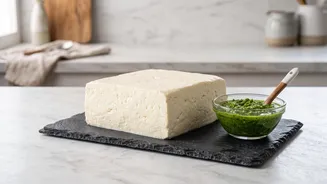
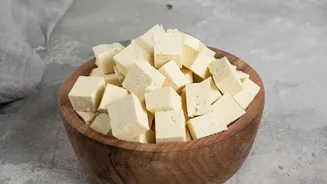
Sometimes the label tells only part of the story. You can also rely on your senses to judge quality. Real, fresh paneer should have a clean, off-white colour and a mild, milky aroma. If it smells sour or chemical-like, it may be spoiled or adulterated. The texture should be soft and moist, yet firm enough to hold its shape when cut. It should crumble when pressed, not feel rubbery, overly smooth, or spongy. At home, you can perform a simple heat test: pure paneer will brown slightly and hold its form in a dry pan, whereas paneer with additives might release excess water, become oily, or melt unevenly.