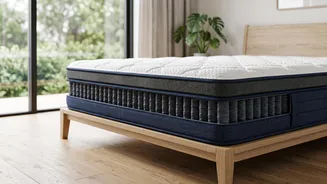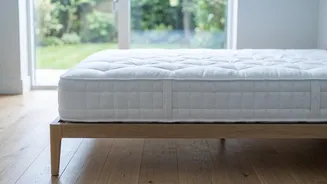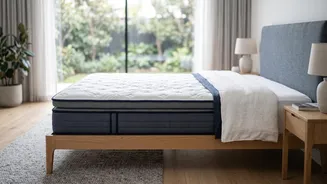




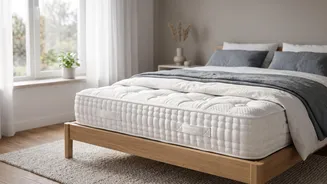

When shopping for a spring mattress, it’s easy to get fixated on one number: coil count. But a high count doesn't always mean high quality. The real story of a supportive, durable mattress lies in a complete system of interacting parts.
The Myth of More Coils
For years, mattress
marketing has pushed the idea that more coils equal a better bed. While a mattress needs a sufficient number of springs to provide adequate support, an extremely high count can sometimes be misleading. A bed with 900 well-made coils will almost always outperform one with 1,500 flimsy ones. Manufacturers can fit more coils into a mattress by using thinner wire or smaller springs, which may not offer better support or durability. Instead of focusing only on the total number, it's more important to understand the quality of the entire spring system.
Coil Gauge: The Thickness That Matters
A more reliable indicator of firmness and durability is the coil's gauge, which refers to the thickness of the wire. In a counterintuitive system, a lower gauge number means a thicker, stronger, and firmer wire, while a higher gauge number indicates a thinner, more flexible wire. For example, a 12-gauge coil is firm and built for longevity, whereas a 15-gauge coil is softer and will flex more easily under weight. A mattress with thicker, lower-gauge coils will generally feel firmer and resist sagging for longer, making it a key factor for durability.
Types of Coils: Not All Springs Are Equal
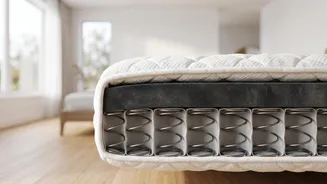
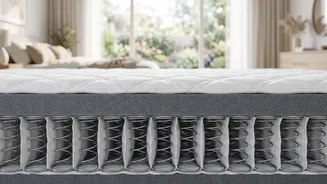
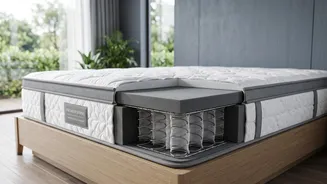
The design of the springs also plays a huge role. There are several main types, each offering a different feel. Bonnell coils are the traditional hourglass-shaped springs that are interconnected, providing a firm and bouncy feel but often transferring motion across the bed. Continuous wire systems are similar, made from a single, long piece of wire. Pocketed coils, considered a more advanced option, are individually wrapped in fabric pockets. This allows each spring to move independently, providing better contouring to your body's shape, reducing motion transfer from a partner, and offering more targeted support.
The Comfort Layers Above
What's on top of the springs is just as important as the springs themselves. These are the comfort layers, and they determine the initial feel and pressure-relieving qualities of the mattress. These layers can be made from a variety of materials, including memory foam, polyurethane foam (polyfoam), latex, and natural fibers like wool or cotton. Memory foam is known for its body-hugging feel and pressure relief, while latex offers a more buoyant and responsive bounce. The quality and thickness of these layers directly impact comfort, temperature regulation, and how the mattress cushions your shoulders and hips.
Edge Support: Using Your Whole Mattress
Often overlooked, edge support is crucial for mattress quality and longevity. This refers to the reinforcement around the perimeter of the mattress, which prevents the sides from sagging when you sit on them or sleep near the edge. Good edge support is typically achieved with a border of high-density foam or a row of firmer, lower-gauge coils. It not only provides a stable surface for getting in and out of bed but also maximizes the usable sleeping area, so you can spread out without feeling like you're about to roll off. A mattress with weak edges will wear out faster and effectively shrink your sleeping space over time.