

Not the Bird, But a Telescope
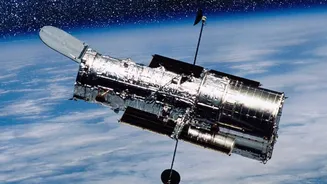
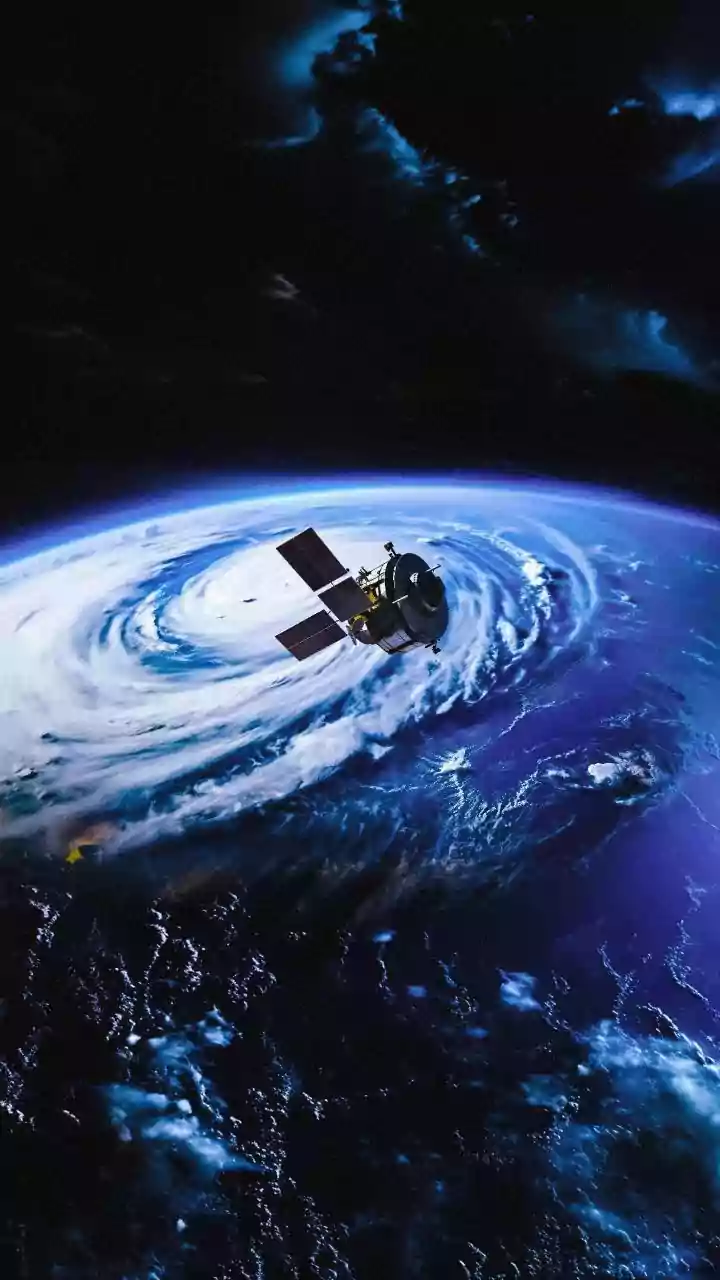
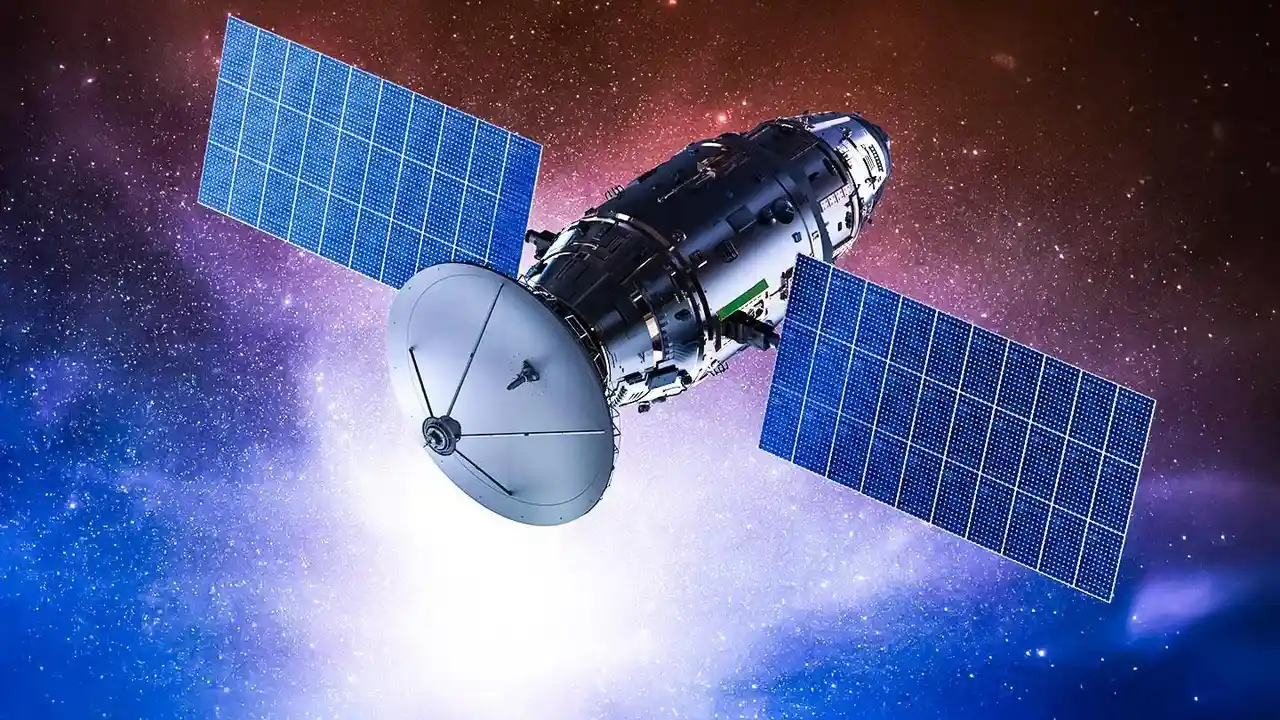
PUFFINS is an acronym that stands for 'Polarimetry in the Ultraviolet to Find Features in INterStellar dust'. It's a small satellite, or SmallSat, equipped with a 10-inch telescope designed for a very specific task: studying the fine dust that drifts
in the vast, seemingly empty space between stars. This interstellar dust, despite making up only about one percent of the Milky Way's visible mass, plays a huge role in the life cycle of galaxies. It's a key ingredient in the cosmic recipe for stars and planets, but its smallest particles are notoriously difficult to observe. The mission is led by Dr. Ramya Anche, a Bengaluru-born astronomer at the University of Arizona.
Seeing the Invisible
So, how will PUFFINS study something so elusive? The mission will revive a technique called ultraviolet (UV) spectropolarimetry from space, which hasn't been a focus for nearly three decades. The telescope will observe the UV light from about 70 different bright stars. As this starlight travels through clouds of interstellar dust on its way to us, the dust particles absorb and scatter the light, leaving a faint but readable signature. Specifically, PUFFINS will measure the light's polarization—the orientation of the light waves. This measurement provides clues about the dust's size, shape, composition, and how it aligns with the galaxy's magnetic fields.
Cosmic Dust Bunnies
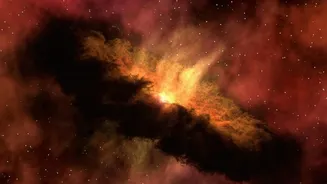
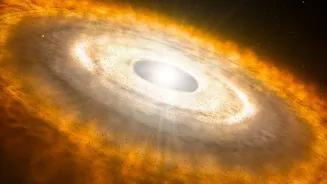
The dust particles PUFFINS will focus on are incredibly tiny, some comparable in size to a common virus. Though minuscule, they have a massive impact. These grains block and reradiate up to half of the UV light from hot stars, which influences temperature regulation and chemical reactions across the galaxy. They are the very seeds from which celestial bodies grow. Stars form within dense clouds of interstellar gas and dust, and the leftover material in the disk around a new star clumps together to form planets. Understanding the properties of this primordial dust is therefore fundamental to understanding how planetary systems, including our own, come into being.
Filling a Decades-Old Gap
Ultraviolet polarimetry data is scarce; most of what scientists have to work with comes from a pair of space shuttle missions in the early 1990s that observed only about 30 stars. This small sample size left many questions unanswered. For instance, in some directions, the UV polarization was much stronger than expected, while a mysterious absorption feature known as the '2175 Å bump' was sometimes polarized and sometimes not. With plans to at least triple the number of observed stars, PUFFINS aims to create a much more detailed map. This will help scientists build and test better models of how these small grains behave and interact with their environment.
What Comes Next
Scheduled for launch around 2030, the $20 million PUFFINS mission is part of NASA's Astrophysics Pioneers program, which focuses on small-scale, high-impact science projects. The data it collects won't just solve old puzzles; it will also serve as a crucial stepping stone for future, even more ambitious observatories. By refining the techniques of UV polarimetry, PUFFINS will help pave the way for larger proposed missions like the Habitable Worlds Observatory, which will search for signs of life on distant exoplanets. The mission demonstrates how even a small, targeted telescope can provide foundational knowledge for some of astronomy's biggest questions.