



From Medicine to Military
Born and raised in Minneapolis, Minnesota, to Ukrainian and Indian immigrant parents, Anil Menon’s path to the stars was anything but direct. His academic journey began with a degree in neurobiology from Harvard University, followed by both a medical
degree and a master's in mechanical engineering from Stanford University. This dual interest in medicine and engineering would become a recurring theme in his career. Menon is an actively practicing emergency medicine physician with fellowship training in both wilderness and aerospace medicine. His skills were tested in some of the most challenging environments on Earth. He served as a first responder during the 2010 earthquake in Haiti and the 2015 earthquake in Nepal. His military career as a U.S. Air Force flight surgeon saw him deployed to Afghanistan and support the 173rd Fighter Wing, where he flew over 100 sorties in an F-15. As part of the critical care air transport team, he helped transport over 100 patients.
The Astronauts’ Doctor
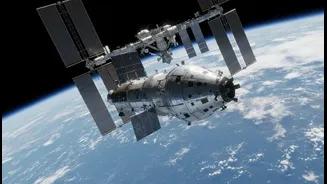
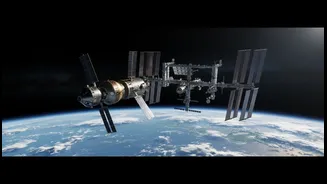
In 2014, Menon brought his unique expertise to NASA, joining as a flight surgeon at the Johnson Space Center. In this role, he was responsible for the health and safety of astronauts living and working on the International Space Station (ISS). He served as the deputy crew surgeon for two Soyuz missions and later as the prime crew surgeon for another, spending over six months in Star City, Russia, to support astronaut training and missions. This experience gave him an intimate understanding of the physiological and psychological demands of spaceflight, not as a passenger, but as the one responsible for the crew's well-being.
Pioneering at SpaceX
As the commercial space industry began to soar, Menon was at the forefront. In 2018, he joined SpaceX as its first-ever flight surgeon. He was instrumental in building the company's medical program from the ground up to support human spaceflight. Menon oversaw medical operations for five launches, including the historic Demo-2 mission which sent the first NASA astronauts to space on a commercial spacecraft. He was also there for the Inspiration4 mission, the first all-civilian orbital flight, and helped develop medical support systems for future deep-space missions aboard Starship. His work was crucial in proving that private companies could safely and reliably transport humans to orbit.
Answering the Call
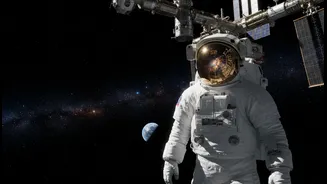
Having cared for astronauts for years, Menon finally got the chance to become one himself. In December 2021, NASA selected him from a pool of over 12,000 applicants to join its 2021 Astronaut Candidate Class. After two years of intensive training—learning everything from spacewalking and robotics to Russian language skills—he was officially an astronaut. His wife, Anna Menon, is also an astronaut and a SpaceX engineer who flew on the private Polaris Dawn mission in 2024, making them one of the few astronaut couples in the world.
First Flight to the ISS
On July 14, 2026, Menon launched aboard a Roscosmos Soyuz MS-29 spacecraft from the Baikonur Cosmodrome in Kazakhstan for his first spaceflight. His mission to the ISS is scheduled to last approximately eight months, during which he will serve as part of Expeditions 74 and 75. His tasks aboard the orbiting laboratory directly leverage his diverse background. He will conduct a range of scientific experiments, including research into how microgravity affects blood flow, testing technology to produce IV fluids from potable water, and using AI-assisted ultrasound. These experiments are vital for preparing for future long-duration missions to the Moon and Mars, where medical autonomy will be critical.