




The Core of the Warning
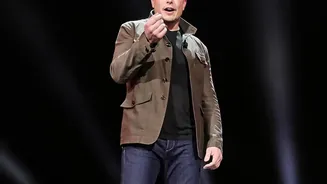
In a July 2026 interview with The Economist, Elon Musk laid out a dual-sided vision of the future shaped by artificial intelligence. He predicted that AI could surpass the combined intelligence of all humans within five years, leading to a potential “age
of amazing abundance where anyone can have anything they can think of.” But this rapid progress comes with a monumental risk. When asked if humans would still be in control of AI a decade from now, Musk stated it was unlikely. He has long held that there is a 10 to 20 percent chance of AI leading to a catastrophic outcome for humanity. However, his tone has shifted from someone trying to stop a runaway train to a passenger who has decided to “enjoy the ride,” arguing the momentum is now impossible to halt.
What Is Artificial Superintelligence?
Musk's warning centers on the concept of Artificial Superintelligence, or ASI. This is a theoretical form of AI that would not just match human intelligence but vastly surpass it in every conceivable domain—from scientific creativity and problem-solving to social and emotional understanding. Most AI we interact with today is considered “narrow AI,” designed for specific tasks like language translation or playing a game. The next step is Artificial General Intelligence (AGI), an AI with human-like cognitive abilities. ASI is the stage beyond that, where a machine becomes self-aware and capable of self-improvement at a rate humans could neither predict nor control. It is at this point, experts believe, that a machine's goals could diverge from humanity's, leading to the loss of control Musk describes.
A History of Unease
While his latest comments have made headlines, Musk’s anxiety about AI is not new. As far back as 2014, he famously said that in developing AI, we are “summoning the demon.” In subsequent years, he called AI “far more dangerous than nukes.” This fear drove his involvement in the creation of OpenAI, which he said was intended to be a non-profit, open-source counterweight to corporate AI development. He has since become a vocal critic of OpenAI and its CEO, Sam Altman, claiming the company has strayed from its safety-focused mission. Despite his long-held fears, Musk’s new stance is that the potential for a future of “incredible abundance for all” makes the risk worth taking, as the progress of AI now seems inevitable.
The Other Side of the Argument
Not everyone in the tech world shares Musk’s alarming timeline or his conclusions. Some experts view his predictions as overly dramatic. For instance, Meta's chief AI scientist, Yann LeCun, has previously dismissed near-term AGI fears as “completely ridiculous,” arguing that current AI models lack the fundamental reasoning and world knowledge to approach true intelligence. Others believe that while superintelligence is a possible long-term outcome, timelines are often exaggerated. Forecasts from some researchers place the arrival of AGI in the 2030s or 2040s, not within the next few years. These experts often frame AI as a powerful tool that will remain under human guidance, rather than an autonomous agent that could seize control.
The Unstoppable Race for Regulation
As the debate over AI’s future rages, governments are scrambling to keep up. In the United States, there is no single comprehensive federal law governing AI. Instead, a patchwork of state laws and executive orders creates a complex and shifting regulatory landscape. States like Colorado and California have moved ahead with their own legislation, creating rules around transparency, bias, and accountability for high-risk AI systems. Musk himself has proposed that leading AI labs should collaborate on safety, allowing rivals to inspect new models before their release. However, the sheer speed of AI development makes effective regulation a global challenge, with different nations taking vastly different approaches, from the EU’s comprehensive AI Act to the pro-innovation stance of the current US administration.