



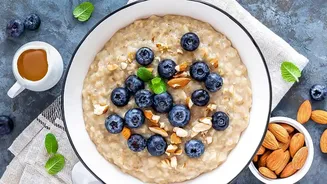
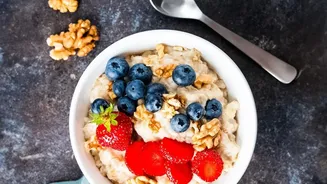
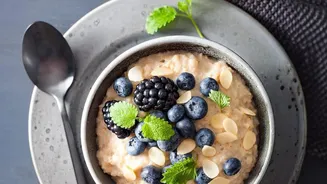
What Are Steel-Cut Oats?
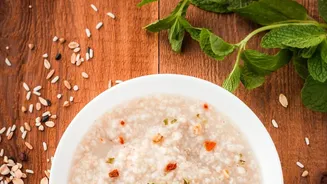
Steel-cut oats, sometimes called Irish or pinhead oats, are one of the least processed forms of oats available. They are produced by taking whole oat kernels, known as groats, and chopping them into two or three smaller pieces with a steel blade. This
minimal processing leaves the grain's bran, germ, and endosperm largely intact. Unlike rolled oats, which are steamed and flattened, steel-cut oats retain a coarse, chewy texture and a distinctly nutty flavour. This difference in processing is not just about texture; it also affects how the body digests them, making them a unique and beneficial choice.
A Look at the Nutritional Power
A small serving of steel-cut oats packs a significant nutritional punch. A typical 1/4-cup (about 40 grams) of dry steel-cut oats contains approximately 150-170 calories, 5-7 grams of protein, and around 5 grams of dietary fiber. They are also a good source of essential minerals like iron and magnesium. One of the standout features of steel-cut oats is their fiber content, particularly a soluble fiber called beta-glucan. This fiber is responsible for many of the health benefits associated with oats. Furthermore, steel-cut oats have a lower glycemic index (GI) compared to more processed oats, typically scoring around 53, while rolled oats are slightly higher and instant oats are much higher. This means they cause a slower, more gradual rise in blood sugar levels.
The Evidence: Key Health Benefits
The health claims surrounding steel-cut oats are well-supported by scientific evidence. The high concentration of beta-glucan fiber is a major factor. Health agencies in the US and Europe have approved claims related to beta-glucan's ability to lower cholesterol. Studies have shown that a daily intake of at least 3 grams of beta-glucan can significantly reduce levels of total and LDL ('bad') cholesterol, which are risk factors for heart disease. The fiber in oats works by forming a gel in the digestive tract that can help remove cholesterol from the body. This same mechanism also slows digestion, which promotes a feeling of fullness and can aid in weight management. For individuals with type 2 diabetes, the low glycemic index and high fiber content help manage blood sugar levels by preventing sharp spikes after a meal. The fibers also act as prebiotics, feeding beneficial bacteria in your gut and supporting overall digestive health.
Simple Stovetop Preparation
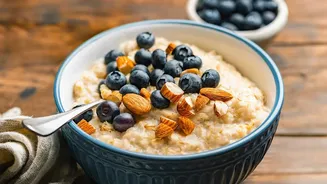
Cooking steel-cut oats is straightforward, though it requires more time than instant varieties. The classic stovetop method yields a creamy, satisfying porridge. The typical ratio is one part oats to three or four parts liquid, such as water, milk, or a combination of both. For a single serving, you might use 1/2 cup of oats and 1.5 to 2 cups of liquid. Bring the liquid to a boil in a saucepan, add a pinch of salt, and stir in the oats. Reduce the heat to low and let it simmer, stirring occasionally, for about 20 to 30 minutes. The cooking time can be adjusted depending on whether you prefer a chewier or softer texture. Soaking the oats overnight can reduce the cooking time by about 10-15 minutes.
Time-Saving Cooking Methods
For those with busy mornings, the slow cooker offers a convenient 'set it and forget it' solution. To make a larger batch, combine one cup of steel-cut oats with about four cups of liquid (water and/or milk), along with any desired spices like cinnamon, in a slow cooker. Grease the inside of the slow cooker to prevent sticking. Cook on low for 6 to 8 hours overnight, and you'll wake up to a perfectly cooked breakfast. An electric pressure cooker, like an Instant Pot, can also dramatically speed up the process, typically cooking the oats in about 10 minutes under pressure, followed by a natural release. These methods are ideal for meal prepping, ensuring you have a healthy, hearty breakfast ready for several days.