


The Cosmic Misfits
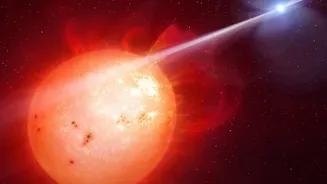
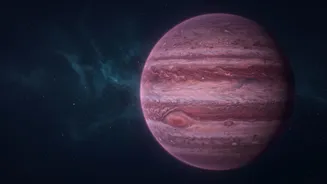
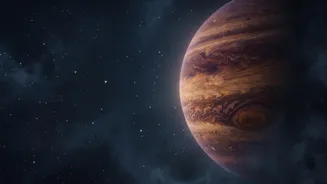
Imagine a star. It forms from a giant, collapsing cloud of gas and dust, growing so massive and dense that its core ignites with the fire of nuclear fusion, burning for billions of years. Now, imagine a planet like Jupiter, a gas giant but still very
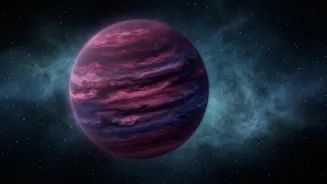
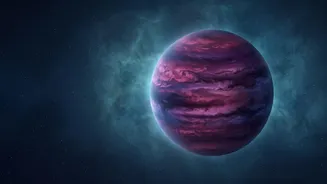
much a planet. Brown dwarfs exist in the mysterious gap between these two. They form like stars but never quite accumulate enough mass—typically between 13 and 80 times that of Jupiter—to kickstart the sustained hydrogen fusion that defines a true star. They are more massive than planets but lack a star's brilliant light, instead glowing dimly with leftover heat from their formation. This unique status makes them fascinating objects of study, offering a window into both star formation and the complex atmospheres of giant exoplanets.
A Puzzling Transformation
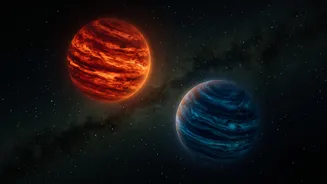
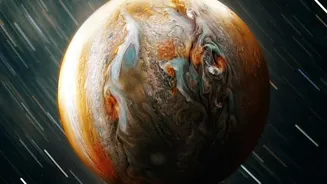
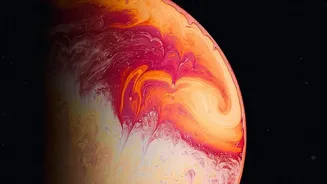
Like stars, brown dwarfs cool down as they age. As they do, they pass through different stages, or spectral types, classified by letters. A key phase in their life is the 'L-T transition', a period where their atmospheres undergo a dramatic transformation. Younger, hotter 'L-type' brown dwarfs are shrouded in thick, exotic clouds made of silicates and iron—essentially hot clouds of sand and molten metal. As they cool further, they are expected to transition into 'T-type' dwarfs, where these clouds dissipate or sink, and the atmosphere becomes clear, dominated by methane gas. For years, scientific models have tried to predict exactly how and when this cloudy-to-clear transition happens. The process appeared to be surprisingly rapid, but the underlying physics remained a subject of intense debate.
SPHEREx Reveals an Unruly Reality
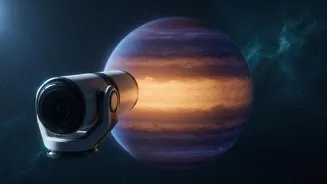
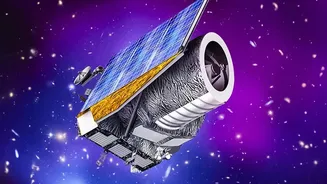
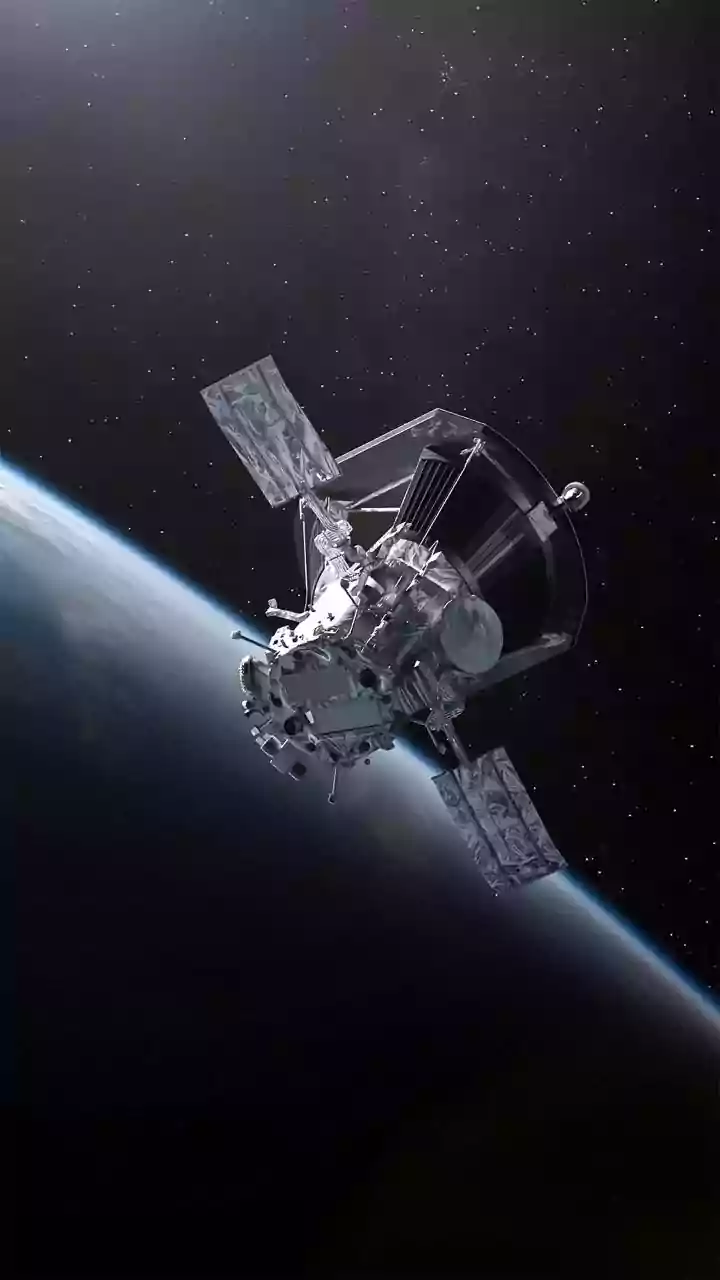
Enter NASA's SPHEREx telescope, a new eye on the sky launched in 2025 designed to map the cosmos in infrared light. Recent findings from the mission, published in The Astrophysical Journal, have provided the most detailed look yet at these atmospheric changes. Scientists used SPHEREx to analyze dozens of nearby brown dwarfs across their full temperature range. The results were not what the models predicted. The data showed that the transition from cloudy to clear is far from uniform. Even among brown dwarfs of the same temperature, their atmospheric chemistry and cloud cover can look remarkably different. This diversity throws a wrench into the neat and tidy picture of a predictable cooling sequence.
Why Current Models Fall Short
The new data doesn't just add detail; it exposes significant gaps in our fundamental understanding. Zafar Rustamkulov, lead author of the new study, explained that while the 'state-of-the-art models are capturing the general chemical trend, when it comes to these cloudy transitions, the models are struggling to match the data'. In essence, the existing theories are too simple. They fail to account for the sheer variety and individuality of these cosmic objects. 'No two brown dwarfs are alike', Rustamkulov noted. This suggests that other factors, perhaps subtle differences in their composition, rotation, or weather patterns, play a far more significant role than previously thought. The findings are a clear signal to scientists that they need to go back to the drawing board and develop more complex, nuanced models.
A Laboratory for Alien Worlds
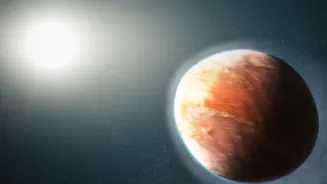
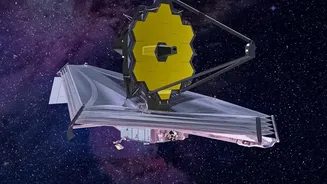
This might seem like a niche problem for astronomers, but it has major implications for one of the most exciting fields in science: the study of exoplanets. Many giant exoplanets are similar in composition and temperature to brown dwarfs. However, they are incredibly difficult to study in detail because the blinding light of their host star washes out the faint light from their atmospheres. Brown dwarfs, often found drifting alone in space, don't have this problem. They serve as a natural, controlled laboratory for understanding the chemistry and weather on gas giants throughout the galaxy. By improving our models of brown dwarf atmospheres, we are sharpening the tools we need to understand the thousands of alien worlds being discovered by telescopes like the James Webb Space Telescope. The more we learn about these 'failed stars', the more we understand about the family of planets in our universe.