

After more than a decade of secrecy, the curtain is finally being pulled back. Rockstar Games is sharing rare insights into the creation of Grand Theft Auto VI, the most anticipated entertainment launch in history. Here’s what we’ve learned.
A Mission to Exceed Expectations
The weight
of expectation for Grand Theft Auto VI is immense. Following a 13-year gap since the last main entry and multiple release date delays, the pressure is on. In a rare public statement just before the game's November 19 launch, Rockstar Games President Sam Houser addressed this directly. He explained that the studio's core belief is that games can be essential to modern culture, and their goal with GTA VI was to create an experience that would not only meet but 'exceed your expectations'. The aim, he stated, was to show what the medium is capable of. This sentiment was echoed by Take-Two Interactive CEO Strauss Zelnick, who justified the long development cycle by stating the team seeks to 'do something that's never been done before'. For a series that has consistently redefined open-world gaming, these are bold statements that set the stage for what the studio hopes is a landmark release.
Building a World, One Obsessive Day at a Time
So, how does a team of nearly 5,000 people across the globe build a world as complex as the state of Leonida? According to Rob Nelson, co-studio head at Rockstar North, it's a meticulous, iterative process. Preliminary work began as far back as 2014. In an interview, Nelson detailed the studio's development schedule, which revolves around eight-week milestones. During each cycle, teams build and rough-in content, then come together to evaluate the progress. Nelson described it as working 'year after year, one obsessive day at a time, course-correcting as we go'. This process is about chasing a specific feeling for the finished game, trusting they will find it eventually. The goal wasn't to create 'GTA 5.5' but to take a massive swing and make something that feels both 'familiar and entirely new'.
The Unprecedented Level of Detail
The word that comes up repeatedly in these behind-the-scenes discussions is 'detail'. Rockstar has achieved a level of granularity that aims to be beyond anything seen before, even surpassing the intricately designed world of Red Dead Redemption 2. This obsession with detail extends to every corner of Vice City and the surrounding state. In a recent hands-off preview, journalists noted absurdly specific details, from the physics of liquid sloshing in a six-pack of beer as a character runs, to the ability to multitask by sipping a drink in one hand while eating with the other. To bring the world to life, Rockstar established an entire writers' room in Los Angeles dedicated solely to writing the dialogue for the thousands of nonplayer characters (NPCs) who populate the world. This was done to ensure every part of the world 'rings true no matter how small it is'.
New Technology for a New Generation
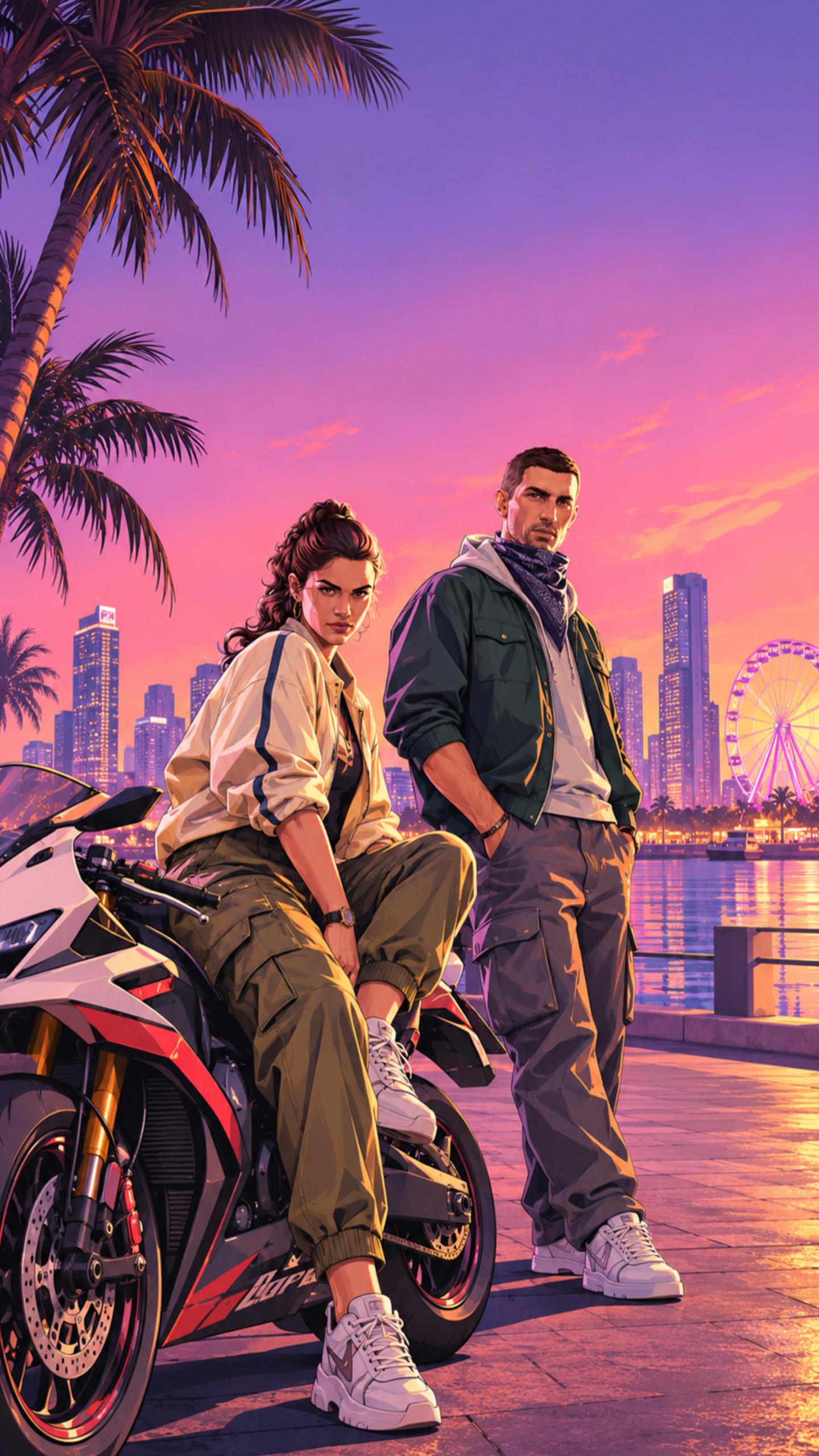
This level of immersion required new tools. According to development notes shared with the press, Rockstar created new technology from the ground up to support its creative vision for NPCs. Mark Tennant, the vice president of animation, explained that new animation techniques were developed to allow for a greater diversity of body types and sizes among the in_game population,, enabling different character models to share key animations. This focus on variety was a core principle,, with the goal of visually leveling the entire cast of characters,, from the protagonists Lucia and Jason down to every last pedestrian. According to Alastair MacGregor,, vice president of audio,, the soundscape is just as detailed,, with music and sound being inherently connected to the game's visual aesthetics,, blaring realistically from car subwoofers and wireless speakers.
From Research Trips to a Living World
The authenticity of Vice City and its 'Florida Man' chaos is rooted in real_world research. Rob Nelson reminisced about the production team's early research trips to Miami. These trips involved everything from late_night visits to nightclubs and hanging out in 'weird bars' to riding along with police,, all to soak in the atmosphere that would define the fictional state of Leonida. This research informs not just the world's look but its feel. Stephen Donkin,, vice president of design,, noted that the most exciting part of the process was exploring the connections between different development threads,, where a minor tweak in one area could have a cascading influence on another,, making the entire world feel deeply interconnected and reactive.