



An Ambitious Rescue Attempt
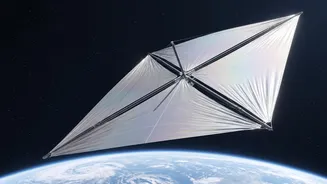
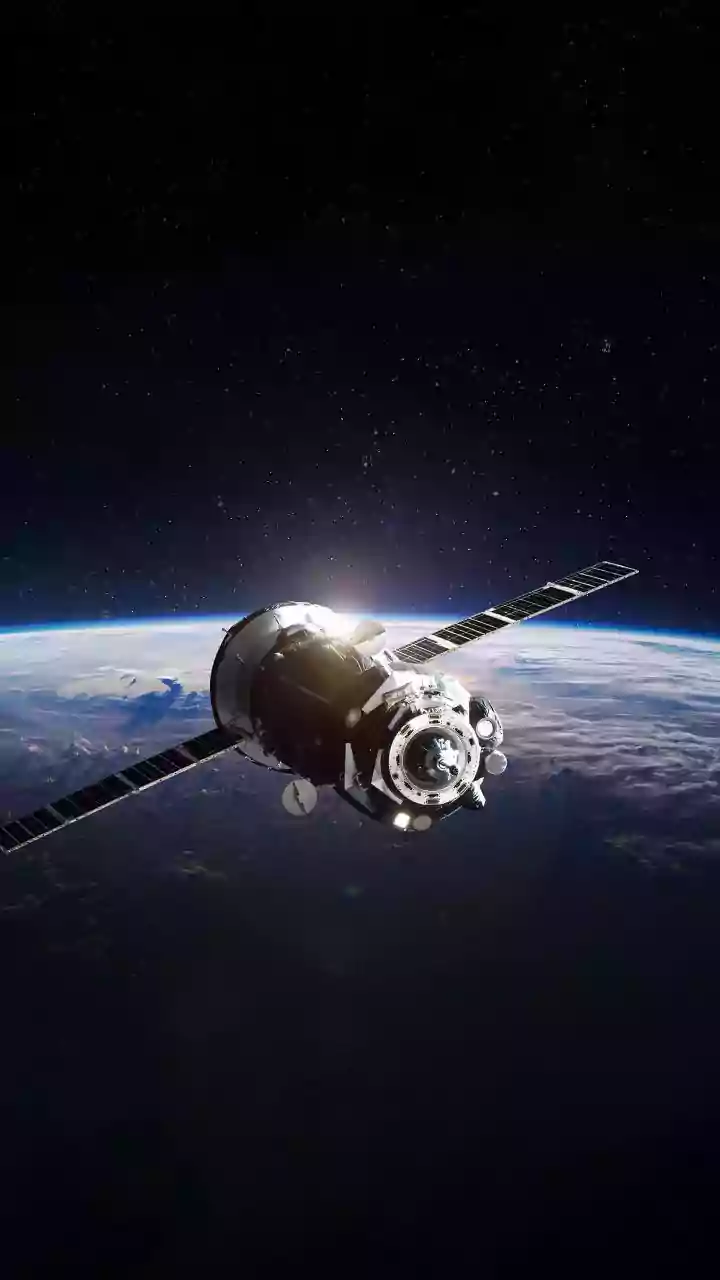
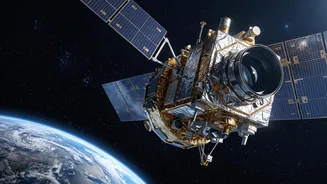
The end for Swift was sealed by the failure of a different spacecraft. In early July, a robotic servicing vehicle named LINK, built by Katalyst Space Technologies, was launched on a high-stakes mission. The plan was for LINK to rendezvous with Swift,
delicately capture it with robotic arms, and use its own thrusters to push the aging observatory into a higher, more stable orbit. This would have added years to Swift's operational life. However, the high-risk, high-reward mission began to unravel a few weeks after launch when the LINK spacecraft entered an uncontrollable spin, compounded by thruster and electronics issues. Despite engineers managing to slow the tumble, persistent control problems made the capture impossible, forcing NASA to abandon the rescue.
An Eye on Cosmic Violence
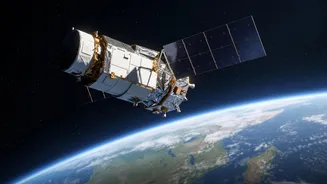
Launched in November 2004, the Swift Observatory was designed for a two-year mission to study gamma-ray bursts (GRBs)—the most powerful explosions in the universe. These events, often linked to the collapse of massive stars into black holes, are incredibly bright but fleeting. Swift’s revolutionary design allowed it to detect a burst and then rapidly pivot its other instruments—an X-ray telescope and an ultraviolet/optical telescope—to study the afterglow in detail within seconds. This rapid-response capability, which gave the observatory its name, transformed GRB science. Instead of just a two-year run, Swift became a workhorse for over 20 years, observing not just GRBs but also supernovae, black holes, and comets.
A Legacy of Discovery
Swift's contributions to astronomy are immense. It provided the first accurate locations for short-duration GRBs, strengthening the theory that they are caused by merging neutron stars. On multiple occasions, it spotted the most distant cosmic explosion ever seen at the time, with one burst, GRB 090429B, occurring when the universe was just 520 million years old. In 2022, it observed the 'BOAT' (Brightest of All Time), the most luminous gamma-ray burst ever recorded. Beyond GRBs, Swift became a go-to observatory for responding to transient celestial events of all kinds, observing around 70 different targets on an average day.
The Inevitable Fall
Like all satellites in low-Earth orbit, Swift constantly battled atmospheric drag. In recent years, heightened solar activity caused Earth's upper atmosphere to expand, increasing this drag significantly. Without its own propulsion system to counteract the pull, the observatory's orbit began to decay much faster than predicted. Its altitude dropped from its initial 600 kilometers to below 400 kilometers, putting it on a collision course with the thicker parts of the atmosphere. This accelerated decay prompted the urgent, though ultimately unsuccessful, rescue mission. NASA now expects Swift to burn up upon re-entry sometime after October 2026.
A Lesson in Smart Risks
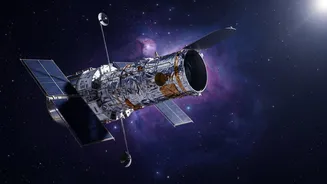
While the rescue mission did not succeed in its primary goal, NASA officials do not see it as a total failure. The $30 million mission, developed on an aggressive timeline of less than a year, was a test of new commercial capabilities for in-space servicing. "NASA should be willing to move quickly and take smart risks when the potential return is worth it, and that is exactly what we did with this mission," said NASA Administrator Jared Isaacman in a statement. Even without capturing the observatory, the LINK spacecraft will attempt to conduct rendezvous and proximity operations to demonstrate its autonomous capabilities, gathering valuable data for future servicing missions that could one day save other vital satellites, like the Hubble Space Telescope.