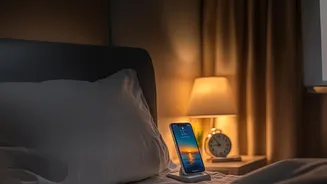







Why Light Is Your Body's Master Clock
Light is the single most powerful signal that regulates your body's internal clock, or circadian rhythm. This 24-hour cycle tells you when to feel awake and when to feel tired. Exposure to bright light, especially in the morning, reinforces this natural
rhythm. However, light exposure at night does the opposite. It tricks your brain into thinking it's still daytime, which suppresses the production of melatonin, the hormone that makes you feel sleepy. Even small amounts of light from a streetlamp, a charging phone, or a television can disrupt your sleep cycles, preventing you from reaching the deeper, more restorative stages of sleep. While all light can interfere, the blue light emitted from electronic screens is particularly potent at delaying melatonin release and keeping you alert.
Creating a Cave: How to Master Light
The goal is to make your bedroom as dark as possible, creating a 'cave-like' environment that signals to your body it's time for rest. Start with your windows. Investing in blackout curtains or shades is one of the most effective ways to block external light. If that's not an option, a comfortable eye mask can work wonders. Next, tackle electronics. Cover or remove any devices with glowing lights. If you charge your phone in the bedroom, place it screen-down or out of your direct line of sight. Most importantly, create a screen-free buffer zone of at least 30 to 60 minutes before bed. Dimming the lights in your home an hour before bed can also help your body begin to wind down and produce melatonin naturally. If you need a light on for safety, opt for a dim, warm-hued or red night light, as red light has the least impact on your circadian rhythm.
The Disruptive Power of Noise
Even if a noise doesn't fully wake you, it can still ruin your sleep quality. Your brain continues to process sounds while you sleep, and sudden or inconsistent noises can pull you out of deep sleep and into lighter stages. These 'micro-awakenings' prevent your body from getting the restorative rest it needs, which is why you can sleep for eight hours and still wake up feeling groggy and unrested. Over time, this constant disruption can lead to increased stress hormone levels, irritability, and a higher risk for long-term health issues. Common culprits include traffic, noisy neighbours, a snoring partner, or even the humming of household appliances. The key issue isn't always the noise itself, but the sudden change in sound from silence to noise that alerts your brain.
Engineering a Peaceful Soundscape
If you can't eliminate disruptive sounds, the next best thing is to mask them. This is where white noise comes in. A white noise machine, a fan, or even an air purifier creates a constant, soothing sound that covers up sudden noises like a door slamming or a dog barking. This consistent sound floor makes abrupt noises less jarring, allowing your brain to stay in a relaxed state. Studies have shown that white noise can help people fall asleep faster and experience fewer awakenings throughout the night. If ambient sound isn't for you, high-quality earplugs can be a simple and effective solution. For a more permanent fix in a noisy area, consider adding soft surfaces to your room like heavy curtains, upholstered furniture, and rugs, as they naturally absorb sound.