




Targeting Your Lateral Core
When people talk about core training, the focus is often on the rectus abdominis, the 'six-pack' muscles at the front of the stomach. The side plank, however, shifts the focus to the obliques, which run along the sides of your torso. These muscles, both
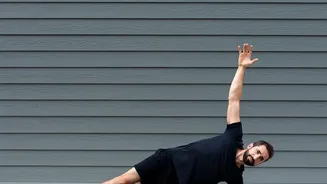
internal and external, are crucial for bending your trunk, rotating, and most importantly, resisting unwanted movement to stabilize your spine. By holding your body in a straight line against gravity, the side plank forces these oblique muscles into an isometric contraction, building endurance and strength that supports nearly every move you make.
Building Shoulder Stability
The side plank is a weight-bearing exercise for your upper body, and the supporting arm plays a critical role. To hold the position correctly, you must actively push the floor away, engaging the muscles of your shoulder. This action strengthens the rotator cuff and other stabilising muscles around the shoulder joint. Proper form—keeping the elbow directly under the shoulder—ensures these muscles work to create a solid platform, preventing the shoulder from shrugging or collapsing. This builds the kind of stability needed for lifting objects, playing sports, and preventing injury.
The Crucial Role of Hip Control
One of the most common mistakes in a side plank is letting the hips sag towards the floor. Preventing this dip requires significant effort from your hip muscles, particularly the gluteus medius and minimus, located on the outer side of your hips. These muscles act as powerful stabilisers for the pelvis. By keeping your hips lifted and stacked, you are directly training these vital muscles, which are often weak from prolonged sitting. Strong hip stabilisers are essential for balance, walking, running, and reducing strain on the lower back and knees.
Why a Neutral Spine Is Everything
The phrase 'neutral spine' refers to maintaining the natural curves of your back. In a side plank, this means creating a straight, rigid line from your head to your feet, without arching or rounding your back. Holding a neutral spine is the safest and most effective way to perform the exercise. It ensures that your postural muscles are aligned correctly, allowing them to produce force efficiently and without strain. This position protects the spine from excessive pressure and trains your core to brace effectively under load, a skill that is fundamental for preventing back injuries in both the gym and everyday life.
Getting the Form Right
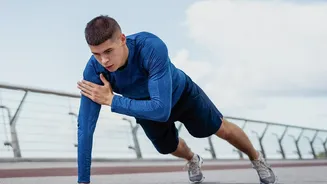
To get the most out of your side plank, focus on quality over duration. Start by lying on your side with your forearm on the ground, elbow stacked directly under your shoulder. Tighten your core and glutes, then lift your hips until your body forms a straight line. Avoid rotating your torso forward or backward and keep your head in line with your spine. Don't hold your breath; breathe steadily throughout the hold. If the full version is too challenging, start with a modified version by bending your knees. The goal is to maintain perfect alignment, ensuring all the right muscles are working in harmony.