









A thwarted terrorist plot targeting Taylor Swift’s 2024 Vienna concerts is back in the news, with recent revelations highlighting a complex web of international intelligence cooperation that prevented a potential mass-casualty event.
New Details on Intelligence Sharing Emerge
In a recent revelation,
former Mossad chief David Barnea disclosed that the Israeli intelligence agency played a significant role in disrupting the planned attack. Speaking at a conference, Barnea stated that while Austrian authorities first identified the threat, they subsequently sought assistance from Mossad. The Israeli agency then used its capabilities to analyze the intelligence, identify the global jihadist cell, and aid in the arrests. This news adds another layer to the story, as previous reports had primarily credited U.S. intelligence with providing the crucial tip-off that led to the plot's disruption. The case now stands as a powerful example of multi-national cooperation between Austrian, American, and Israeli agencies to counter a shared threat.
A Look Back at the Foiled 2024 Plot
The incident unfolded in August 2024, just before Taylor Swift was scheduled to perform three sold-out shows at Vienna’s Ernst Happel Stadium as part of her Eras Tour. Authorities arrested several young men, including a primary suspect identified as Beran A., who had become radicalized online and pledged allegiance to the Islamic State (IS). The plot was extensive, allegedly involving plans to use knives, a car, and homemade explosives to attack the crowds of fans expected to gather both inside and outside the stadium. The goal, according to authorities, was to 'kill as many people as possible'. Following the arrests and an evaluation of the 'very high' threat level, all three concerts, expected to host over 170,000 fans, were cancelled for safety reasons.
The Suspects and Legal Consequences
The main conspirators were young men who had been radicalized online. Following his arrest on August 7, 2024, the primary suspect, Beran A., confessed to the plot. Investigators found bomb-making materials and IS propaganda at his residence. In May 2026, an Austrian court sentenced the then 21-year-old to 15 years in prison after he pleaded guilty to terrorism-related offenses. Another accomplice was sentenced to 12 years. The case also had international dimensions, with a teenage accomplice in Germany receiving a suspended sentence in 2025 for his role in supporting the plot. The trial revealed that the suspects had followed online instructions to try and build an explosive device and had attempted to acquire weapons.
The Challenge of Securing Mega-Events
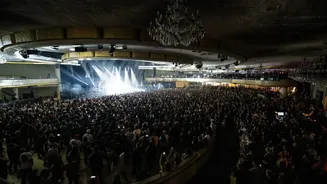
The Vienna plot starkly illustrates the immense security challenges surrounding global mega-events like a Taylor Swift tour. The scale of these concerts, with tens of thousands of ticketed fans and often thousands more gathering outside, creates what security experts call 'soft targets'. One of the suspects had even secured a job with a company providing services at the concert venue, highlighting the risk of insider threats. The incident drew comparisons to the tragic 2017 bombing at an Ariana Grande concert in Manchester, which killed 22 people. The successful disruption in Vienna underscores the critical importance of proactive intelligence gathering and international cooperation, as even a hint of a threat can force the cancellation of massive, logistically complex events to ensure public safety.