



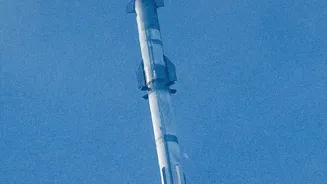
What Happened on Flight 15?
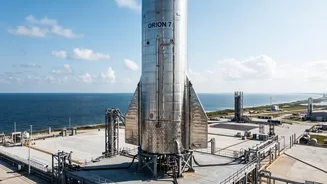
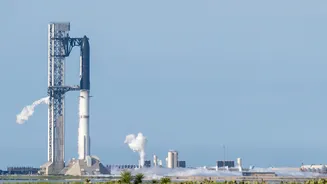
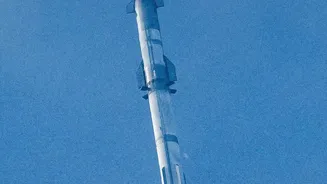
On November 13, 2026, SpaceX launched its 15th Starship test flight. While the mission successfully delivered 26 Starlink satellites to orbit and ended with the historic first-ever catch of the Starship upper stage, the first stage Super Heavy booster
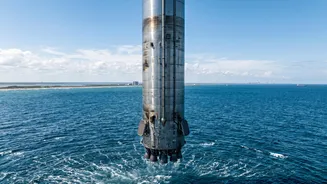
did not complete its part of the mission. Minutes after liftoff, the booster, known as Booster 22, separated from the upper stage as planned and began its journey back to the launch site. However, its automated systems detected an issue and triggered an abort, diverting the booster to a contingency splashdown in the Gulf of Mexico, where it was destroyed by its flight termination system. This prevented the planned 'double catch' of both the booster and the ship.
Why Did The Booster Abort?
SpaceX is still investigating the root cause of the abort. Initial statements suggested that the guidance, navigation, and control (GNC) system triggered the abort because the booster was not in the correct position for a safe return to the launch tower. A spokesperson later clarified this was not a failure of the GNC system itself; rather, the system worked as designed by preventing a potentially unsafe landing. Early indications pointed to the booster's boostback burn ending early due to a low fuel mass alarm. One of the booster's 33 Raptor engines also failed to light for the boostback burn, though it's unclear if this contributed to the abort. The investigation will focus on engine performance, fuel systems, and sensor data to pinpoint the exact cause.
The 'Chopsticks' Catch Explained
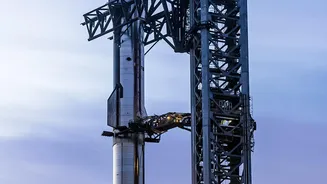
The 'Starship catch' is a revolutionary concept central to SpaceX's goal of full and rapid reusability. Instead of landing on legs like the Falcon 9 booster, the much larger Super Heavy booster is designed to be caught by the launch tower itself. This system, nicknamed 'Mechazilla', consists of two giant, movable arms on the launch tower, often called the 'chopsticks'. As the returning booster approaches the tower, it uses its engines for a final landing burn to slow itself to a near-hover. The chopsticks then close around the booster, catching it by two reinforced points near its grid fins and lifting it back onto the launch mount, ready for its next flight. This method saves the weight of adding heavy landing legs to the booster and dramatically speeds up the turnaround time for the next launch.
Why Aborts Are Part of the Plan
While a launch abort and loss of a booster may seem like a major failure, it's a built-in feature of SpaceX's iterative design philosophy. The abort system is a critical safety measure designed to protect ground personnel and property by ensuring a failing rocket does not go off course. In the case of Flight 15, the abort system correctly identified that the booster was not on a perfect trajectory for a tower catch and safely diverted it to the ocean. Each test, even one with anomalies, provides invaluable data that engineers use to improve the system's reliability. Previous FAA-monitored investigations into test flights have taken months, but are essential for ensuring public safety before the next launch is approved.
What's Next For Starship?
The program will be on hold pending the results of the FAA-overseen investigation into the Flight 15 booster loss. Despite the booster issue, the successful orbital flight, payload deployment, and historic catch of the Starship upper stage mark massive progress for the program. Starship has now flown to orbit twice and deployed operational satellites, proving its core capabilities. The focus will now be on understanding and fixing the booster issue to achieve the ultimate goal: catching both stages on a single flight. This is the key that unlocks the rapid reusability needed for SpaceX's ambitious plans, which include completing its Starlink constellation, landing NASA astronauts on the Moon for the Artemis program, and eventually building a city on Mars.