



More Than Just Scraps
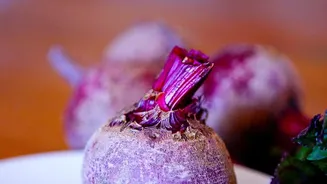
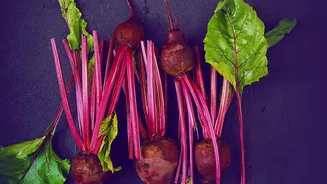
Beet greens are the edible leaves that grow on top of the beetroot plant. Far from being food waste, they are a culinary prize. If you enjoy other leafy greens like spinach or Swiss chard, you will find a familiar yet distinct quality in beet greens.
In fact, beets, Swiss chard, and spinach all belong to the same plant family, which explains their similar characteristics. When you buy a bunch of beets, you're essentially getting two vegetables for the price of one, each with its own unique culinary applications. The key is to see them not as a byproduct, but as an ingredient waiting to be discovered.
A Uniquely Earthy Flavour
The flavour of beet greens is a direct extension of the root they're attached to: mild, sweet, and distinctly earthy. Younger, smaller leaves tend to be milder and sweeter, making them perfect for eating raw in salads. Older, larger leaves can have a slightly more assertive, sometimes bitter taste, but this mellows beautifully with cooking. Unlike the powerful earthiness of the beetroot itself, the greens offer a more delicate flavour, often compared to Swiss chard but with a unique sweetness that sets them apart. They don't taste like kale; they are significantly less bitter and have a softer profile that pairs well with simple seasonings like garlic, olive oil, and a splash of citrus or vinegar.
The Magic of Texture
One of the most appealing aspects of beet greens is their dual texture. The leaves themselves are tender and cook down into a silky, delicate consistency, similar to well-prepared spinach. They wilt quickly, so it's important not to overcook them to retain their vibrant colour and tender bite. The stems, which often boast a beautiful ruby or golden hue, are another story. They are more fibrous but provide a wonderful, crisp crunch when cooked. To make the most of this, it's best to separate the stems from the leaves, chopping the stems finely and giving them a head start in the pan before adding the delicate leaves. This technique ensures the stems become tender while the leaves are perfectly wilted, creating a fantastic textural contrast in the final dish.
A Nutritional Powerhouse
Beyond their taste and texture, beet greens are packed with nutrients. They are an excellent source of vitamins, including high levels of Vitamin K, which is essential for bone health, and Vitamin A, which supports the immune system. They also provide a significant amount of Vitamin C, iron, potassium, and magnesium. In fact, beet greens often contain a higher concentration of certain nutrients, like iron, than spinach and even the beetroot itself. Low in calories and high in fibre, they are a fantastic way to add a nutritional boost to any meal.
From Market to Pan
To get the best from your beet greens, a little care goes a long way. When you bring them home, separate the greens from the beetroots immediately. This is a crucial step, as the leaves will continue to draw moisture from the roots, causing both to wilt faster. Wash the greens thoroughly, as they can be quite gritty. Submerging them in a large bowl of water is an effective way to let the dirt sink to the bottom. Once clean and dry, store them in the crisper drawer of your refrigerator, loosely wrapped in a bag, where they should last for three to four days. When you're ready to cook, simply chop the stems and leaves and you're good to go.
Simple Cooking, Maximum Enjoyment
You don’t need a complicated recipe to make beet greens shine. Sautéing is one of the best and easiest methods. Heat a little olive oil in a pan, add minced garlic and the chopped beet stems, and cook for a few minutes until they begin to soften. Then, toss in the chopped leaves and cook until they have just wilted. A squeeze of lemon juice or a splash of red wine vinegar at the end brightens up the earthy flavour perfectly. You can also add them to soups and stews in the last few minutes of cooking, or even blend the tender, raw leaves into a smoothie for a nutrient-packed drink.