





A World Shaped by Moving Plates
To understand Japan's geology, we first have to think about the ground beneath our feet not as solid and still, but as a mosaic of massive, slow-moving puzzle pieces called tectonic plates. These plates, which make up the Earth's crust, are in constant
motion, drifting apart, sliding past each other, or colliding with immense force. Most of the world's most dramatic geological events—earthquakes, volcanic eruptions, and the creation of mountain ranges—happen right at the boundaries where these plates meet. Japan's story is one of the most intense examples of this process on the planet.
Japan's Crowded Tectonic Neighborhood
Most countries sit on one or two tectonic plates, but Japan is uniquely positioned at the junction of four. The archipelago lies where the massive Pacific and Philippine Sea plates grind against the continental Eurasian and North American plates. Specifically, the northern part of Japan rests on the North American plate, while the south is on the Eurasian plate. To the east, the huge Pacific plate is moving westwards, and to the south, the Philippine Sea plate is pushing north. This crowded and contentious intersection is the primary reason Japan is a hotbed of geological activity.
The Engine of Creation: Subduction Zones
The interaction between these four plates is not gentle. The oceanic Pacific and Philippine Sea plates are denser than the continental plates they are crashing into. As a result, they are forced to dive underneath in a process called subduction. This constant, violent grinding creates what are known as subduction zones. Off the coast of Japan, the Pacific plate is being subducted beneath the North American plate at a rate of about 8 to 9 centimeters per year. This process creates unimaginable pressure and friction deep within the Earth's crust, setting the stage for major geological phenomena.
Forging Trenches and Fracturing Faults
As the oceanic plates bend and plunge into the Earth's mantle, they create some of the deepest points on the planet: oceanic trenches. The Japan Trench, which runs parallel to the country's northeastern coast, is a direct result of the Pacific plate's subduction and reaches depths of over 8,000 meters. This immense geological stress doesn't just create trenches; it also fractures the overlying continental plates. This creates a vast and complex network of faults, which are breaks or cracks in the rock. Major fault lines like the Median Tectonic Line run through Japan, while countless smaller, active faults crisscross the islands, accumulating strain from the constant plate movement.
Inevitable Consequences: Quakes and Volcanoes
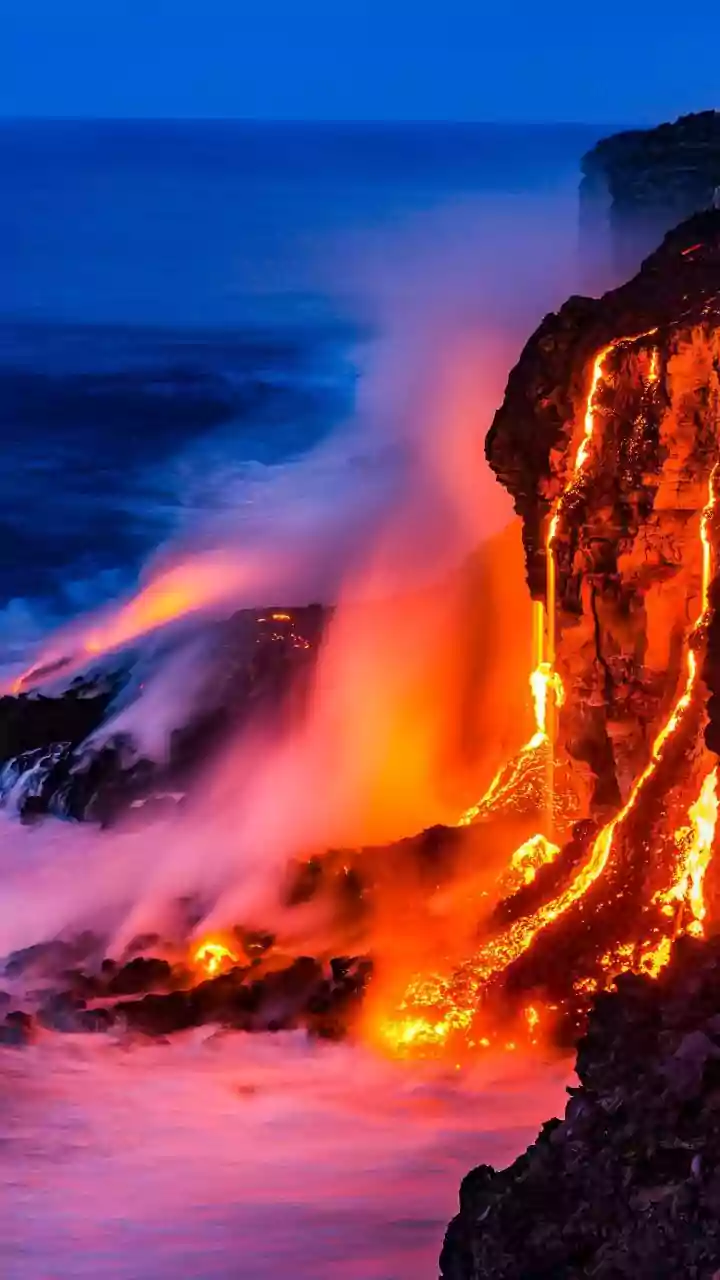
The immense energy built up in these subduction zones and fault lines has to be released. When the plates suddenly slip, that energy is unleashed in the form of seismic waves, causing earthquakes. Japan experiences around 1,500 noticeable earthquakes each year, accounting for about 10% of the world's total seismic activity. Furthermore, as the subducting plate dives deeper, the intense heat and pressure cause rock to melt, creating magma. This molten rock rises to the surface and erupts, forming volcanoes. Japan has about 10% of the world's active volcanoes, a key feature of its position on the Pacific 'Ring of Fire'—a horseshoe-shaped zone of intense seismic and volcanic activity that encircles the Pacific Ocean.
A Culture Forged by Fire and Tremors
Living in such a dynamic and hazardous environment has profoundly shaped Japanese society. The constant threat of earthquakes and tsunamis has led to the development of some of the world's strictest building codes and most advanced early warning systems. From ancient pagodas designed to sway with tremors to modern skyscrapers built on massive rubber-and-steel shock absorbers, Japanese engineering has long focused on resilience. This geological reality is intertwined with the national identity, fostering a deep-seated culture of preparedness, awareness, and respect for the powerful forces that have built, and continue to shape, the islands of Japan.