

Myth: It's a Significant Source of Iron
The most persistent claim about cast-iron is that it boosts your dietary iron. While it's true that some iron can leach into your food, the amount is highly variable. Acidic and moist foods, like tomato sauce or applesauce, can absorb a measurable amount of
iron, sometimes as much as 6 to 8 milligrams per cup. However, it's non-heme iron, the same type found in plants, which the body absorbs less efficiently than the heme iron from meat. Absorption can be improved by eating it with Vitamin C, but it's reduced by things like coffee or tea. For most people, a well-seasoned pan—which has a protective layer of oil—transfers very little iron. Relying on your pan for your daily iron intake is inconsistent; it’s better to focus on iron-rich foods.
Reality: Seasoning Is Everything
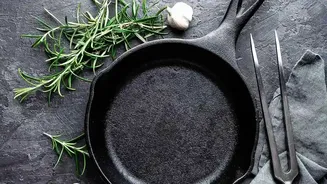
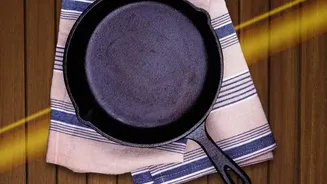
The black, non-stick patina on a cast-iron pan isn't a chemical coating; it's 'seasoning'. This is formed when fats or oils are heated to their smoke point, causing them to polymerize and bond to the pan's surface. This creates a natural, easy-release cooking surface that improves with every use. Most new pans come pre-seasoned, but this initial layer is just a starting point. The best way to build a robust seasoning is simply to cook with your pan regularly using oil or fat. For a deeper seasoning, you can do it in the oven. Clean and dry the pan completely, apply a very thin layer of a neutral, high-smoke-point oil (like vegetable or canola oil) all over, and bake it upside down in a hot oven (around 230-260°C) for an hour. Let it cool in the oven to create a hard, durable layer.
Myth: You Can Never Use Soap
The 'no soap' rule is perhaps the most fiercely debated cast-iron commandment. This advice dates back to when soap was made with lye, which could strip seasoning. Modern dish soaps are much gentler and are perfectly safe to use on a well-seasoned pan for stubborn or greasy residue. While you don't need to use soap every time—often a simple wipe or scrub with hot water is enough—a little soap will not ruin your pan's hard-earned seasoning. The key is to avoid harsh abrasives like steel wool (unless you plan to re-season from scratch) and to never let the pan soak in water, as this is the quickest way to encourage rust.
Reality: Drying Is Not Optional
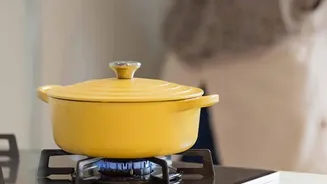
The greatest enemy of cast iron is moisture, which leads to rust. Simply towel-drying your pan is often not enough to remove all the water. The foolproof method is to dry it on the stovetop. After washing, place the pan over a low-to-medium flame for a few minutes until all traces of moisture have evaporated. Once it's completely dry and while it's still warm, you can wipe a very thin layer of cooking oil inside the pan before storing it. This simple step takes only a few moments but is the single most important thing you can do to prevent rust and maintain the seasoning.
The Real Benefits: Durability and Heat
So if it's not a health supplement, why bother with cast iron? Its real strengths are its incredible durability and heat retention. A cast-iron pan can last for generations, is safe to use on any stovetop (including induction) and in the oven, and can handle extremely high temperatures. Its ability to hold a steady, even heat is what makes it unparalleled for searing steaks, frying chicken, and baking cornbread. These are the true, time-tested benefits that make cast-iron a worthy, lifelong kitchen tool—no hype necessary.