




Our Galaxy’s Quiet Giant
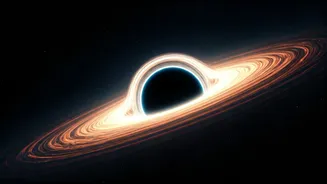
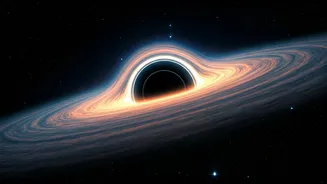
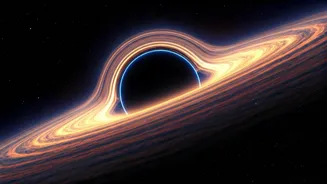
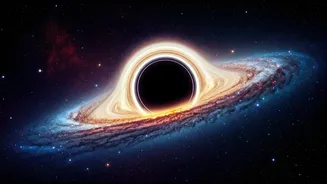
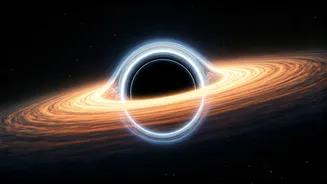
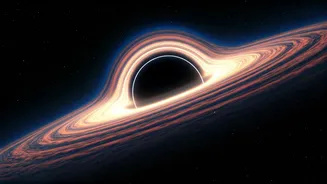
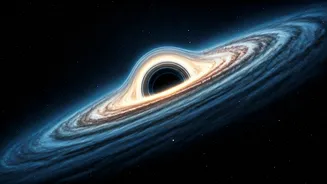
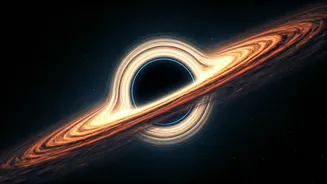
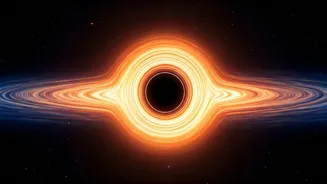
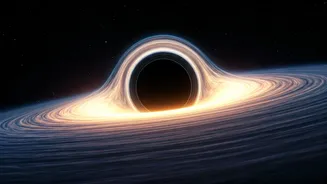
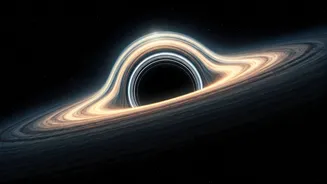
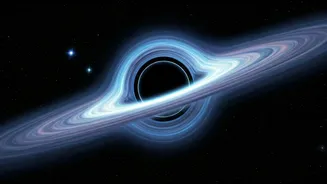
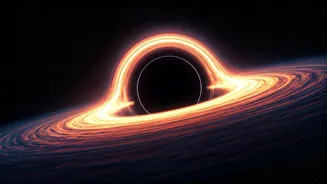
At the center of the Milky Way, about 26,000 to 27,000 light-years from Earth, lies Sagittarius A, or Sgr A for short. It is a supermassive black hole with the mass of over four million suns. Despite its immense size, Sgr A has always been considered
relatively placid. Compared to the ravenous black holes at the centers of other galaxies, which constantly devour stars and gas in spectacular fashion, Sgr A is a picky eater. Its consumption rate is so low it has been compared to a human eating a single grain of rice over a million years. This quiet nature has made it a fascinating, if challenging, object of study for decades.
A Cosmic 'Exhale' After 50 Years
For more than half a century, physicists have theorized that any black hole feeding on matter must also produce an outflow, or a 'wind'. As material gets pulled in, it heats up and releases energy, which should push some of that material back out. This has been seen in active galaxies, but finding proof around our quiet Sgr A has been elusive. Now, after decades of searching, astronomers believe they have finally caught our black hole exhaling. Using data from the Atacama Large Millimeter/Submillimeter Array (ALMA) and NASA's Chandra X-ray Observatory, researchers have identified what looks like a wind blowing from Sgr A.
The Chimney and the Vent
The evidence for this cosmic breath comes from several fascinating structures. Scientists have identified a 'chimney' of hot gas extending from the galactic center, perpendicular to the Milky Way's disk. This structure, previously detected by Chandra and other telescopes, appears to be shaped by magnetic fields. More recently, detailed Chandra data revealed what scientists are calling an 'exhaust vent' at the top of this chimney, about 700 light-years away from Sgr A*. It is thought this vent is created when the hot gas travelling up the chimney collides with cooler interstellar gas, causing shock waves that glow brightly in X-rays, similar to a sonic boom.
Leftovers From a Cosmic Meal
So, what is causing this massive outflow? The leading theory is that it is the result of past activity. Even a quiet black hole has moments where it consumes more material. Scientists suspect that past eruptions from Sgr A, caused by material falling into it, are pushing gas outwards. This material is then channelled up through the magnetic 'chimney' and out the vent. While it confirms that Sgr A is more dynamic than it appears, scientists are still unsure if this is from a single large feeding event in the past or a more continuous, gentle outflow that has been blowing for at least 20,000 years.
Why This Discovery Matters
Confirming this wind changes our understanding of the Milky Way's core. It shows that even a quiet black hole is constantly interacting with and shaping its environment. This outflow of energy and matter helps explain the existence of other mysterious large-scale structures, like the 'Fermi Bubbles'—giant lobes of gamma-ray-emitting gas extending above and below our galaxy. The process also recycles material, pushing heavy elements forged in the galactic center out into the wider galaxy, where they can contribute to the formation of new stars and planets. It reveals that our galaxy’s heart is not dormant but is part of a complex, breathing ecosystem.