




Poland: Of Kings and Resilience
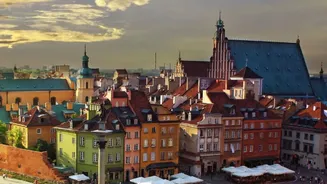
Our journey begins in Kraków, the cultural soul of Poland. Unlike Warsaw, which was meticulously rebuilt after World War II, Kraków’s historic centre survived intact, earning it a place as one of the first UNESCO World Heritage Sites. Spend your days
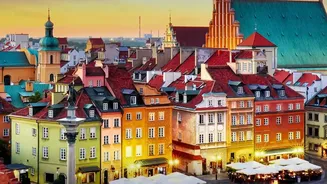
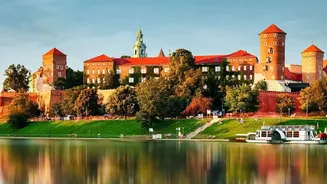
wandering through the Main Market Square, Europe’s largest medieval town square, dominated by the magnificent St. Mary's Basilica and the Renaissance-era Cloth Hall. A short walk leads to Wawel Hill, where the Royal Castle and Cathedral stand as a testament to Poland's golden age. The city also serves as a poignant base for a day trip to the Auschwitz-Birkenau Memorial and Museum, a somber but essential visit for understanding the shadows of 20th-century history. For a different kind of history, descend into the nearby Wieliczka Salt Mine, a subterranean world of chapels and statues carved entirely from rock salt.
Czechia: A Bohemian Fairytale
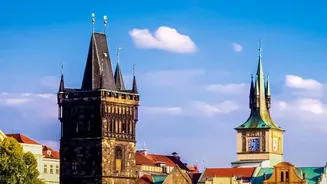
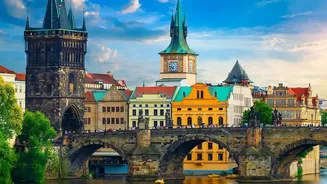
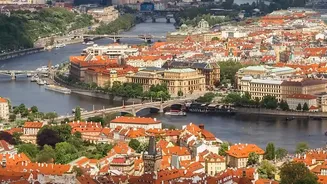
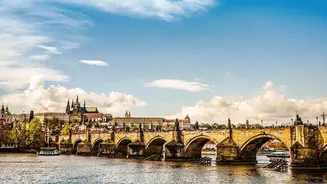
From Poland, the route heads south into Czechia and its enchanting capital, Prague. Often called the 'City of a Hundred Spires', Prague's skyline is a breathtaking collection of Gothic towers, Baroque domes, and Romanesque facades. The city’s historic core is a living museum. Cross the iconic Charles Bridge at dawn, watching artists set up their easels against the backdrop of Prague Castle, the world’s largest ancient castle complex. Lose yourself in the cobblestone labyrinth of the Old Town Square, where the famous Astronomical Clock puts on its hourly show. For a unique and slightly macabre side trip, the town of Kutná Hora is just an hour away by train. Once a prosperous silver mining hub, it is now famous for the Sedlec Ossuary, a small chapel artistically decorated with the bones of tens of thousands of people.
Romania: Myths and Medieval Towns
Continuing southeast, we venture into Romania, a land of dramatic landscapes and enduring legends. The region of Transylvania, often associated with Bram Stoker’s Dracula, is home to some of Europe’s best-preserved medieval towns. Base yourself in Brașov, a charming city encircled by the Carpathian Mountains, and explore its Gothic Black Church and colourful central square. From there, it’s a short journey to the storybook citadel of Sighișoara, a UNESCO World Heritage site and the birthplace of Vlad the Impaler, the historical figure who inspired the Dracula myth. The entire town, with its fortified walls, cobblestone streets, and clock tower, feels like a step back in time. This region is also dotted with fortified churches built by Saxon settlers, creating a unique cultural landscape found nowhere else in the world.
Bulgaria: Ancient Empires and Revival
Our heritage trail concludes in Bulgaria, a country at the crossroads of civilizations. The capital, Sofia, wears its history in layers. You can see Roman ruins peeking out from beneath modern streets, visit the magnificent Alexander Nevsky Cathedral, and explore medieval churches like the Boyana Church, a UNESCO site known for its stunning frescoes. Just a two-hour drive from the city lies the Rila Monastery, Bulgaria's largest and most famous Eastern Orthodox monastery, nestled high in the Rila Mountains. For an even deeper dive into antiquity, travel to Plovdiv, one of the oldest continuously inhabited cities in Europe. Its Roman amphitheatre, old town with colourful Revival-era houses, and vibrant arts district make it a fitting end to a journey through a region where history is not just in museums, but a part of everyday life.