





From Rich Heritage to Colonial Ruin
For centuries, India was a global powerhouse in textiles, its fine cottons and silks coveted across the world. However, the arrival of British colonial rule marked a devastating turning point. The British systematically dismantled India’s thriving textile industry
to fuel their own Industrial Revolution. They imposed heavy taxes on Indian textiles while flooding the market with cheap, machine-made cloth from Manchester and Lancashire. This policy crippled local weavers and spinners, plunging millions into poverty and destroying a centuries-old craft ecosystem. India, once a celebrated exporter of textiles, was reduced to a mere supplier of raw cotton for British mills.
Gandhi's Thread of Freedom
In the early 20th century, as the call for independence grew louder, Mahatma Gandhi sought a symbol that could unite the nation and empower its people. He found it in Khadi. Gandhi recognised that economic self-sufficiency was the first step towards political freedom. He championed Khadi as the heart of the Swadeshi movement, which called for the boycott of foreign goods. The humble charkha, or spinning wheel, was transformed from a simple household tool into a powerful symbol of resistance and national identity. Gandhi urged every Indian, rich or poor, to spin yarn and wear Khadi as an act of defiance and a commitment to self-reliance.
Weaving a Non-Violent Revolution
Spinning Khadi became a revolutionary act. It was a quiet, disciplined form of protest that everyone could participate in, from villagers to intellectuals. By making their own cloth, Indians directly challenged the economic foundations of the British Empire in India. The bonfire of foreign-made clothes became a recurring image of the freedom struggle, a clear rejection of colonial dependency. Khadi was not just about economics; it was a social equaliser. It aimed to bridge the gap between the urban elite and the rural masses, fostering a sense of unity and shared purpose. Wearing the coarse, hand-spun fabric became a visual pledge to the idea of a free and self-sufficient India.
Khadi in a Modern India
After India gained independence in 1947, Khadi retained its symbolic importance. The government established the Khadi and Village Industries Commission (KVIC) in 1957 to promote and develop Khadi and other rural industries, aiming to generate employment in villages. For decades, Khadi was largely seen as the attire of politicians and a relic of the past. However, in recent years, there has been a remarkable revival. The fabric, once called coarse, is now celebrated for its unique texture, breathability, and eco-friendly nature—it's cool in summer and warm in winter.
The Fabric of the Future
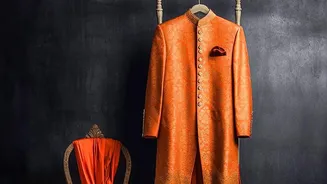
Today, Khadi has shed its old-fashioned image and is being embraced by a new generation. Indian fashion designers have reimagined the fabric, transforming it into high-fashion garments, from stylish jackets to elegant sarees and chic dresses. This resurgence is also driven by a growing global movement towards sustainable and ethical fashion. The production of Khadi has a minimal carbon footprint, uses no electricity or harmful chemicals, and provides a crucial livelihood for thousands of rural artisans. What began as a symbol of protest has evolved into a statement of conscious consumerism, blending heritage with modern style.