








The Promise of Phages
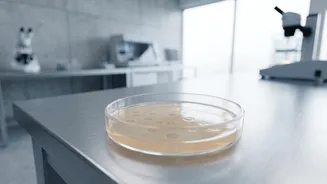
The viruses in question are a specific type known as bacteriophages, or phages for short. Unlike viruses that infect humans, phages exclusively target and kill bacteria. For decades, scientists have seen them as a potential silver bullet in the fight
against antibiotic-resistant superbugs. The challenge has always been finding or engineering the right phage for the right infection, a slow and painstaking process. A tool that could rapidly design new phages on demand would be a game-changer for medicine, potentially saving countless lives.
Where AI Meets Biology
This is where generative AI enters the picture. Researchers at Stanford University and the Arc Institute used AI models, the biological equivalent of large language models like ChatGPT, to learn the rules of viral genetics. By training the models on millions of existing phage genomes, they taught the AI to understand the complex interplay of genes that allows a virus to function. The goal was not just to predict what a genome does, but to generate entirely new, functional genomes from scratch.
From Code to Creation
The research team used their AI models, named Evo1 and Evo2, to generate thousands of potential phage genomes designed to target E. coli bacteria. From these, they selected nearly 300 designs to synthesize chemically and test in a laboratory. The results were stunning: 16 of the AI-generated designs produced viable, functioning viruses that were previously unknown to science. In lab tests, a cocktail of these AI-designed phages was effective at killing E. coli strains that had developed resistance to natural phages, proving the system worked.
A Tool for Good and Ill
The breakthrough is a classic example of dual-use technology—a tool with immense potential for both benefit and harm. The same AI capability that could design life-saving phage therapies could also, in theory, be used to design dangerous biological agents. Current biosecurity measures often rely on screening DNA synthesis orders for sequences that match known pathogens. However, an AI could create a functionally harmful protein or virus from a genetic sequence that bears no resemblance to anything in existing databases, potentially bypassing these safeguards completely. This creates a dangerous gap between our creative capabilities and our safety controls.
The Urgent Call for Guardrails
The Stanford researchers were acutely aware of these risks. They deliberately excluded genetic data from viruses that can infect humans, animals, or plants from their AI's training to prevent the accidental creation of a dangerous pathogen. But their success has triggered an urgent, field-wide conversation about governance. Experts in biosecurity argue that the ability to compose viral genomes with AI now exists, but the rules to steer it safely do not. The consensus is not to halt research, but to build new, more robust safeguards, such as screening AI models themselves and developing methods to detect function, not just sequence. This includes calls for pre-development risk reviews before powerful new biological AI models are even built.