





The Data Behind the Headline
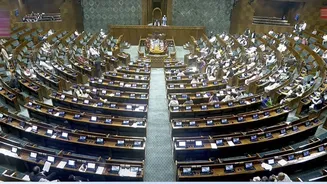
In a written reply to the Lok Sabha, Minister of State for Finance Pankaj Chaudhary provided data on high-income earners based on Income Tax Returns (ITRs) filed for the Assessment Year (AY) 2025-26. The data specifically tracks individuals who reported
a 'Gross Total Income' exceeding the ₹100 crore threshold. It's crucial to understand this refers to declared annual income, not their total net worth or wealth. The Finance Ministry clarified that it does not use or have a statutory definition for the term 'billionaire', but this income bracket serves as a clear indicator of the country's highest earners.
A Four-Fold Jump in Five Years
The most striking aspect of the data is the trend. The number of individuals in this ultra-high-income bracket has quadrupled in just five years, jumping from 142 people in AY 2021-22 to 576 in AY 2025-26. The progression shows a significant acceleration in recent years. The count stood at 301 for AY 2022-23, saw a minor dip to 284 in AY 2023-24, before climbing to 415 in AY 2024-25 and surging to the current high. This rapid expansion of the 'crorepati' club points towards an economy that is generating extreme wealth at an unprecedented pace, even as it navigates global and domestic challenges.
Where is the Wealth Coming From?
While the parliamentary data doesn't break down the sources of income for these 576 individuals, the broader economic context offers strong clues. India's economic boom has been driven by sectors like technology, financial services, manufacturing, and real estate. The rise of the startup ecosystem has minted a new generation of wealthy founders and investors. At the same time, established industrialists and legacy business families continue to expand their fortunes. Public reports on India's wealthiest individuals consistently feature promoters of large listed companies, tech entrepreneurs, and astute stock market investors, suggesting that the sources of such high incomes are a mix of traditional and new-age industries.
The Other Side of the Coin: Inequality
The growth of the super-rich inevitably brings the conversation to economic inequality. While the government points to a declining Gini coefficient—a measure of inequality—based on consumption expenditure surveys, other reports paint a more complex picture. Reports from organisations like Oxfam and the World Inequality Lab have consistently highlighted that India is one of the most unequal countries in the world. One report noted that by 2022-23, the top 1% of the population held over 40% of the nation's wealth, and the top 10% accounted for nearly 60% of the national income. This suggests that while incomes are rising at the top, a vast majority of the population is not experiencing the same level of prosperity, creating what many economists refer to as a 'K-shaped' recovery where different segments of society recover at vastly different rates.
A Challenge for Policymakers
This concentration of income presents both an opportunity and a challenge for the government. On one hand, it signals a vibrant economy capable of creating immense value. These high earners are also significant contributors to the national exchequer through direct taxes, with measures like progressive tax slabs designed to ensure higher earners contribute more. On the other hand, it puts a spotlight on the effectiveness of the tax system and raises calls for policies that promote more inclusive growth. The debate around introducing wealth or inheritance taxes, which India does not currently have, often surfaces in this context. The government abolished the Wealth-tax Act in 2016, and does not maintain data on the total wealth of taxpayers. Balancing wealth creation with equitable distribution remains one of the central challenges for Indian policymakers.