



The Hammer-Blow of a Raindrop
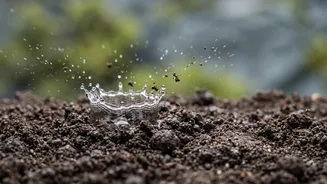
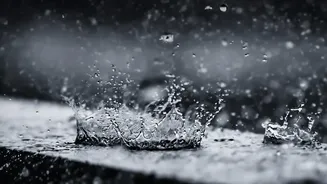
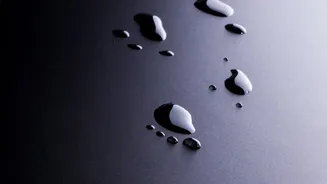
For years, the story of rain erosion began and ended with a single, dramatic event: the splash. Scientists have long known that a raindrop doesn't land gently. Hitting the ground at speeds up to 30 kilometres per hour, its impact acts like a tiny hammer
blow. A heavy storm can unleash millions of these impacts, dislodging soil particles and blasting them in all directions. This process, known as splash erosion, was considered the primary way rain initiated soil loss. Models used for agriculture and land management focused almost entirely on calculating the energy of this initial impact, assuming it did most of the destructive work before flowing water took over. This understanding paints a picture of countless microscopic explosions, a process that clogs soil pores, reduces water infiltration, and sets the stage for larger-scale erosion.
A Previously Unseen Phenomenon
Scientists, however, are now realizing there is a critical second act to this story. A groundbreaking study published in early 2026 by researchers from EPFL in Switzerland and the University of Pennsylvania has shed light on what happens immediately after the splash. Led by physicist Bertil Trottet, who brings a unique perspective as a tree farmer, the team asked a simple but overlooked question: what happens to the raindrop itself after it hits? Using high-speed cameras and controlled experiments on dry, sloping sand, they observed something that current erosion models completely missed. Instead of simply disintegrating, some raindrops remained remarkably intact.
The Birth of the 'Sandball'
The research revealed that on these dry, angled surfaces, a raindrop would often bounce upon impact and then begin to roll downhill. As it rolled, it acted like a tiny, wet snowball, collecting loose grains of sand and soil. The scientists termed these formations 'sandballs'. This rolling and gathering process continues until the drop either evaporates or merges with other water flows. The discovery is significant because of the sheer amount of material these sandballs can move. According to the study, this post-splash rolling can transport up to ten times more soil than the initial splash dislodges. This means that on certain landscapes, the most significant part of rain erosion wasn't the explosive impact, but the quiet journey of the drop that followed.
Why This Changes Our Understanding
This finding fundamentally changes how we must view erosion, particularly in certain environments. The sandball effect is most pronounced when rain begins to fall on dry, loose, and sloping ground—conditions common in arid and mountainous regions, as well as on freshly tilled farmland before vegetation has grown. By ignoring this mechanism, existing erosion models have likely been substantially underestimating the rate of soil loss in these vulnerable areas. For a world grappling with desertification, soil degradation, and the stability of agricultural lands, understanding the true measure of erosion is critical. The study suggests that the very first moments of a rainfall event on a dry landscape are far more consequential than previously believed, initiating a powerful chain reaction of soil movement.