


The Flag: Ready for Day One
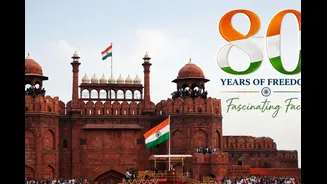
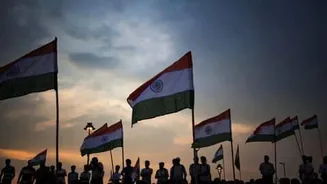
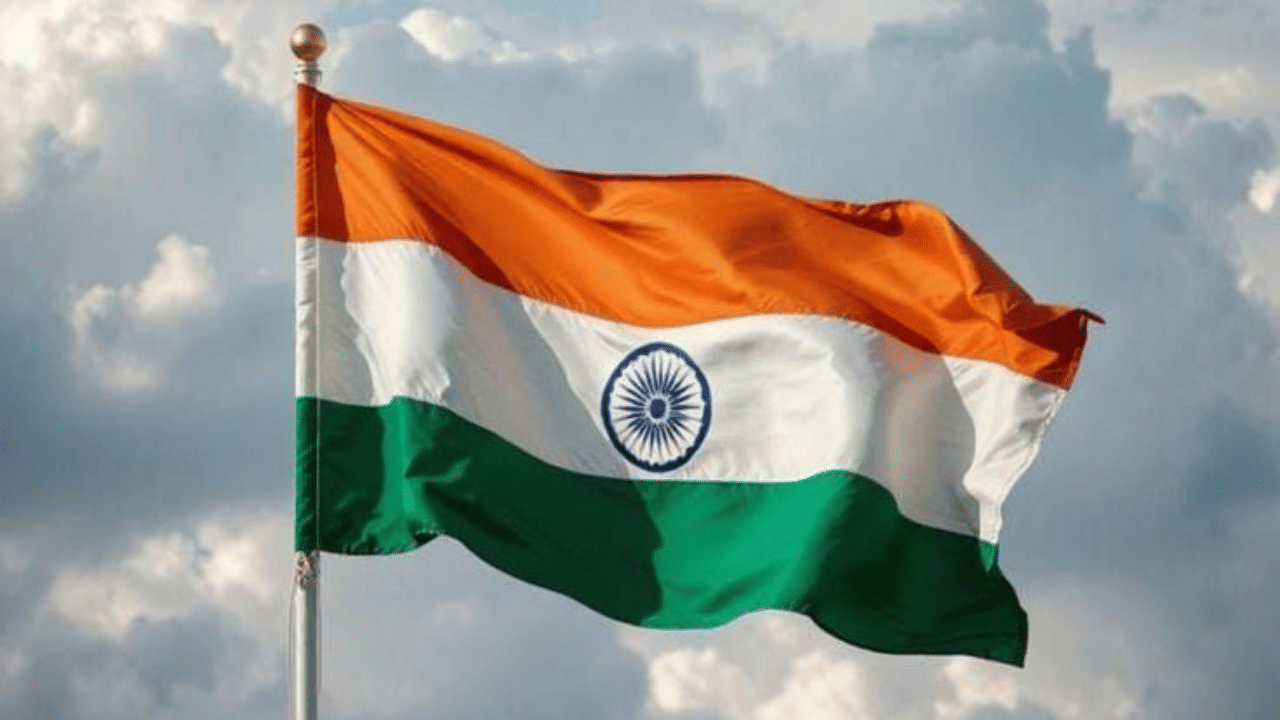
Of all the major national symbols, only the Tricolour, or Tiranga, was formally in place at the moment of independence. The Constituent Assembly adopted its design on July 22, 1947, just weeks before freedom. Based on the Swaraj Flag used during the freedom struggle,
it was modified to be acceptable to all communities. The charkha (spinning wheel) was replaced by the Ashoka Chakra, representing the eternal wheel of law and dharma. This crucial, early decision ensured that when the Union Jack was lowered, India had its own flag ready to be hoisted, a powerful symbol of a new dawn.
The Anthem and Song: A 1950 Decision
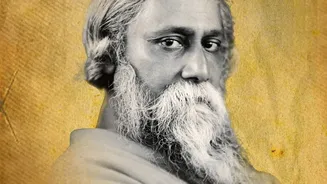
The sounds of the new republic took longer to formalise. For years, both Rabindranath Tagore's 'Jana Gana Mana' and Bankim Chandra Chattopadhyay's 'Vande Mataram' were popular and revered. 'Vande Mataram' was the clarion call of the freedom movement, but 'Jana Gana Mana' was also widely respected. The Constituent Assembly faced a difficult choice. Finally, on January 24, 1950, two days before India became a republic, a decision was made. 'Jana Gana Mana' was adopted as the National Anthem, and 'Vande Mataram' was given equal honour as the National Song, recognising its historic role in the struggle for freedom.
The State Emblem: A Seal for the Republic
The official seal of the Government of India, the State Emblem, is an adaptation of the Lion Capital of Ashoka from Sarnath. While a version was adopted for the Dominion of India in December 1947, the final, familiar emblem was officially adopted on January 26, 1950, the day India's constitution came into force and it became a republic. The emblem, featuring four lions (three visible) and the motto 'Satyameva Jayate' (Truth Alone Triumphs), signifies a nation built on the foundations of courage, confidence, and a commitment to truth.
The National Animal: From Lion to Tiger
For a period, the Asiatic Lion held the title of India's national animal. However, this changed in the early 1970s. As concerns grew over the dwindling population of tigers, a concerted push for conservation began. In 1972, the Bengal Tiger was officially designated as the National Animal. This decision was not just symbolic; it was tied to the launch of Project Tiger in 1973, a massive conservation effort to protect the species. The tiger was seen as representing the strength and grace of India, and its presence across a wider swath of the country made it a more encompassing symbol.
Feathers, Petals, and More
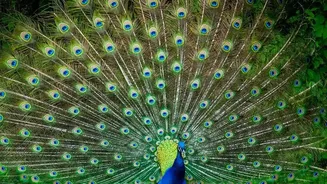
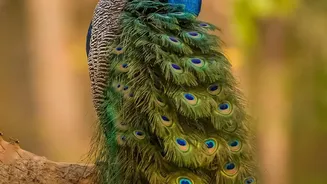
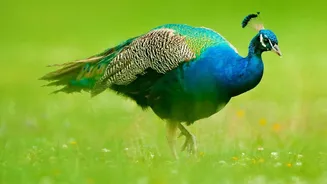
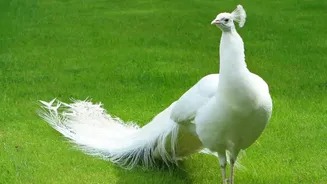
The process of defining India's symbolic identity continued for years. The Indian Peafowl, or peacock, with its deep roots in Indian tradition and mythology, was declared the National Bird in 1963. Its beauty, grace, and widespread familiarity made it a natural choice. Similarly, the Lotus, a flower of immense cultural and spiritual significance in India, symbolising purity and divinity, was recognised as the National Flower. These choices, made years after 1947, reflect a nation thoughtfully curating symbols that resonated with its ancient heritage and natural biodiversity.