







The Two Meanings of Kyber
To understand the situation, it's crucial to distinguish between two different 'Kybers' in the tech landscape. The first is CRYSTALS-Kyber, a post-quantum cryptographic algorithm selected by the U.S. National Institute of Standards and Technology (NIST)
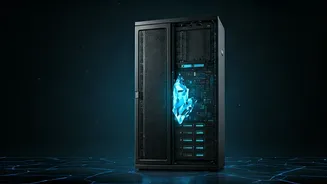
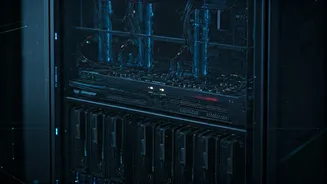
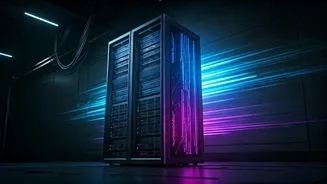
to become the new standard for secure data encryption. Now formally known as ML-KEM, it's designed to protect data from being decrypted by future quantum computers. Companies across the tech spectrum, including NVIDIA, are working to integrate this security standard into their products. The second 'Kyber' is NVIDIA's internal codename for a next-generation rack-scale architecture, the Kyber NVL144, designed to house its future Rubin Ultra AI chips. The headline-making delay is about this second Kyber—the physical hardware system—not the cryptographic algorithm.
NVIDIA's Billion-Dollar Stumble
According to recent reports, NVIDIA has pushed the launch of its Kyber rack-scale system from 2027 to 2028. The delay is reportedly due to significant manufacturing challenges with a critical component known as the midplane PCB, or 'orthogonal backplane'. This complex, 78-layer circuit board represents the cutting edge of PCB manufacturing technology. This delay disrupts NVIDIA's famously aggressive product roadmap and forces a change in plans for its Rubin Ultra chips, which were designed to be scaled using this system. The company's backup plan to link current-generation racks was also reportedly scrapped after pushback from major cloud customers, leaving a gap in its high-end scaling strategy.
An Opening for Team Red
This hardware delay could create a significant opportunity for NVIDIA's chief rival, AMD. The AI chip market is a race to provide not just powerful individual chips, but the ability to scale them into massive, interconnected systems for training enormous AI models. With NVIDIA's top-tier scaling solution for its Rubin Ultra platform facing a year-long delay, customers who need to build out massive AI factories may look for alternatives. Analysts suggest this creates a window of opportunity for AMD's upcoming MI500X accelerator to gain ground. If AMD can deliver a compelling and scalable alternative while NVIDIA's most advanced rack system is on hold, it could win key contracts with hyperscale data centres that are hungry for every ounce of computing power.
Google's In-House Advantage
Google is in a unique position. As one of the world's largest operators of data centres and a major AI developer, it also designs its own custom AI chips, called Tensor Processing Units (TPUs). The delay in NVIDIA's architecture could give Google's next-generation TPU, the v8i, a competitive edge. Google builds TPUs for its own massive internal needs and for its Google Cloud customers. A delay from its primary external supplier, NVIDIA, strengthens the case for Google to rely more heavily on its own silicon. This allows Google to control its own roadmap and potentially offer its cloud customers a more stable and predictable path to scaling their AI workloads, turning NVIDIA's manufacturing snag into a strategic advantage for its cloud platform.
The Quantum Security Race Continues
While the hardware delay is the immediate issue, the other Kyber—the post-quantum cryptography standard (ML-KEM)—remains a critical background factor. The entire industry is grappling with the 'harvest now, decrypt later' threat, where adversaries collect encrypted data today to break with future quantum computers. All major players, including NVIDIA, AMD, and Google, are racing to implement these new NIST-approved standards to secure their platforms. NVIDIA has been actively working on GPU-accelerated libraries (cuPQC) to speed up these new algorithms, and Google has been integrating them into its cloud services and Android operating system. Any perceived lag in security implementation could also create market shifts, but for now, the most immediate competitive opening comes from the physical delay of NVIDIA's data centre hardware.