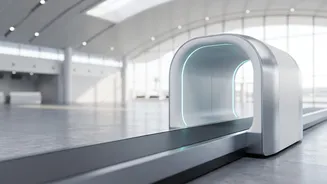





The End of the Security Scramble
For years, the security checkpoint has been one of the most stressful parts of air travel. The routine of unpacking electronics and liquids from hand luggage often creates bottlenecks and anxiety. Dubai International Airport (DXB), one of the world's
busiest hubs, is tackling this pain point head-on by gradually installing a new generation of security scanners. The goal, according to Dubai Airports CEO Paul Griffiths, is to make the entire process “slicker, quicker, faster, and more convenient” for the millions who pass through its terminals. This upgrade isn't a distant promise; the rollout is an ongoing program, with new machines already being installed as part of wider airport refurbishments. The vision is a future where passengers can walk from the kerb to their gate with minimal interruption.
What is This 'Next-Gen' Technology?
The centerpiece of the upgrade is new screening equipment that uses advanced imaging technology, similar to a medical CT scan, to create detailed 3D images of a bag's contents. This allows security staff to get a clear view of everything inside without requiring passengers to remove items like laptops, tablets, and liquids. Some of these new systems are also powered by Artificial Intelligence (AI), which helps analyze the scanned images to detect potential threats more efficiently. Beyond baggage screening, DXB is also expanding its biometric 'smart journey' program. This involves using facial recognition from check-in through to immigration and boarding. In some areas, particularly Terminal 3, AI-powered 'Red Carpet' corridors can process up to 10 passengers simultaneously in mere seconds, eliminating the need to present a passport at all for registered travellers.
A Seamless Journey from Check-in to Boarding
So what will this new experience look like for a passenger? Once the systems are fully deployed across all terminals, your journey through DXB could be remarkably different. After checking in, you’ll approach the security checkpoint and place your entire hand luggage onto the belt, without opening it. Laptops, liquids, and chargers can all stay inside your bag. You will then proceed through passport control, potentially without stopping. At terminals equipped with biometric gates or smart tunnels, you will simply walk through as cameras verify your identity using facial recognition. For eligible passengers who have registered their biometric data, the entire immigration process can take as little as six to 14 seconds. This touchless, document-light journey aims to significantly reduce queues and give travellers more time to relax before their flight.
Why This Upgrade Matters for Dubai
This technological overhaul is about more than just passenger convenience; it's a strategic move to secure Dubai's position as a leading global aviation hub. By increasing efficiency and passenger throughput, the airport can handle more traffic without the need for massive physical expansion. The investment in a seamless experience is also crucial for the airport's brand, reinforcing Dubai’s image as a futuristic and innovative city. The program includes not just security screening but also expanded self-service options and smarter operational systems to improve overall passenger flow. While the gradual rollout means not every passenger will experience the changes immediately, the intention is to eventually replace all older technology to provide a consistent level of convenience across the entire airport. It's an investment in future-proofing operations for decades to come.