







A Bigger, More Complicated Family
The original BRICS quintet—Brazil, Russia, India, China, and South Africa—has welcomed new members like Egypt, Ethiopia, Iran, and the United Arab Emirates. This expansion significantly increases the group's economic heft and demographic footprint, now
representing around 45% of the global population and a substantial share of global GDP. The goal was to amplify the voice of the 'Global South' and create a more multipolar world. However, a larger membership brings a wider array of national interests, political systems, and foreign policy priorities. This diversity is both a strength and a major challenge. While it enhances the bloc's claim to represent a significant portion of the world, it also complicates the consensus-driven decision-making process that has been a hallmark of BRICS.
The Economic Glue: Trade and De-Dollarization
The strongest bond holding the group together is economic. A central pillar is the shared desire to reform global financial governance, which members see as dominated by Western interests. This has led to two major initiatives: the New Development Bank (NDB) and the push for de-dollarization. The NDB aims to fund infrastructure and sustainable development projects in member countries, offering an alternative to the World Bank and IMF. Under its current strategy, it plans to allocate $30 billion for projects and increase lending in local currencies to 30%, reducing reliance on the US dollar and exposure to exchange rate volatility. The broader de-dollarization agenda involves promoting the use of national currencies in trade between member states. India, for instance, already uses rupees for much of its energy trade with Russia. This isn't necessarily about replacing the dollar overnight, but about creating parallel systems that give members more financial autonomy.
The Political Cracks: Rivalries and Alliances
Beneath the economic agenda, deep political fissures remain. The most significant is the strategic rivalry and unresolved border disputes between India and China. While both nations cooperate within the BRICS framework, their bilateral tensions are a constant source of friction that complicates deeper unity. Furthermore, the members have vastly different relationships with the West. India, for example, is also a member of the Quad, a strategic dialogue involving the US, Japan, and Australia, and seeks to balance its ties between Western-led forums and BRICS. Other members like Russia and Iran have openly adversarial relationships with the United States. This diversity of alignment means that while the group can agree on broad economic principles, finding a unified voice on contentious geopolitical issues is exceptionally difficult. A truly united political front often remains out of reach.
India's Chairmanship: A Tightrope Walk
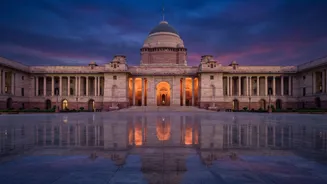
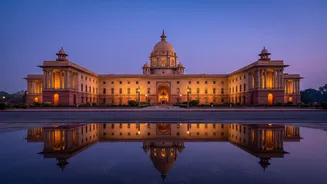
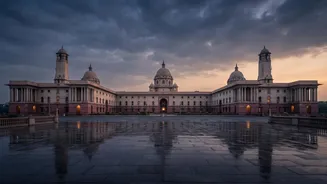
Hosting the summit in New Delhi places India in a crucial but delicate position. As the 2026 chair, India's stated goal is to focus on a 'humanity-first' approach, emphasizing resilience, innovation, and sustainability. New Delhi aims to steer the bloc towards concrete outcomes while navigating the internal power dynamics. For India, a successful BRICS is one that serves its strategic autonomy, allowing it to act as a 'global bridge' between the Global South and the West. It has supported the expansion but remains cautious, wary of the bloc becoming too dominated by China or overtly anti-Western. The summit will be a major test of Indian diplomacy: balancing its own national interests, managing the India-China dynamic, and steering a diverse and sometimes divided group toward a shared vision.