






A Christmas Gift for the Wizarding World
It’s official: the return to Hogwarts has a date. HBO confirmed that the first season of its ambitious Harry Potter series, titled "Harry Potter and the Philosopher’s Stone," will debut on December 25, 2026. This holiday release positions the series as a massive
event for the network and its streaming platform, Max. The first season will consist of eight episodes, a structure that has fans buzzing about the potential for a much deeper and more faithful adaptation of the first book than the beloved 2001 film. This episodic format is at the core of the project's promise: to bring the fantastic details and much-loved characters from J.K. Rowling's books to the screen in a way the movies, constrained by runtime, never could.
Meet the New Faces of Magic
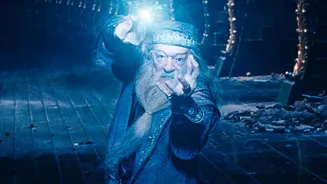
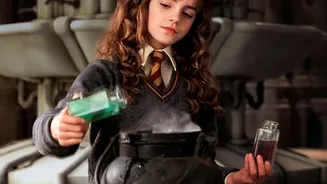
The billion-dollar question of who would inherit the iconic roles has been answered. The series will introduce a new generation of actors to lead the fandom. Newcomers Dominic McLaughlin, Alastair Stout, and Arabella Stanton will step into the shoes of Harry Potter, Ron Weasley, and Hermione Granger, respectively. They’ll be joined by a formidable cast of veteran actors, including John Lithgow as the wise and whimsical Albus Dumbledore, Janet McTeer as the stern but fair Minerva McGonagall, and Paapa Essiedu as the perpetually brooding Severus Snape. Rounding out some of the key staff at Hogwarts is Nick Frost, who will play the lovable half-giant Rubeus Hagrid. The only actor reprising a role from the original films is Warwick Davis, who will once again portray Filius Flitwick.
The Masterminds Behind the Camera
To steer this massive undertaking, HBO has turned to a team with a proven track record of handling high-stakes, prestigious television. The series is helmed by showrunner Francesca Gardiner, a writer and producer known for her work on critically acclaimed dramas like "Succession" and "His Dark Materials". She is joined by Mark Mylod, another "Succession" alum who also directed episodes of "Game of Thrones," who will serve as an executive producer and direct multiple episodes. J.K. Rowling serves as an executive producer, and according to reports, she was personally involved in interviewing and selecting the creative team, praising their "genuine passion" for the books. This creative pairing signals HBO’s intention to treat the source material with both reverence and the sophisticated, character-driven approach that has become its signature.
More Book, More Magic
So, what will an eight-episode season of "The Philosopher's Stone" actually look like? For fans of the books, the possibilities are thrilling. The expanded runtime allows the series to incorporate beloved characters and subplots that were cut from the films for time. Viewers can expect a more detailed exploration of life at the Dursleys', more classroom antics at Hogwarts, and perhaps even the introduction of the chaotic poltergeist Peeves, a fan-favorite character entirely absent from the movies. The goal, as stated by the producers, is a "faithful adaptation" that spans a decade, dedicating roughly one season to each of the seven books. This approach promises to give every chapter room to breathe, from the mystery of the Sorcerer's Stone to the intricate backstories and darker themes that emerge in later installments. Production on the second season, based on "The Chamber of Secrets," is reportedly already scheduled to begin this fall.
A Reboot for a New Generation?
While excitement is high, the project is not without its complexities. The original film series remains incredibly popular and culturally significant, leading some to question if a reboot is necessary so soon. Furthermore, the involvement of J.K. Rowling has been a point of contention for some, following her controversial public statements on sex and gender issues. Some cast members have faced public backlash for joining the production. Despite this, Warner Bros. Discovery is betting big that the universal appeal of the wizarding world will draw in both nostalgic millennials who grew up with the books and a brand-new generation of viewers. The strategy seems to be to create a definitive, comprehensive version of the story that can stand on its own, honoring the source material while building a new legacy for the 21st century.