


A Cosmic Crime Scene
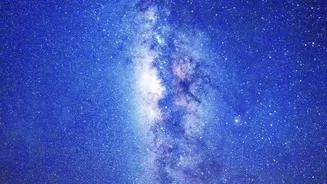
Imagine trying to piece together the details of a car crash that happened 10 billion years ago, with the wreckage scattered across trillions of kilometres. This is the challenge astronomers face when studying the Milky Way. For years, they’ve known something
big happened in our galaxy's youth. Data from the European Space Agency's Gaia mission revealed a bizarre feature: a vast, sparse cloud of stars surrounding our galaxy's main disk, known as the stellar halo, is rotating far more slowly than it should be. Stars in the main disk, including our own Sun, zip around the galactic centre at about 220 kilometres per second, while halo stars dawdle along at a mere 25 kilometres per second. This discrepancy has been a major puzzle, hinting at a dramatic, untold story in our galaxy's history.
The Prime Suspect: A 'Sausage' Galaxy
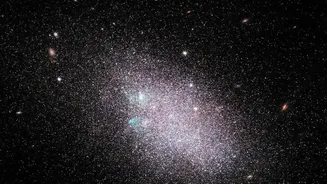
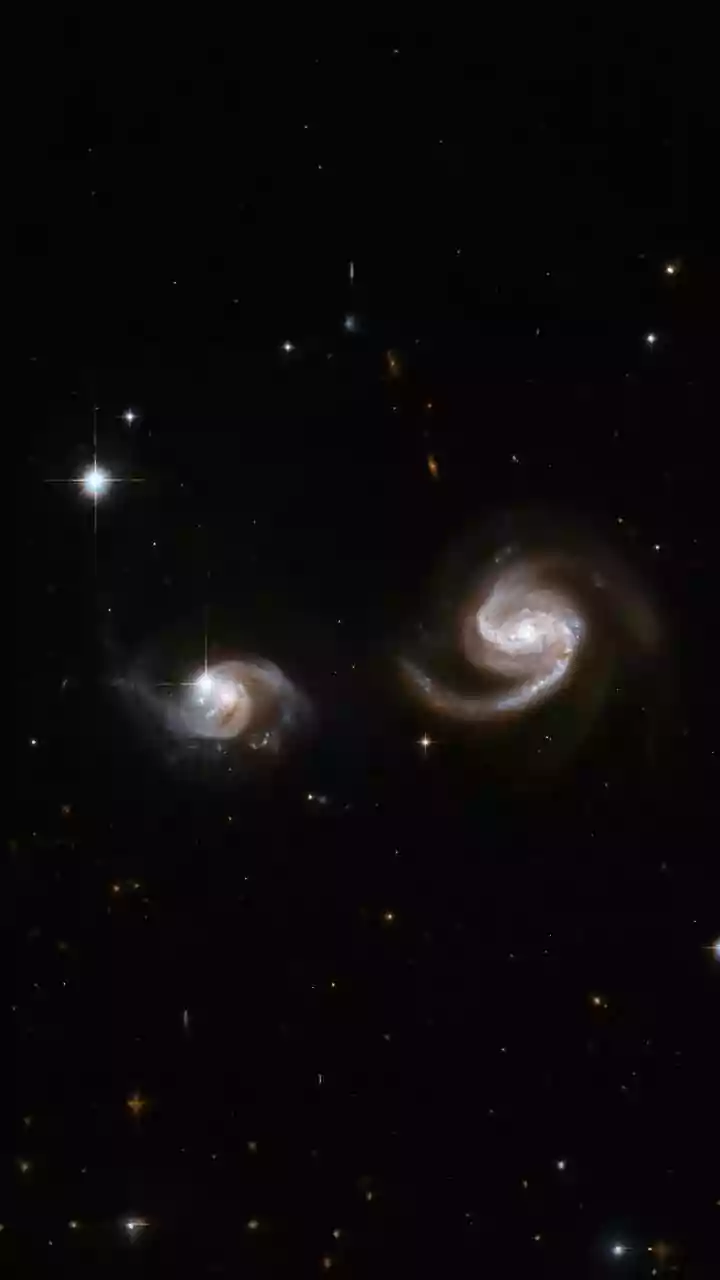
The prime suspect in this cosmic mystery is a dwarf galaxy that astronomers have whimsically named Gaia-Sausage-Enceladus. This smaller galaxy slammed head-on into the young Milky Way between 10 and 11 billion years ago. It was the largest and most definitive merger in our galaxy's history, an event so violent it tore the intruder to shreds. The victim's stars were absorbed into the Milky Way, where their highly elongated, sausage-shaped orbits can still be detected today—the smoking gun from the ancient collision. This merger fundamentally reshaped our galaxy, contributing significantly to the central bulge of stars and the now-mysterious stellar halo.
Rewinding the Clock with Supercomputers
To understand how the Gaia-Sausage collision could lead to a slow-moving halo, researchers at Durham University turned to massive supercomputer simulations. Using a powerful set of models called the Auriga suite, they created and evolved 25 virtual galaxies similar to the Milky Way over billions of years of cosmic time. These simulations allowed them to witness how galaxies react to different types of mergers. The results, presented at the National Astronomy Meeting in the UK, were revelatory. The simulations showed a clear pattern: galaxies that ended up with slowly rotating stellar halos had two things in common. They all experienced a major, head-on collision like the one with Gaia-Sausage, and they all underwent a 'disk flip'.
The 'Huge Turn' Explained
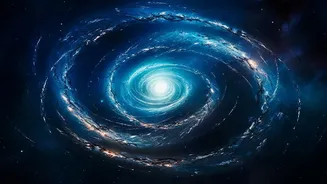
The 'huge turn' mentioned in the headline is this very disk flip—a gradual but dramatic reorientation of the entire galactic disk by more than 90 degrees. Essentially, the sheer gravitational force of the head-on collision with the Gaia-Sausage galaxy likely sent the whole Milky Way tipping over, like a spinning top that gets knocked off its axis. This process would have taken hundreds of millions of years, slowly changing the galaxy's plane of rotation. The new simulations are the first to successfully link this violent flipping motion directly to the mysteriously slow rotation of the stellar halo. The chaos of the merger and the subsequent reorientation scrambled the orbital momentum of the absorbed stars, resulting in the slow-moving halo we observe today.
A New Chapter in Our Galaxy's History
This discovery does more than just solve a long-standing astronomical puzzle. It rewrites a key chapter of our galaxy's biography, painting a picture of a much more dynamic and chaotic youth than previously imagined. By confirming the effects of the Gaia-Sausage collision, astronomers can better date the major events in the Milky Way's formation. Furthermore, the research suggests that the stellar halo's rotation is closely linked to the rotation of the invisible dark matter halo that envelops our galaxy. Understanding this connection provides crucial clues about the nature and distribution of dark matter, the mysterious substance that makes up the vast majority of the universe's mass. The simulations act as a time machine, allowing us to witness the forces that shaped the vast stellar city we call home.