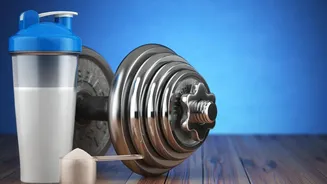






Myth: Everyone Needs Protein Powder
Fact: Most people do not need protein supplements. The Indian Council of Medical Research (ICMR) suggests that a balanced diet containing cereals, pulses, milk products, eggs, fish, or meat can sufficiently meet the daily protein needs of most individuals.
According to a large-scale survey, 73% of Indian diets are protein-deficient, but this is often because people are unaware of their requirements. A sedentary adult needs about 0.8 grams of protein per kilogram of body weight. For a 60 kg person, that's roughly 50 grams of protein, an amount easily attainable from whole foods like dal, paneer, eggs, and soya chunks. Supplements are a convenient tool but should be considered secondary to a food-first approach.
Myth: The More Protein You Eat, The More Muscle You Build
Fact: Extra protein does not automatically equal extra muscle. Muscle growth is primarily stimulated by resistance training, not just high protein intake. While active individuals do need more protein, there's a limit to how much your body can use for muscle synthesis at one time. Studies show that benefits tend to level off around 1.6 to 2.2 grams of protein per kilogram of body weight for those training intensely. Consuming more than this offers no additional muscle-building advantage. The body cannot store excess protein, so any extra is either used for energy or, more likely, stored as fat.
Myth: Protein Powder Will Make You 'Bulky'
Fact: This is a common concern, especially among women, but it's largely unfounded. Gaining significant muscle mass, or 'bulk', requires a combination of intensive strength training and a consistent calorie surplus (eating more calories than you burn). Protein powder itself is just a source of protein; it's not a magic bulking agent. Consuming a protein shake will not automatically lead to unwanted weight gain or a bulky physique. In fact, when used correctly as part of a balanced diet, protein can support fat loss by helping you feel fuller for longer and preserving lean muscle mass while in a calorie deficit.
Myth: You Must Drink a Protein Shake Immediately After Your Workout
Fact: The idea of a strict 30-minute 'anabolic window' post-exercise is a persistent myth that has been largely debunked. While it's true that exercise sensitises your muscles to protein for an extended period, this window of opportunity is much wider than 30 minutes, likely lasting several hours. Research has shown that total daily protein intake is far more important for muscle growth than precise timing. Early studies that seemed to prove a narrow window often had a flaw: the groups drinking shakes immediately also consumed more total protein overall. So, unless you are training in a completely fasted state, there is no need to rush. Consuming a protein-rich meal within a couple of hours of your workout is perfectly effective.
Myth: All Protein Powders Are the Same
Fact: There's a wide variety of protein powders, each with different properties. The most common are whey and casein, both derived from milk. Whey is fast-digesting, making it popular for post-workout recovery, while casein digests slowly, providing a sustained release of amino acids that can be useful before bed. Plant-based proteins, such as those from pea, rice, or soy, are excellent options for vegetarians, vegans, or those with dairy intolerance. While some individual plant proteins may lack certain amino acids, modern plant-based blends are often formulated to provide a complete amino acid profile comparable to whey. The best choice depends on your dietary needs, goals, and tolerance.
Myth: High-Protein Diets and Powders Harm Your Kidneys
Fact: For individuals with healthy, functioning kidneys, a high-protein diet is generally considered safe. This long-standing myth has been challenged by extensive research, with major meta-analyses finding no evidence that high protein intake leads to kidney disease in healthy people. However, the story is different for those with pre-existing kidney conditions. In such cases, excessive protein can indeed strain the kidneys as they work harder to filter waste products. It's also worth noting that extremely high protein intake can cause side effects like dehydration, digestive issues, and fatigue if not balanced with adequate water and fibre.